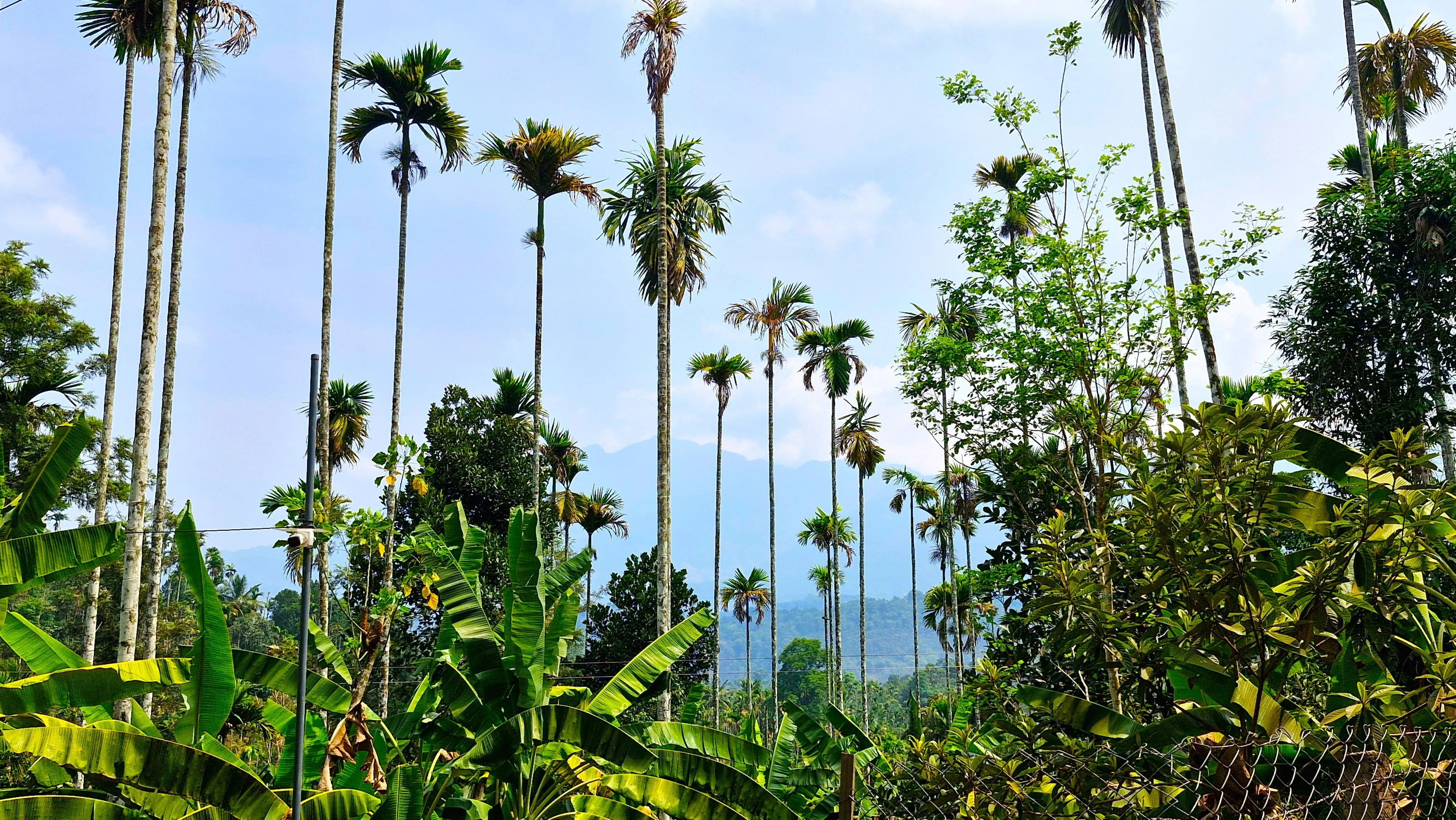
A slow travel story through Wayanad — a blown tyre in Nagarhole, a bamboo forest in Thrikkaipatta, and why the unplanned road often gives you the most.
The light in Nagarhole National Park disappears differently than anywhere else.
It doesn't fade — it withdraws. One moment the road ahead was amber and open, threading between teak and rosewood, the canopy pulling back just enough to let the last of the afternoon through. The next — a sound like a gunshot from beneath the car, a lurch, and then a stillness so complete that the engine's absence felt deliberate. We had blown a rear tyre somewhere inside the elephant corridor, with the golden hour already making decisions on our behalf.
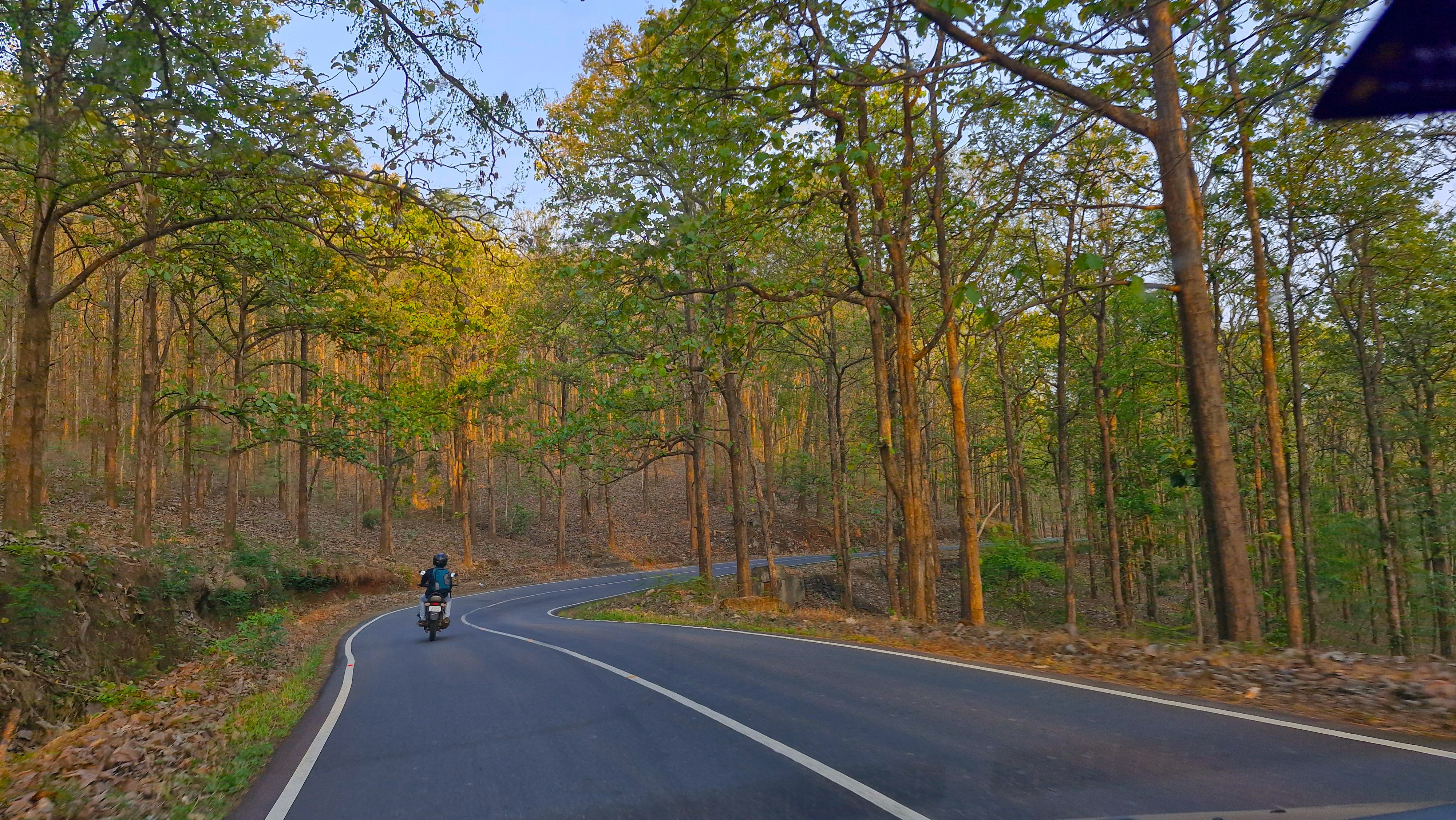 The road through Nagarhole National Park
I got out. The forest pressed close on both sides — Terminalia and Indian laurel rising thirty, forty feet without interruption, their lower trunks dark with old moss and the particular moisture that never quite evaporates here. The air smelled of wet earth and something faintly medicinal. No villages, no chai stalls in vicinity — nothing that signals human presence and therefore safety. Cars passed at intervals, each one slowing just slightly before accelerating again, the drivers doing the same private calculation: the forest, the dark, the time. I understood. I would have done the same.
I opened the boot, found the jack in the toolkit, and stood there. My hands wouldn't cooperate. The reset I had carried from the coast — weeks of slow mornings and open water — dissolved in under a minute. Fear does that. It reaches into you and removes whatever you thought you had built.
Then a sedan stopped. No horn, no dramatic braking — it simply pulled over onto the verge as though it had always meant to be there. A man stepped out. Broad-shouldered, somewhere in his forties, wearing a half-sleeved formal shirt and crisp white Kerala dhoti— the kind that says he'd come from a meeting or was heading to one — and he looked at the tyre, then at me, with the unhurried calm of someone who has already decided what he's going to do.
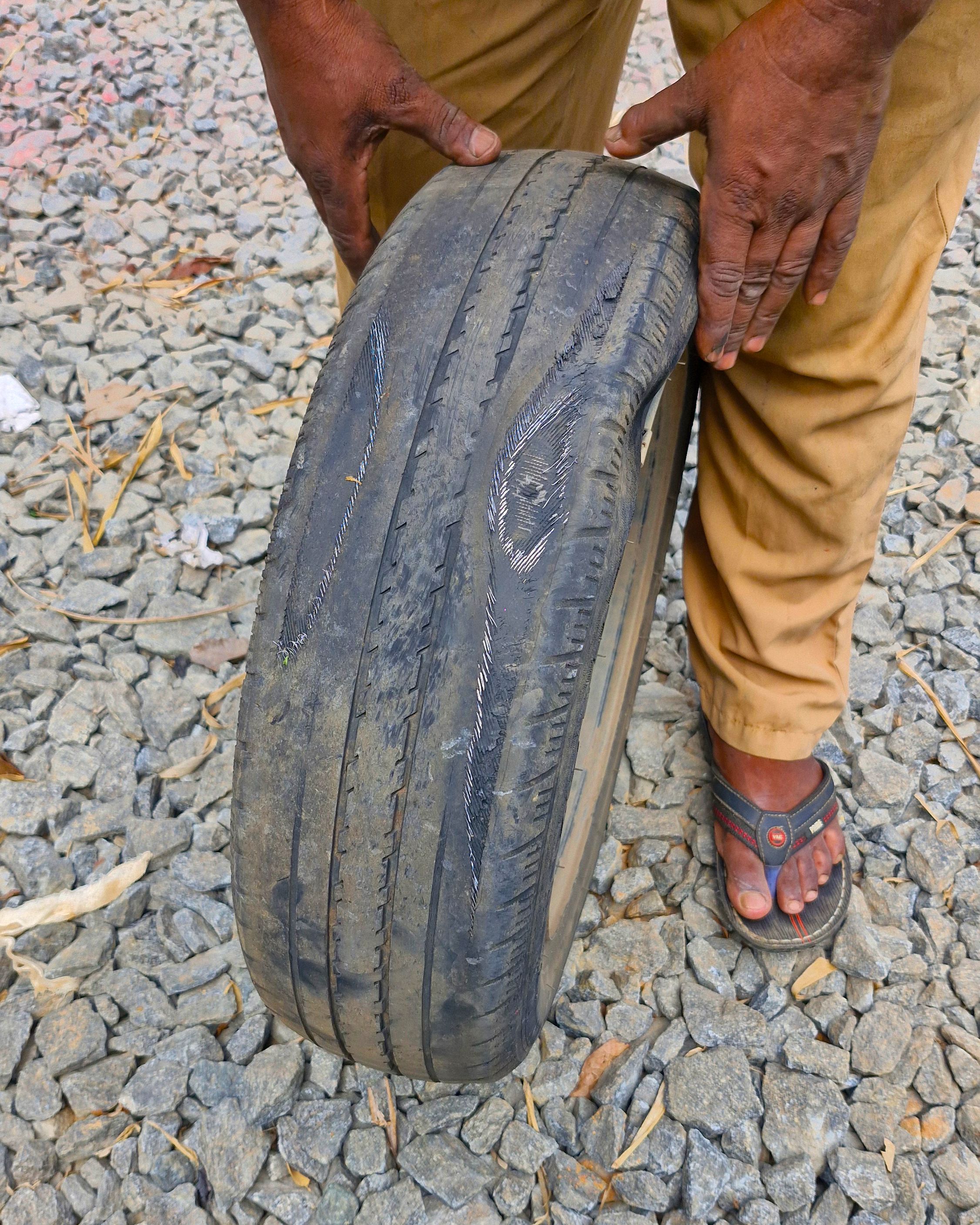 The flat tyre
"Step aside", he said. He handed me a bottle of water. Not a question about what happened. No commentary on the forest or the dark or our poor choice of timing. He simply crouched down and began.
In under five minutes, the spare was on. He loaded the flat into our boot himself, dusted his hands with the same pragmatism with which he'd started, and walked back to his car. Before he got in, he told us — not asked, told — that he would follow behind until we cleared the forest. And he did. When the treeline broke and the highway opened up, headlights steady in our mirror the whole way, he simply drove past and disappeared into the traffic ahead.
We never exchanged names. We have never met since.
I have thought about him often in the months that followed — not with sentimentality, but with something quieter. That kind of help — unrequested, unperformed, anonymous — is easy to believe has vanished from the world. Easy, and wrong. The road, it turns out, still occasionally offers exactly what you need, in a form you would not have thought to ask for. In a world moving faster than it ever has, a man in a meeting shirt pulled over in an elephant corridor to change a stranger's flat tyre and followed them to safety. He did not wait to be thanked. He simply did what seemed right.
Wayanad was never on the original itinerary.
We had come from the Karnataka coast, moving on the advice of a local friend who said, without preamble, that a road trip through South India without Wayanad was a road trip half-finished. We obliged — partly out of curiosity, partly because the best travel decisions almost always start as someone else's idea.
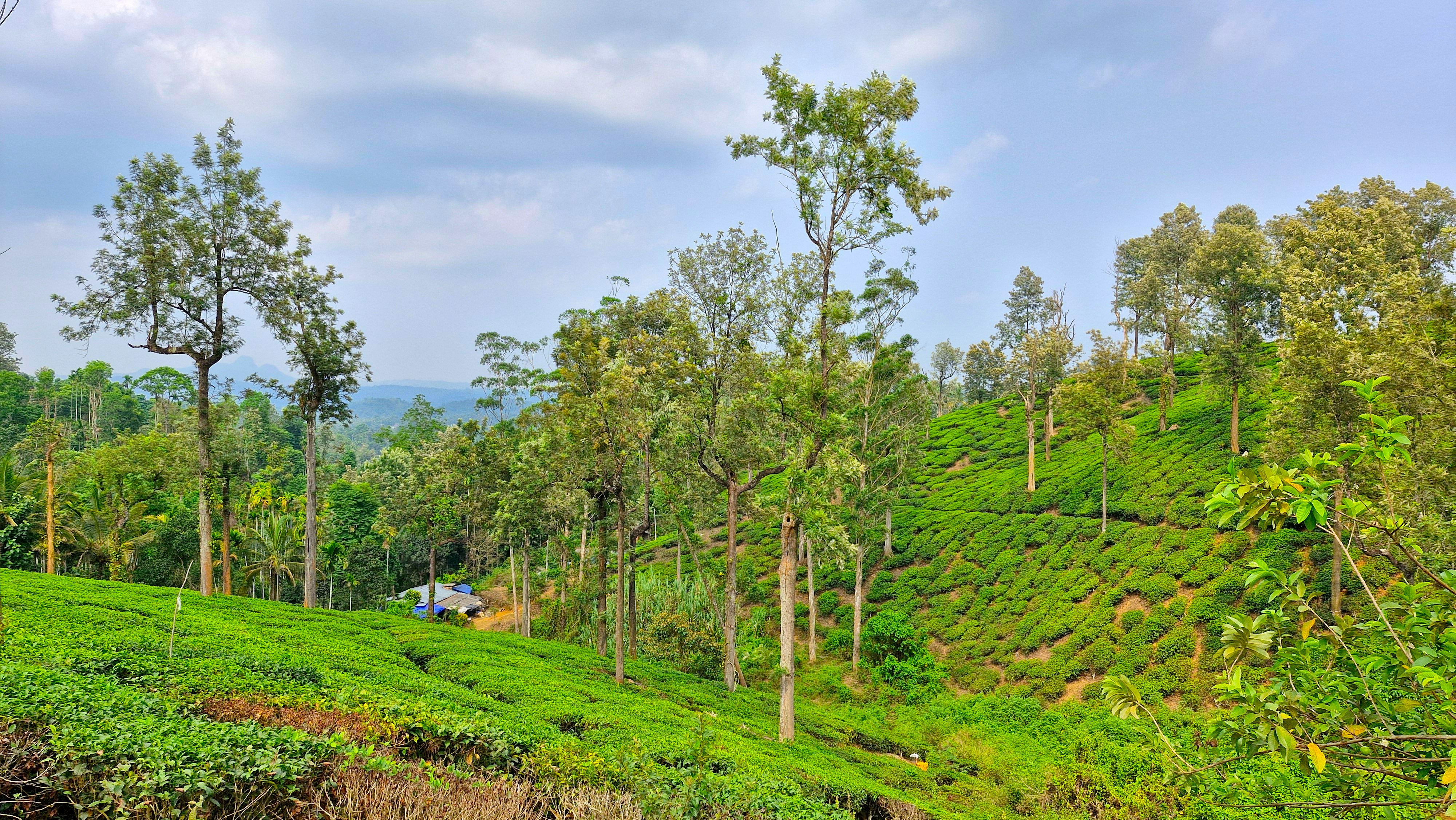 The plantations on the way to Wayanad
The route through Madikeri and Nagarhole — the longer one — was chosen deliberately. After weeks along the coast, we wanted to see what the interior looked like: the denser light, the coffee estates climbing the ghats, the shift in air as the altitude changed and the trees began holding moisture differently. The road delivered all of it, right until the tyre decided otherwise.
After the puncture was repaired at a roadside shop in the foothills — a cup of filter coffee appearing in each of our hands before we thought to ask — we talked with the mechanic and a few others who had gathered the way people do at small stops where a stranded car becomes briefly the most interesting thing happening anywhere in India.
On querying about stay locations, someone mentioned Kalpetta. Someone else immediately declined the suggestion. They meant nothing cruel — only that if we had come this far looking for quiet, we should look further.
Thrikkaipatta, they said. Bamboo village. Uravu.
The eco-resort arrived before we saw it. Walking the narrow path from the gate, the smell reached us first — green, damp, faintly sweet, the particular scent of bamboo in April heat, when the stalks are warm to the touch and the whole grove seems to breathe. Then the structures appeared between them: cottages of mud and split bamboo, their rooflines low and unhurried, designed to fit inside the forest rather than displace it.
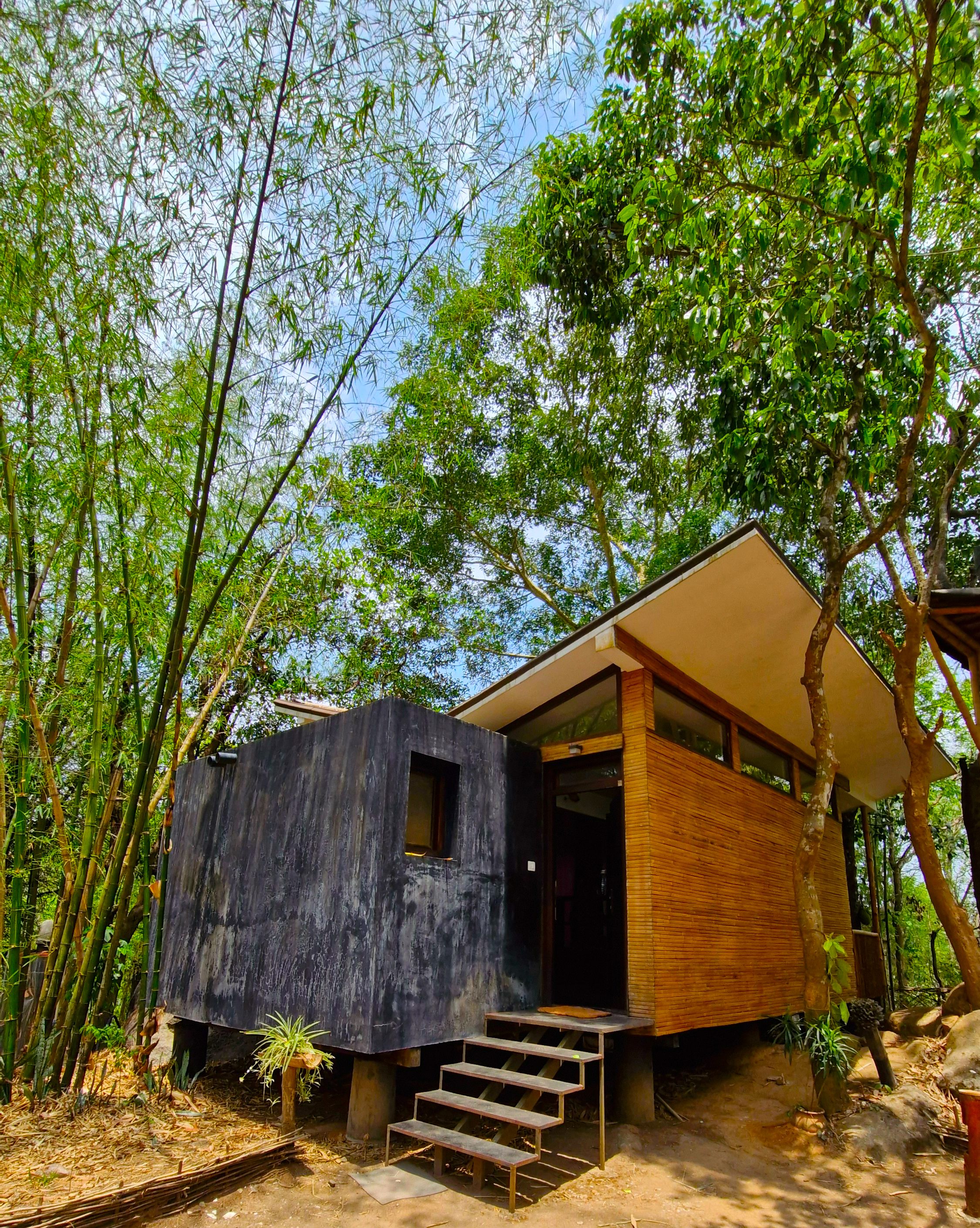 The cottage
Our cottage had an open-air washroom. A square of Kerala sky where a ceiling should have been. It was a design choice that carried an argument inside it: that the guest did not need to be enclosed, managed, or insulated. That the world outside was not a variable to be controlled but an invited presence.
We had arrived hollowed out. The drive, the flat-tyre, the forest — it had taken something from us. We sat on the small veranda for a long time, doing nothing useful, listening to the bamboo knock softly in the evening wind. Wayanad, in that moment, asked nothing of us. That is the most generous thing a place can do.
Joby appeared eventually. He had read the day correctly — or perhaps he had simply read us.
He had the particular subtle demeanor of someone who has spent years in hospitality not because it pays but because he is genuinely good at it. Not the practiced warmth of hotel training, but something organic and more specific: the ability to see what a guest needs before they say it, and to provide it without making the provision feel like a service. He asked few questions. His face was unhurried. There was a quality to his presence — steady, gently attentive — that made the bamboo grove feel more settled the moment he arrived.
He said dinner was arranged, and he said it the way people say things when the arrangement has been made thoughtfully.
Under the thatched bamboo hall, the warm amber of a few low-hung lanterns catching the split cane walls, the table held a Kerala Nadan Choru. Not a curated tasting spread. A meal. The kind that doesn't announce itself and has no need to.
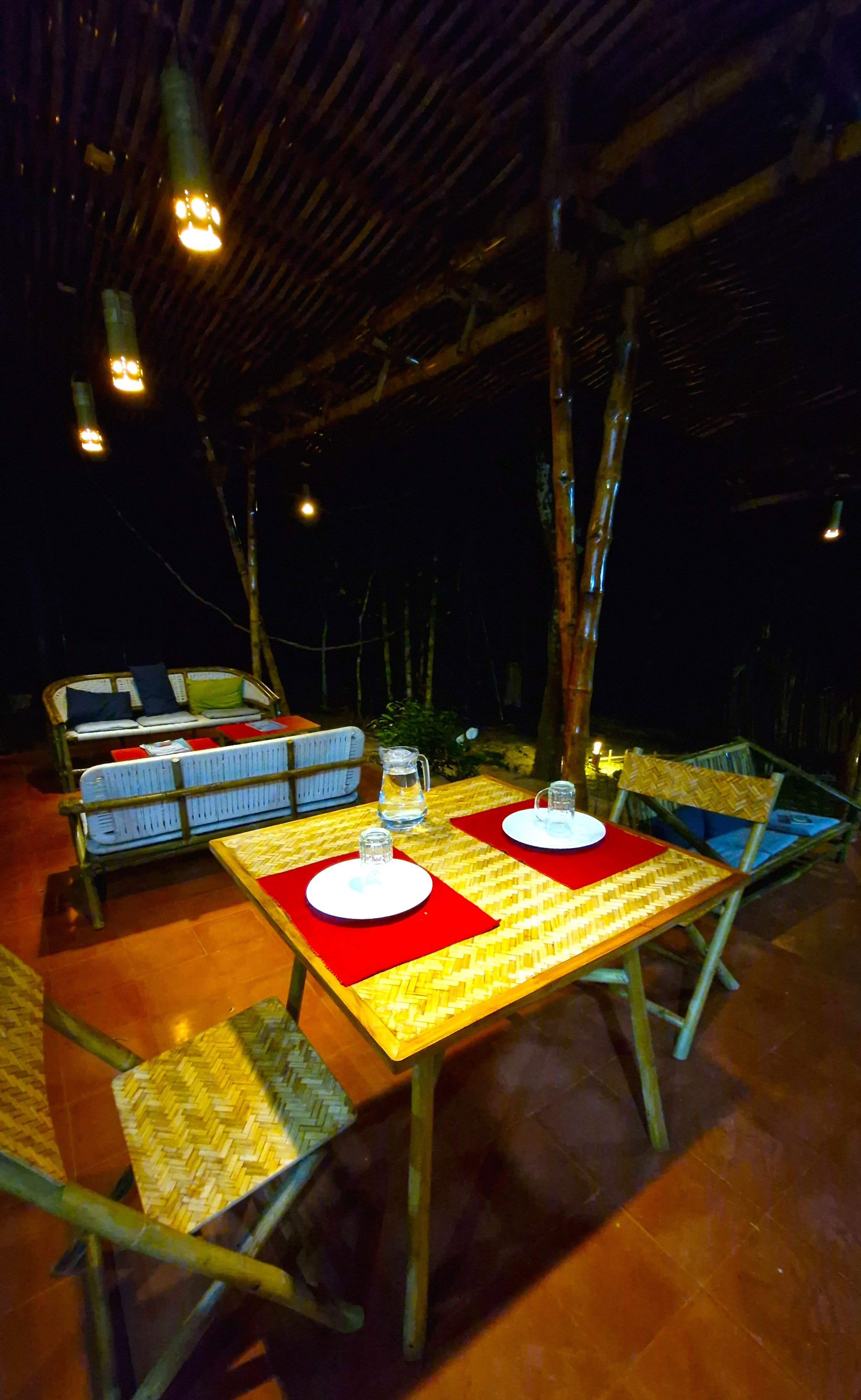 The resort dining hall
Rice. Sambar, its tamarind base deep and slightly sour, tempered with curry leaves that had been fried until their edges crispened and blackened. Cabbage Thoran, the shredded coconut pulled through it in thin threads, just barely cooked to keep the texture. Payar Thoran — yard-long beans with mustard seeds that had been allowed to sputter and go fragrant in hot oil, the beans themselves still holding a slight bite, still green, unwilling to surrender entirely to the heat. Pachadi, the yoghurt cool against all that spice, sweetened faintly with fresh coconut. Papadam, thin and blistered.
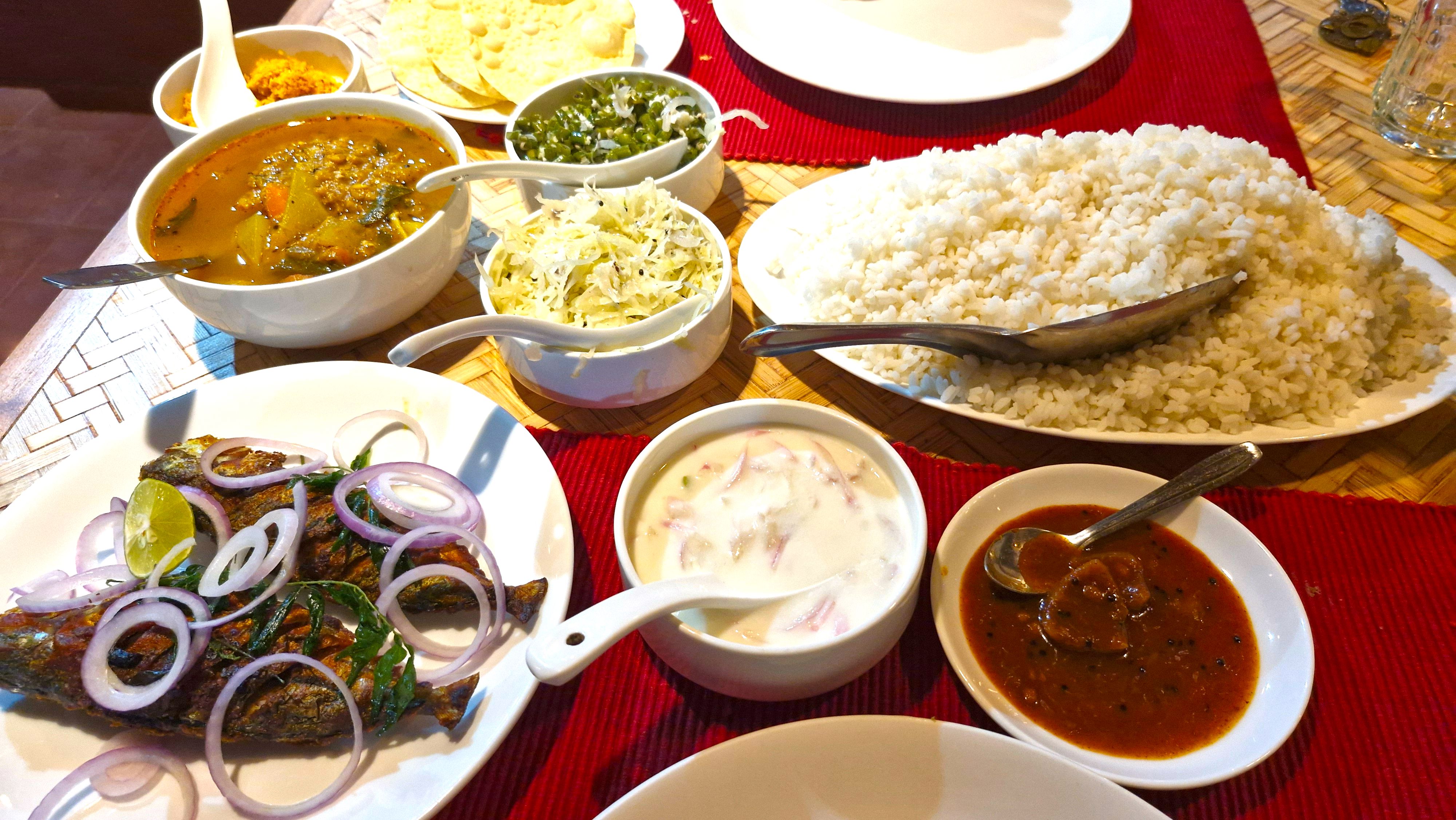 The dinner spread
And then the Meen Varuthathu. Shallow-fried fish, turmeric-dark and fierce with chilli, lifted with a few rings of raw red onion and a hard wedge of lime. The kind of preparation that requires nothing else and knows it. The fish ate like a declaration — this is what the coast tastes like, translated inland.
We ate without speaking much. After a day of too much noise inside our own heads, the silence was the right kind. There is a particular gratitude that arrives only after difficulty — not the polite kind, not the reflex thank you of ordinary comfort, but the kind that settles in the chest and stays. Contemplating about destiny that night, eating in a bamboo forest in a district we had not planned to visit, I felt it completely.
Joby had mentioned, almost in passing the night before, that there was a stone just outside our cottage. That in the mornings, if we were inclined, it made for a good place to sit.
We were inclined.
The previous night's rain had left everything saturated. The bamboo held water in its joints and released it slowly, leaf by leaf, as the first light came through. I sat on the stone and did nothing in particular — no guided practice, no intention-setting, no reaching toward anything — just sat while the forest assembled itself around me.
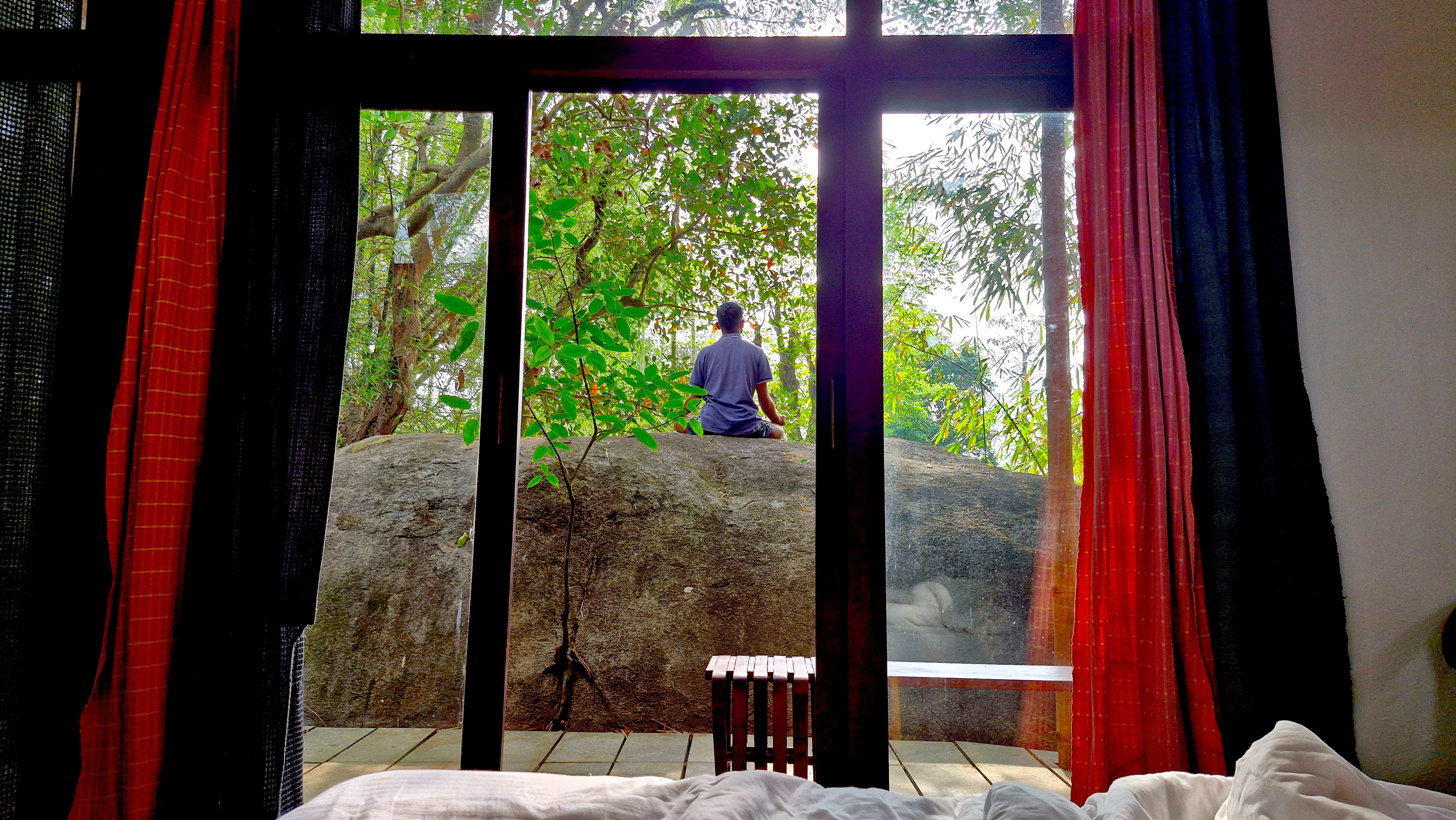 The stone outside the cottage
The birds did not announce themselves one at a time. They arrived in overlapping waves, each call threading through the others until the sound was continuous, layered, larger than any single source. Wayanad's forests carry a particular density of birdsong in the early hours — not background noise but presence, something that displaces the silence rather than fills it. The dry rattle of a Malabar giant squirrel somewhere high up. The two-note fall of something I couldn't name. Then, underneath it all, the slow drip of last night's rain still finding its way down through the canopy.
It lasted perhaps forty minutes. It felt like a different unit of time entirely.
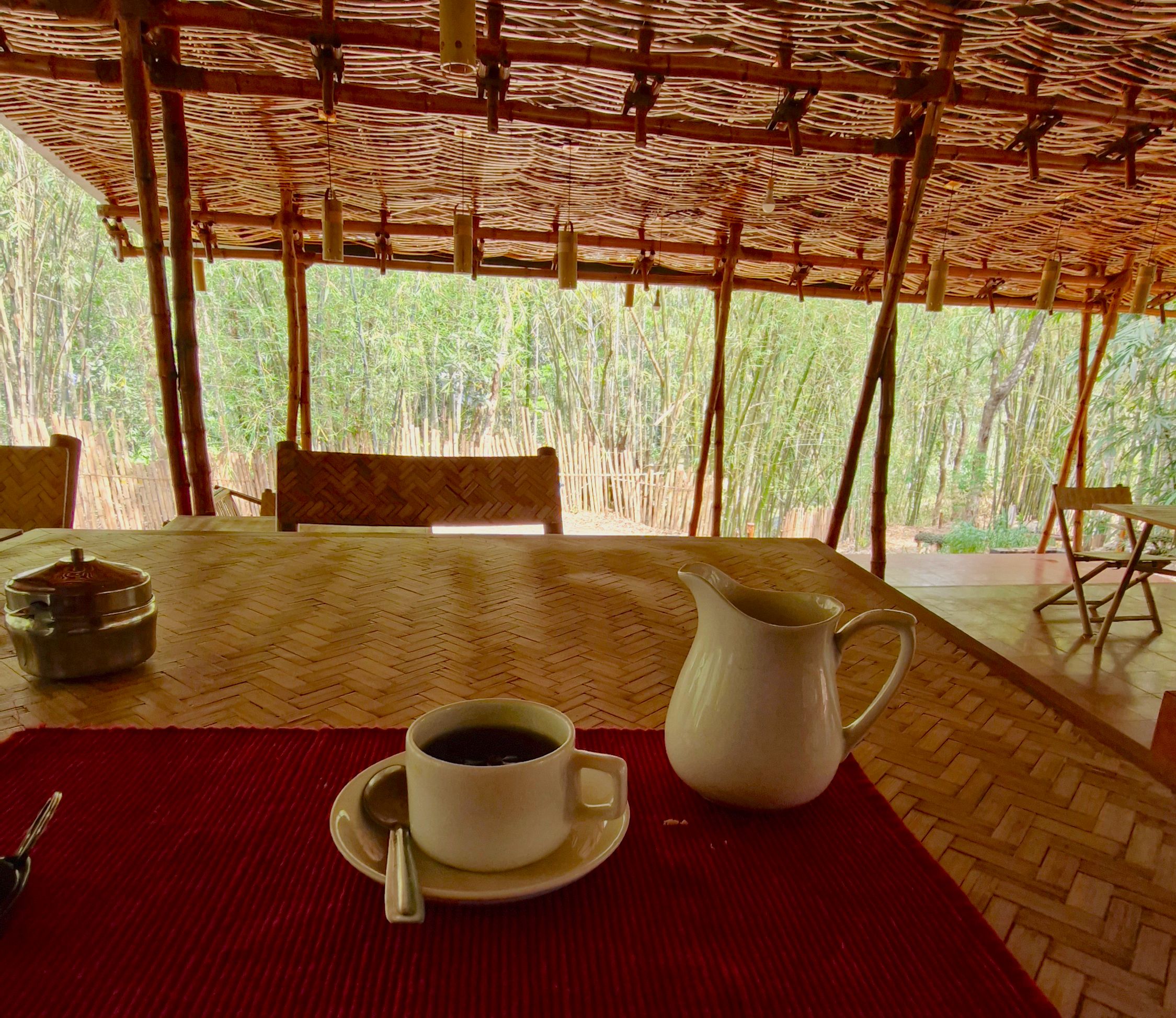 The morning dopamine boost
The Wayanad coffee that followed — dark, faintly earthy, the kind of single-estate bitterness that asks you not to add anything — arrived in a cream white ceramic pot without ceremony, the way the best things often do. The world had somewhere to be. We, for once, did not.
We had decided early that Wayanad's more trafficked offerings — the waterfall circuits, the Chembra Peak queues — were not what we had come for. This was not snobbery. It was an acknowledgment that some places give more when you ask less of them.
So we walked.
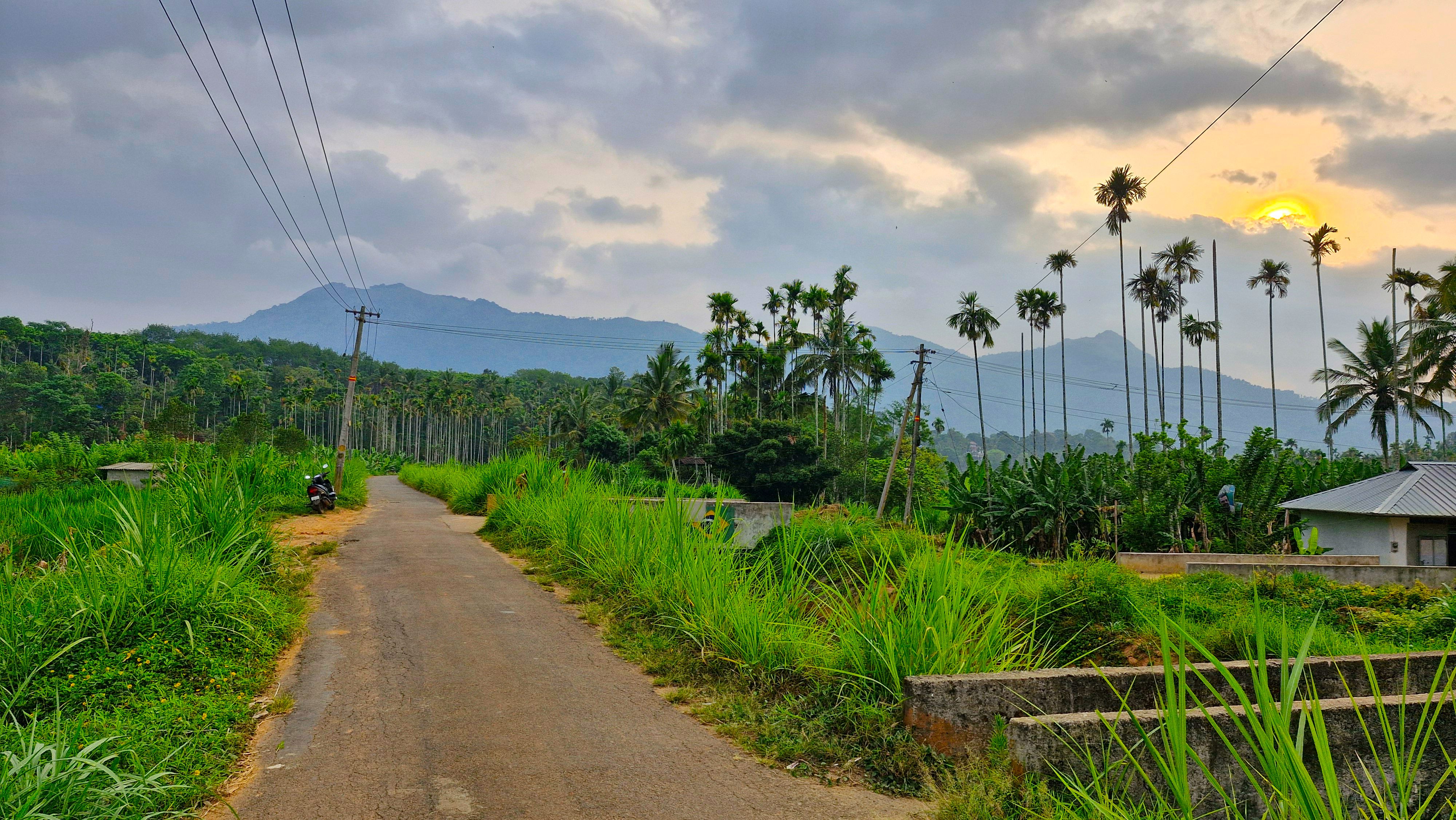 The inner corners of Wayanad
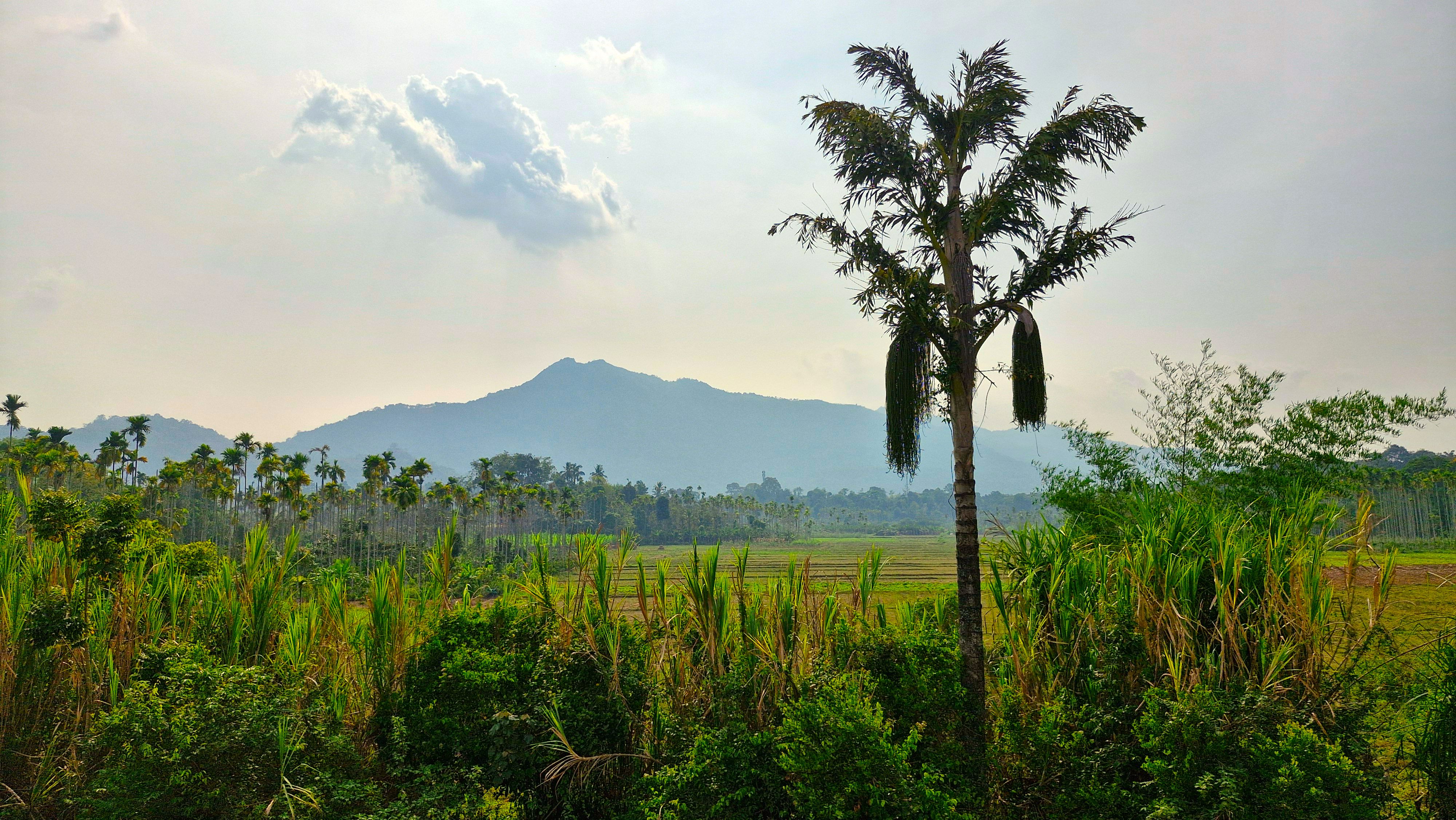
The lanes around Thrikkaipatta move through areca palm farmlands and tea plantations that gradient from pale yellow-green at the field edges to something almost black-green in the deeper canopy shade — the light doing its slow arithmetic through each successive layer of leaf. In the workshops of the Uravu Bamboo Cluster — a community enterprise that has spent decades researching bamboo as a building material, a livelihood, an alternative to what gets cut down — craftsmen bent and split and shaped with a precision that had nothing hurried about it.
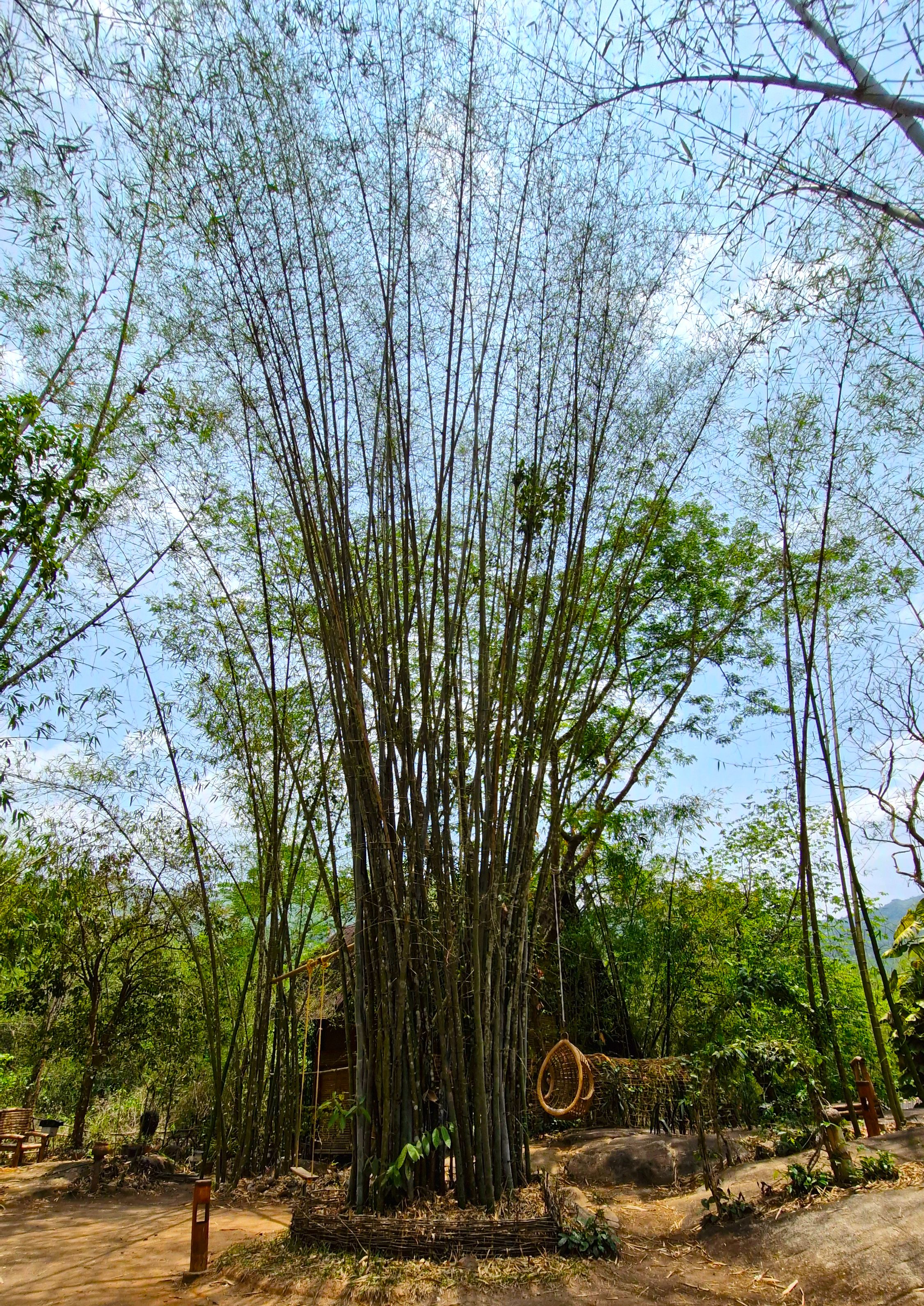 Bamboo plantations in Uravu, Wayanad
A half-finished chair leaned against one wall. A roll of woven bamboo matting sat in the corner, ready to become something else. The air smelled of cut wood and concentration. Nobody was performing. The workshops were working, and we were simply present inside them.
This is a different kind of sightseeing. It asks more of you and returns more in kind.
Slow travel earns its name not in grand gestures but in the accumulated weight of unhurried hours. Walking these lanes with no destination and no departure time pressing, I noticed how rarely I move through the world without a purpose in ordinary life. The legs know what they are doing. The mind, given nothing to manage, eventually quietens. It took most of the morning. But it happened.
Sunsets in places like this are not optional.
Karapuzha reservoir is known locally for the activity park on its main bank — paddleboats, giant swing, small crowds, the usual weekend energy. Cross the dam gate to the far side, though, and the landscape shifts register entirely. The crowd disappears. The water opens out, wide and still, the surrounding hills closing the frame with the quiet assurance of something composed rather than discovered.
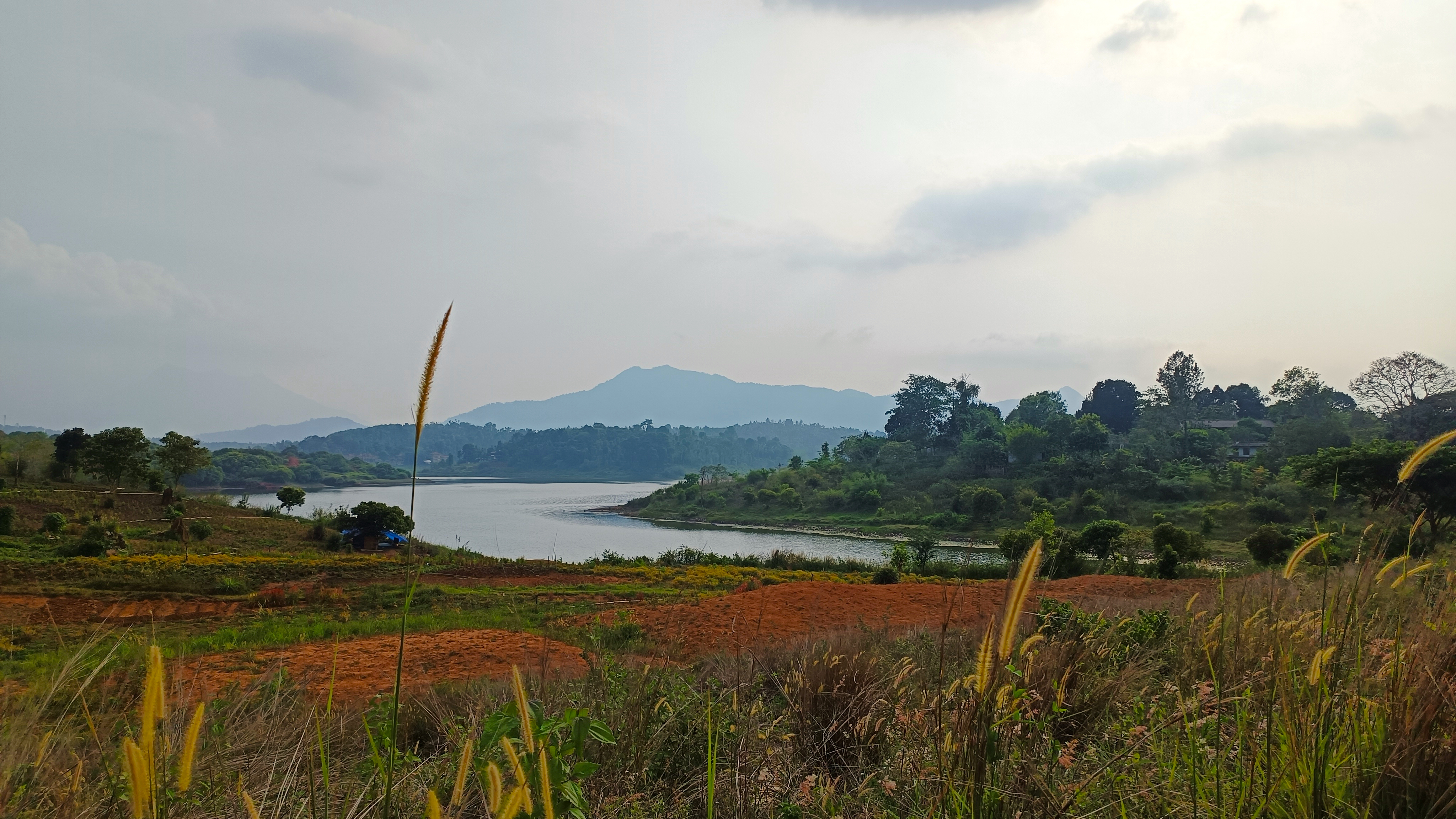 Sunset spot at Karapuzha Dam, Wayanad
The paddy fields between the waterline and the treeline in distance catch the late light differently — warmer and more amber than everything around them, as though the grass itself is generating heat from the inside out.
That evening, the sky didn't perform. The clouds sat low and the light diffused early, spreading flat across the reservoir without drama or declaration. We stayed anyway. A muted sunset over still water has its own quality — less spectacle, more company. The hills held their shape as the light went. The reservoir kept its reflection regardless of what the sky was doing.
There is something clarifying about a landscape that has no interest in impressing you. It simply continues. We drove back in the early dark, quieter than we had left.
Not every meaningful moment announces itself while it is happening.
The man who stopped in the dark of Nagarhole did not stop because it was remarkable. He stopped because it was right. The stone outside the cottage did not promise a practice — it was simply there, and we were simply ready. The meal under the bamboo thatch was not designed to be remembered. It was made to be eaten, in that place, that evening, after that particular day.
Wayanad entered our trip uninvited, through a blown tyre and a stranger's quiet kindness. It gave us forest mornings and a meal we still talk about and walks that led nowhere worth photographing and a sunset that didn't bother being beautiful. It gave us exactly what slow travel is supposed to give and rarely does: the sensation of time moving at a pace the body was built for.
Some of what the road offers arrives quietly.
Like help on a dark road.
Like stillness after fear.
Like a district you never planned to visit becoming the part of South India you remember most.