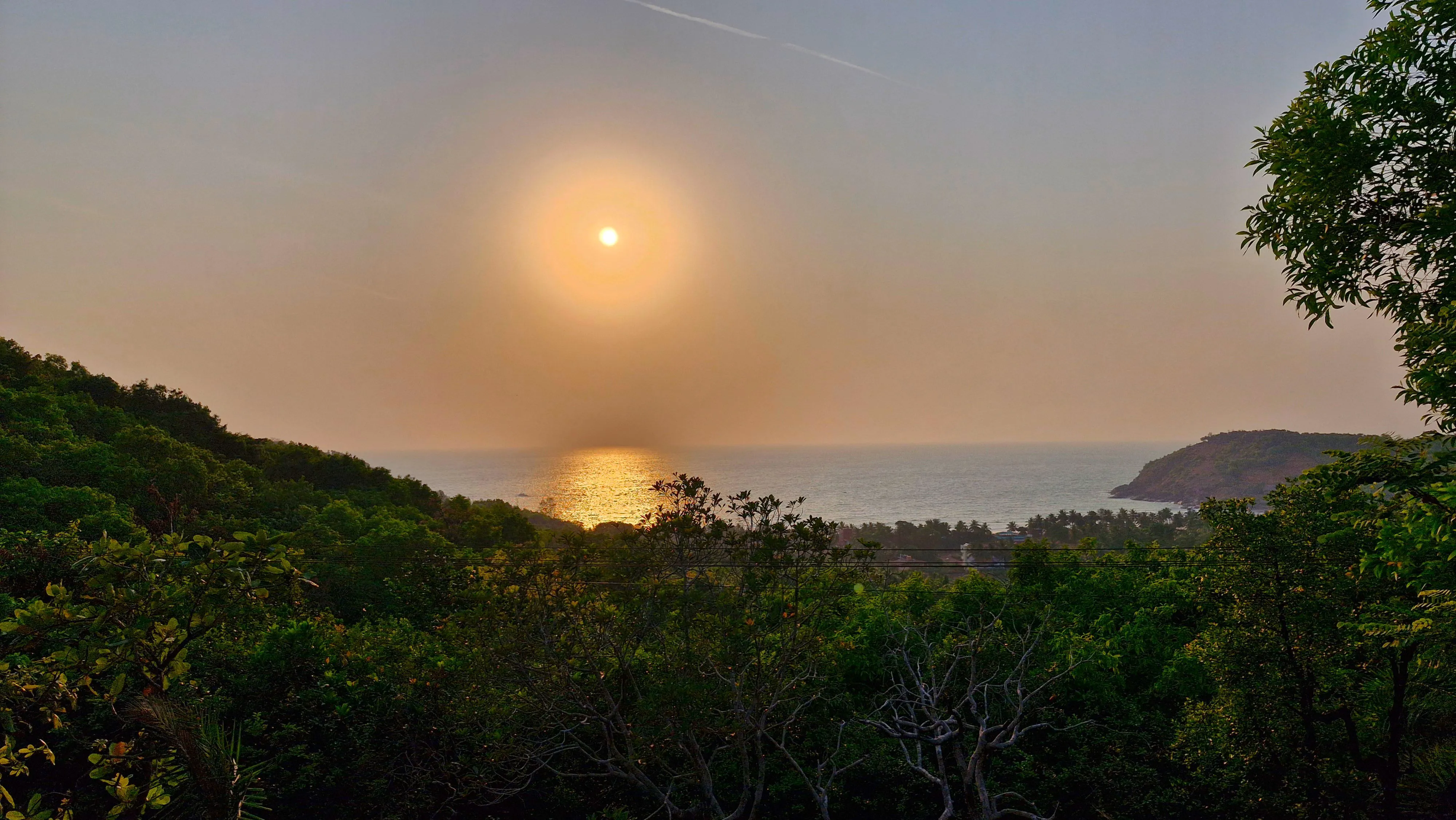
27 Apr, 2026
Last Updated: 03 May, 2026
Modern urgency felt briefly absurd after leaving Hampi — from its boulder-strewn silence, its ruins that make . The stone there does something to you. It slows the internal clock. And so by the time we turned the car westward toward the coast, we were already in a different gear. Not on holiday. More like: finally paying attention.
The plan for this leg was, deliberately, no plan. We were mid-journey through southern India — Hampi behind us, Kerala still ahead — and coastal Karnataka was the stretch we'd always bypassed on the way to somewhere more Instagrammed. Not this time.
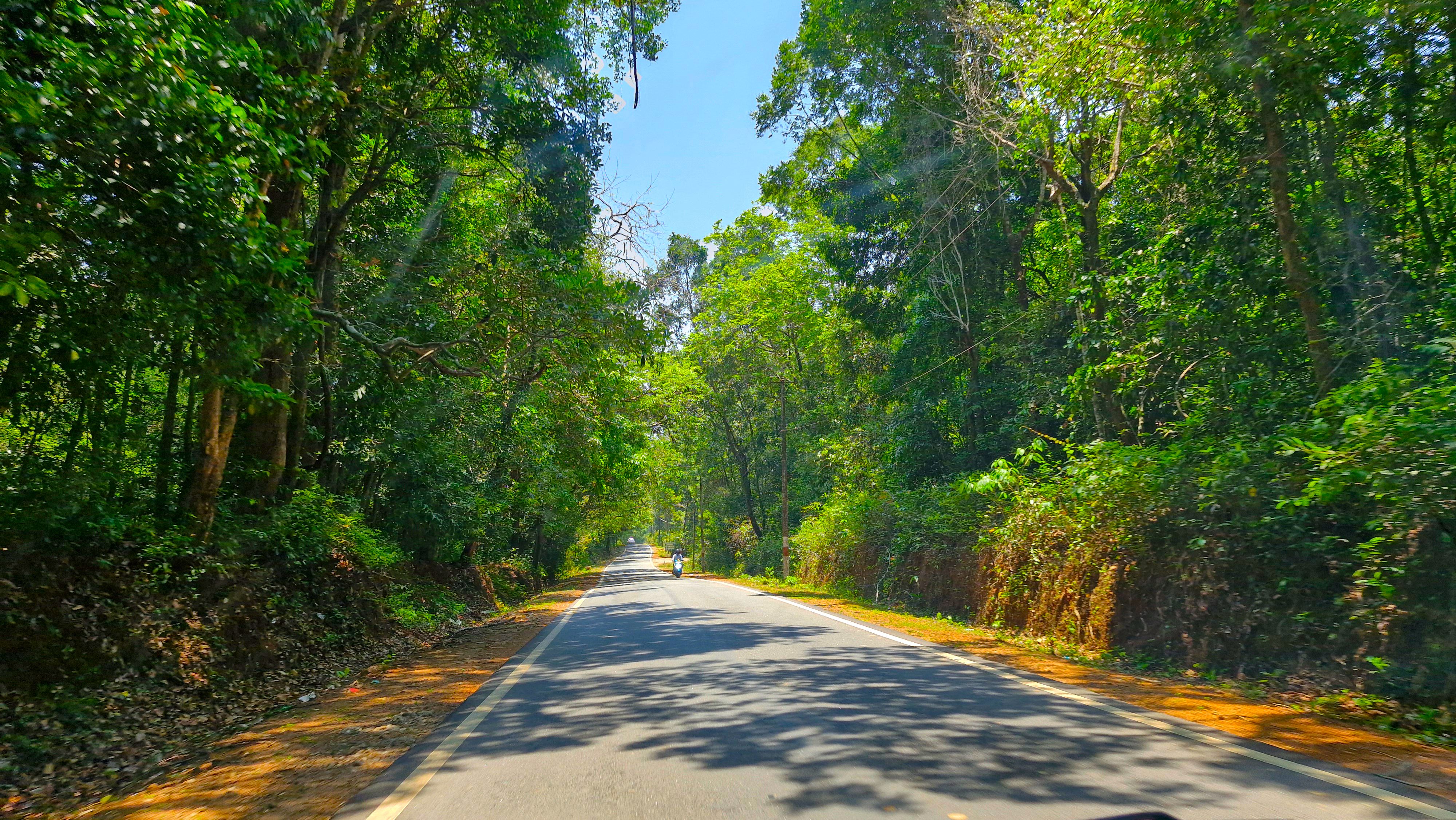 The Western Ghats section
We crossed the Western Ghats through NH-67 and NH-52, past Hubbali, through forest sections and ghat curves where the April heat felt almost tolerable — a combination of altitude, canopy, and roads smooth enough to forget you're in a car at all. Coconut water stops at frequent intervals to upkeep the electrolyte levels. The windows down. And a long drive playlist playing in sync with the incoming wind.
This is not a list of places to visit. It's an argument for a different kind of travel — one where the point is to arrive somewhere inside yourself, not just somewhere on a map. If you work in Bengaluru, if your weeks are calendared within an inch of their lives, if you've forgotten what it feels like to sit and watch the sea without photographing it — the NH-66 coastal Karnataka road trip is your prescription.
We pulled into Gokarna in the afternoon, announced by areca palms and coconut trees crowding narrow lanes, everything leaning slightly toward the sea as if in agreement.
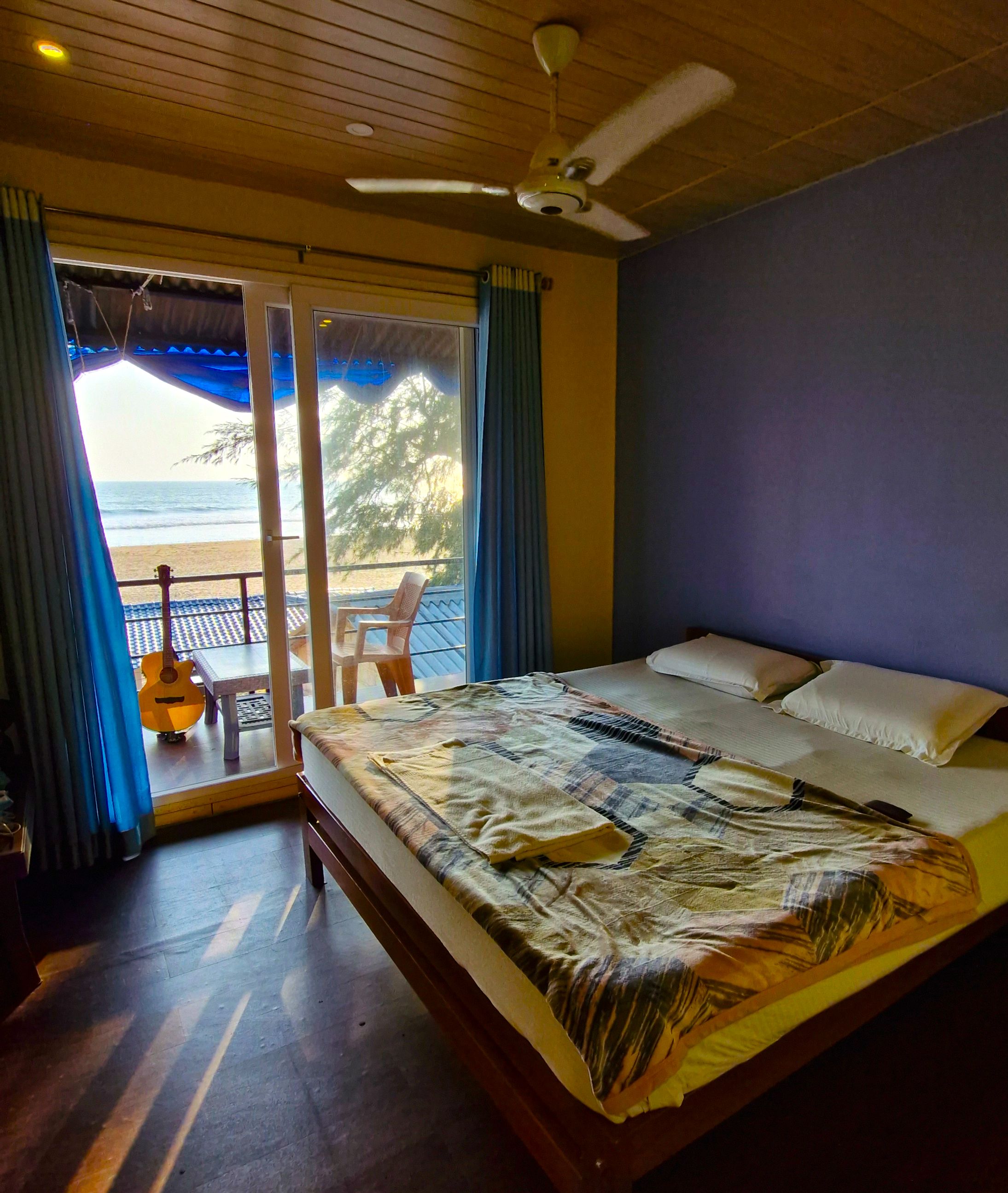 The sea-facing room at Gokarna beach
We'd made one deliberate choice: stay near the main beach, away from the backpacker circuit. Off-season meant we got a room with a balcony directly over the water — a view of the Arabian Sea framed by palms, a sea breeze adequate enough that the AC stayed off all night. This is the kind of accommodation that feels dishonest. Too good for what you paid.
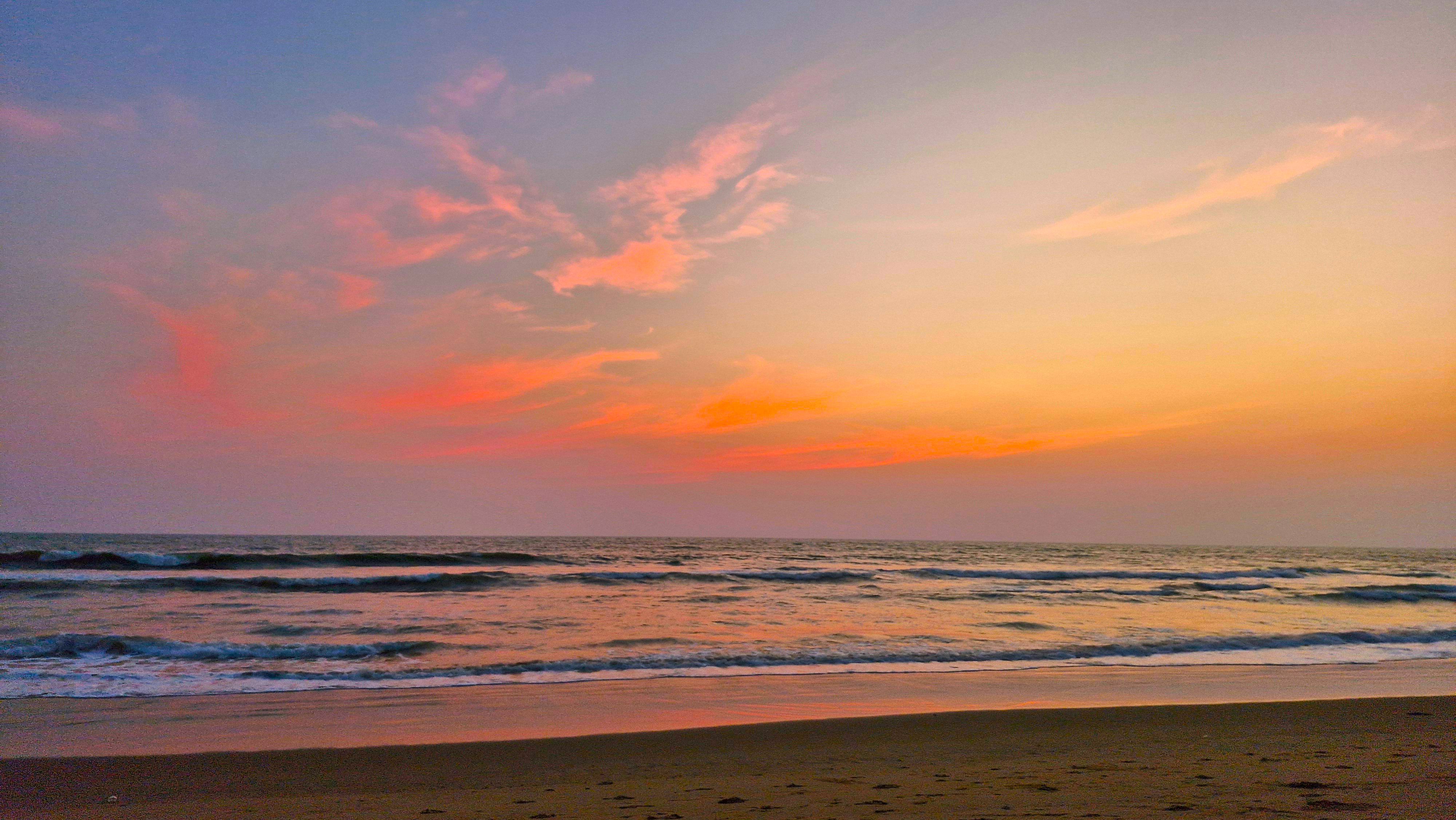 The sunset hour at Dubbansasi Beach, Gokarna
The first evening, we had the entirety of Dubbansasi Beach to ourselves. Just us, a couple of dogs who had made us their project — following at a precise distance, not close enough to be shooed, not far enough to be ignored — and the sky doing something extraordinary. That hour-long gradient shift that coastal skies specialize in: deep blue bleeding into orange, orange conceding to something bruised and borderless, the colour that doesn't have a clean name because it only exists for about eleven minutes and nobody's ever agreed on what to call it.
The moon that night was full. It didn't rise so much as assert itself — taking over from the darkening sky with the authority of something that has been doing this for longer than the shoreline has been where it is. The stars that had just begun to show thought better of it.
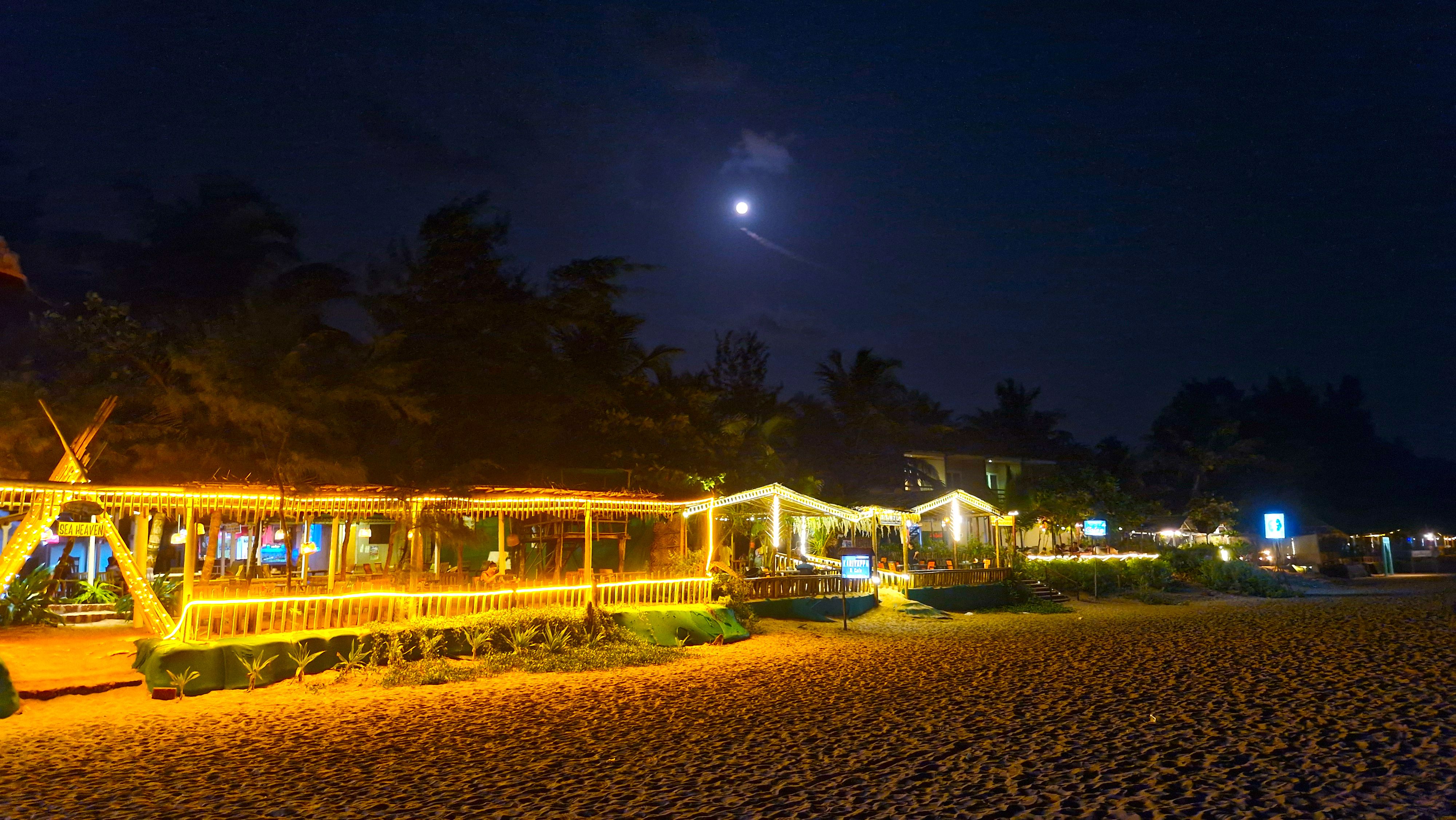 The full-moon guarding the beach
One by one, the shacks along the waterline lit up. Bare bulbs and led strips mostly along the shed linings, strung at the height of a tall man, swaying when the breeze came off the water. We wandered toward the nearest one — a small operation, the kind where the menu is shorter than it looks because half of it depends on what came in that morning. A local couple ran it. No amplified music. This sounds like a minor detail. It wasn't. The silence — or rather, the presence of only the sounds that belonged there — was a relief more profound than it had any right to be.
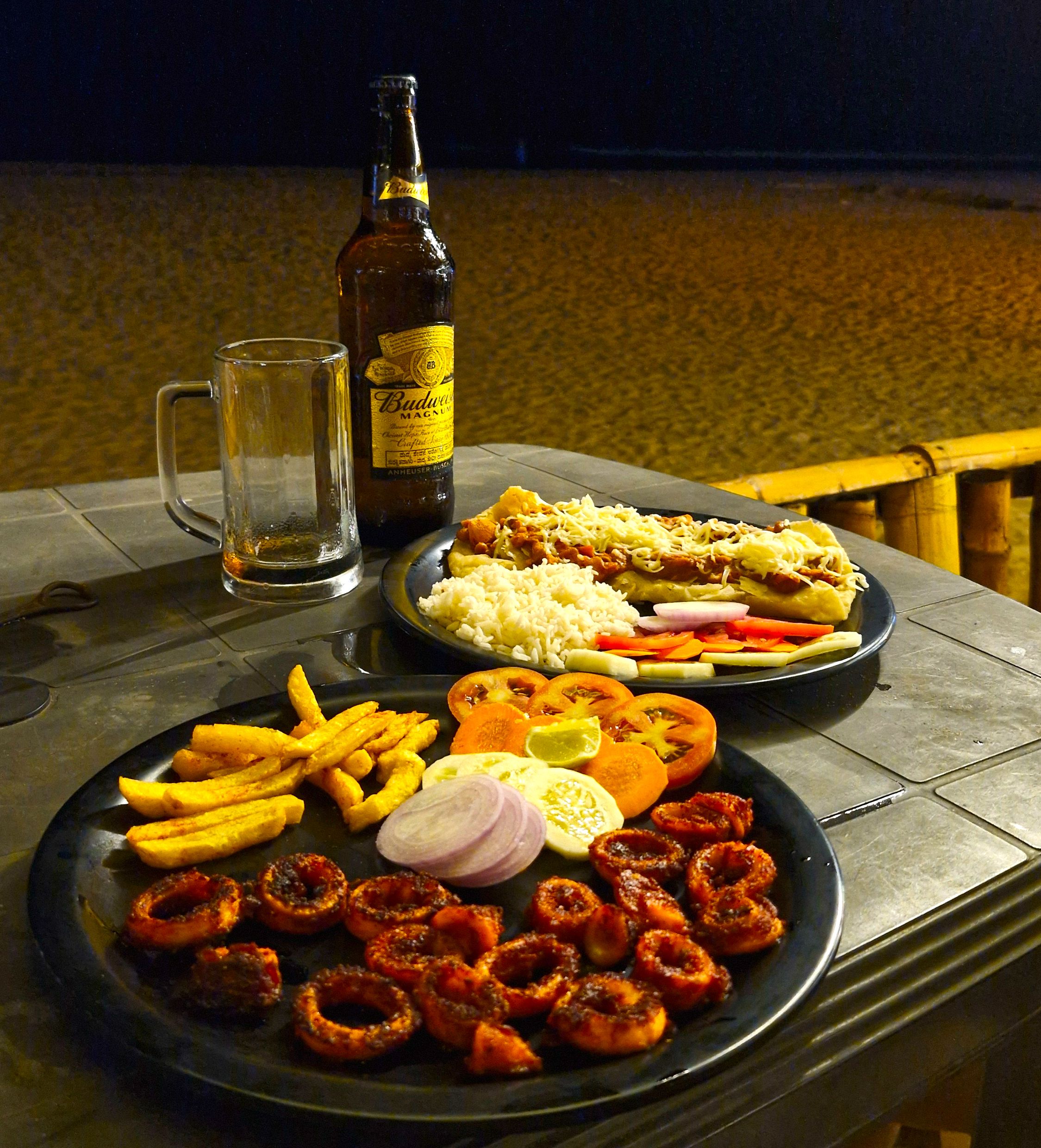 Dinner by the beach, Gokarna
The barbecue smoke found us before we found our seats, threading through the salt air like it had somewhere specific to be. The calamari masala arrived drenched in southern spices, still spitting. The lager was cold in the way that lager only gets when it's been sitting in ice and you've been walking in heat. The moon laid itself across the waves in a long, trembling line that pointed, with suspicious specificity, directly at our table.
There is a popular version of Gokarna that involves five-beach cliff hikes, adventure water sports, and a to-do list that starts at sunrise. We bypassed all of it, without guilt.
The slow morning began the way slow mornings rarely do — with a knock past 11am, the manager at the door with fresh coconuts from his own farm. Sweet in every sense: the gesture, the timing, the water itself, cold and clean in a way that bottled things never quite are.
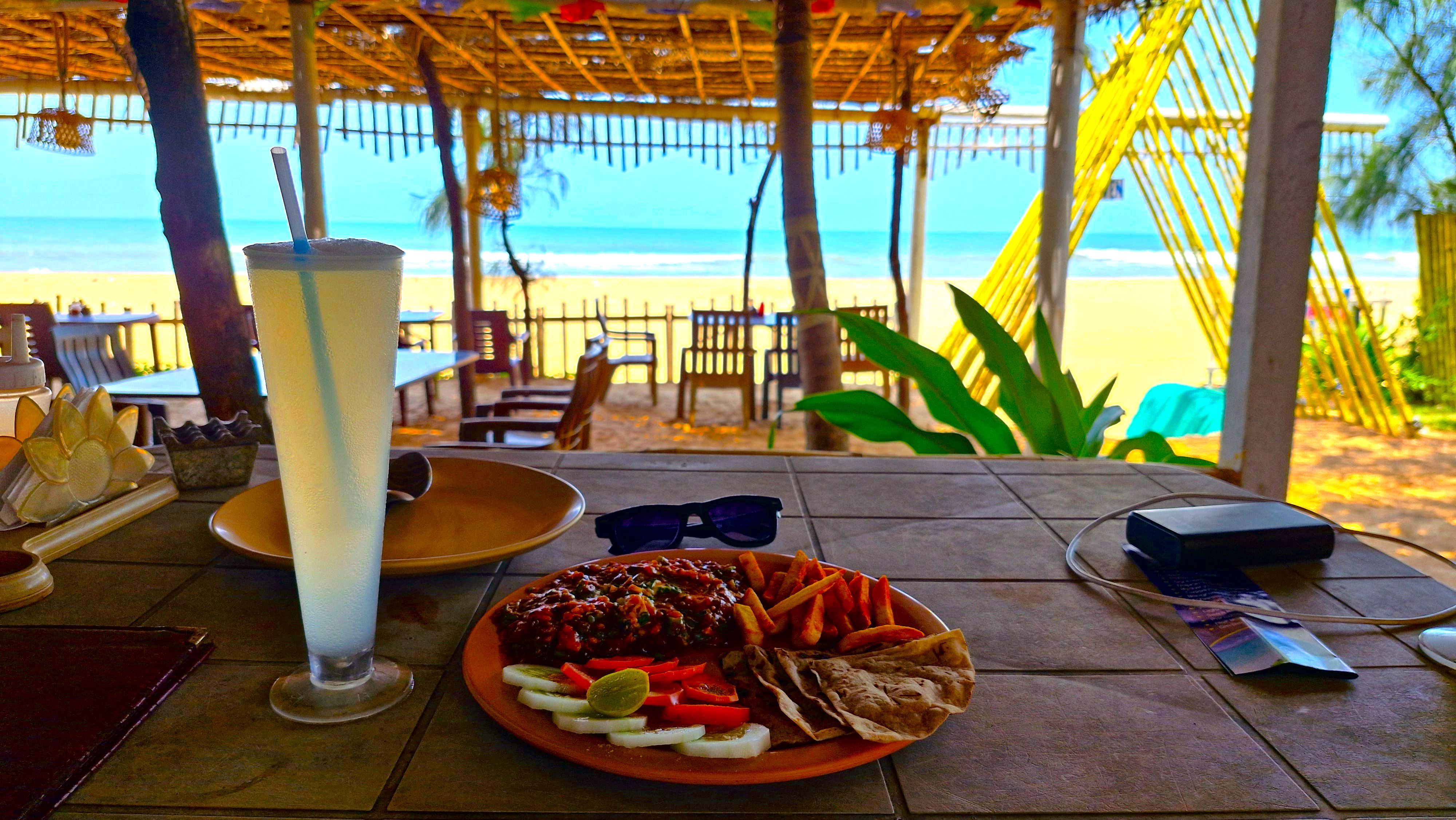 The slow morning brunch at a shack, Gokarna
We took our time getting anywhere. The noon sun made the decision for us — not the beach, not the cliff road, just the bamboo shack adjacent to the hotel, where the salty breeze came in at intervals like something the coast was offering on its own schedule. Brunch arrived. A drink followed. I was sitting in a beach chair on a Tuesday, salt in the air, nowhere to be until tomorrow, and I was — there is no more honest word for it — romanticising the moment as it was happening.
Then a local woman walked across the sand.
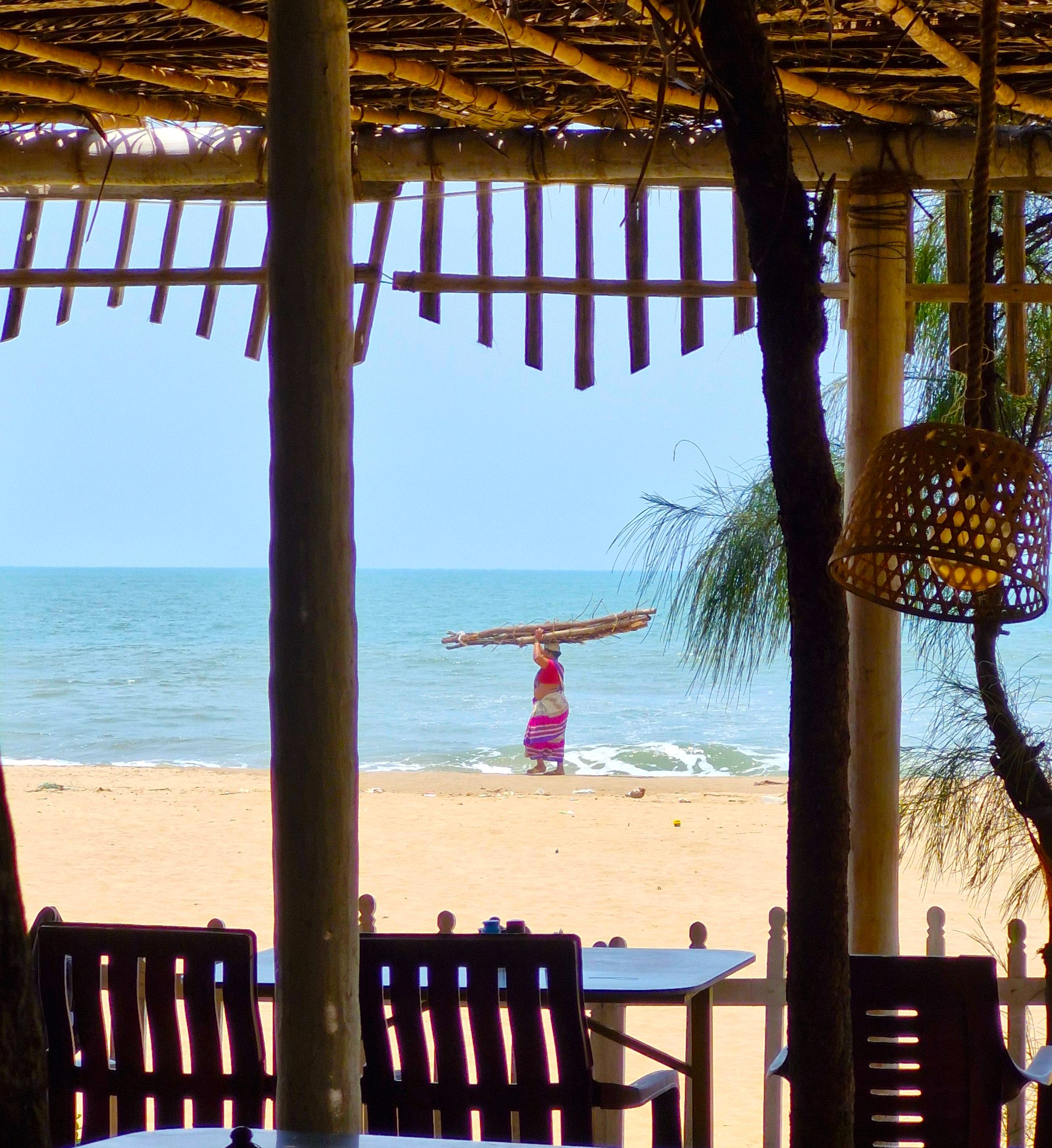 Daily life of the locals, Gokarna
She was in her fifties, maybe older, carrying a bundle of firewood on her head, walking with the straight-backed efficiency of someone who has done this ten thousand times. The overhead sun that had sent us indoors didn't register on her face as anything requiring acknowledgment. She wasn't struggling. She wasn't performing hardship. She was simply going about the business of her day — which happened to pass directly through the foreground of my postcard.
I stopped mid-sip.
Slow travel, I realised, is a philosophy available only to those with the privilege of choosing their pace. The coast doesn't offer restoration equally. It simply offers itself, and we each take from it what our lives allow.
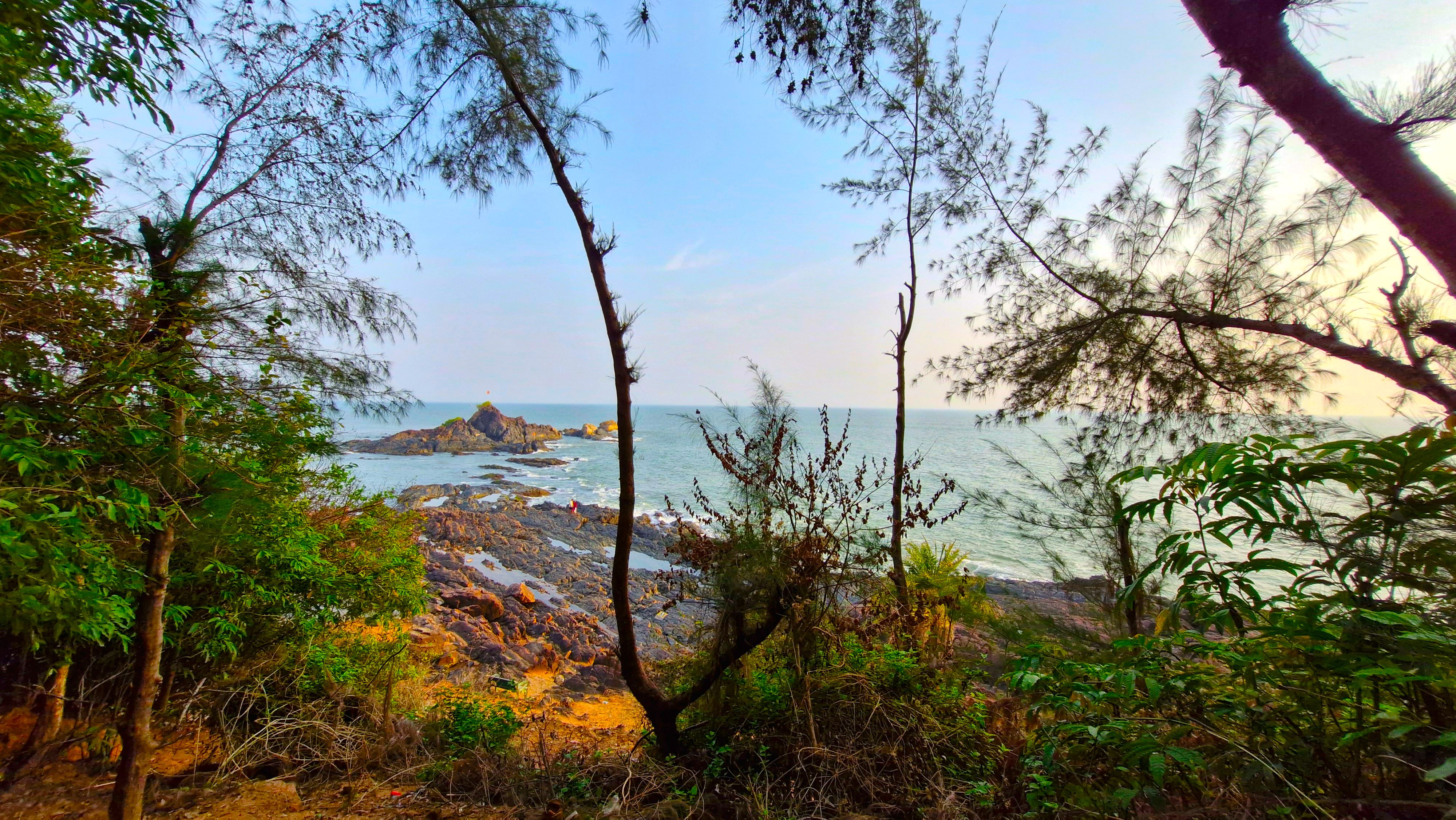 Om Beach, Gokarna
By late afternoon, when the temperature had softened its grip, we drove the cliff road through the forest to the vantage above Om Beach. The rock formations jutting from the water below form a composition that photographers love and painters understand — the sea arranging itself around the immovable. There's something clarifying about an object that simply absorbs every wave and stays. Kudle Beach at dusk, dinner at a café above the water, the last of the orange sky.
That was our version of beach-hopping. Two beaches. Done slowly.
We left Gokarna with an adequate dose of the sea in us — but the coastal Karnataka road trip on NH-66 keeps giving before it lets you go inland.
Murudeshwar appears at the precise moment you need a reason to stop.
The town doesn't build toward anything — there's no gradual accumulation of signage or traffic that prepares you. One moment you're on the highway, areca plantations scrolling past on both sides, and then the road bends and there it is: the gopuram rising above the coastline with the blunt confidence of something that has never once considered whether it belongs. Behind it, the Arabian Sea. Ahead of it, nothing worth mentioning.
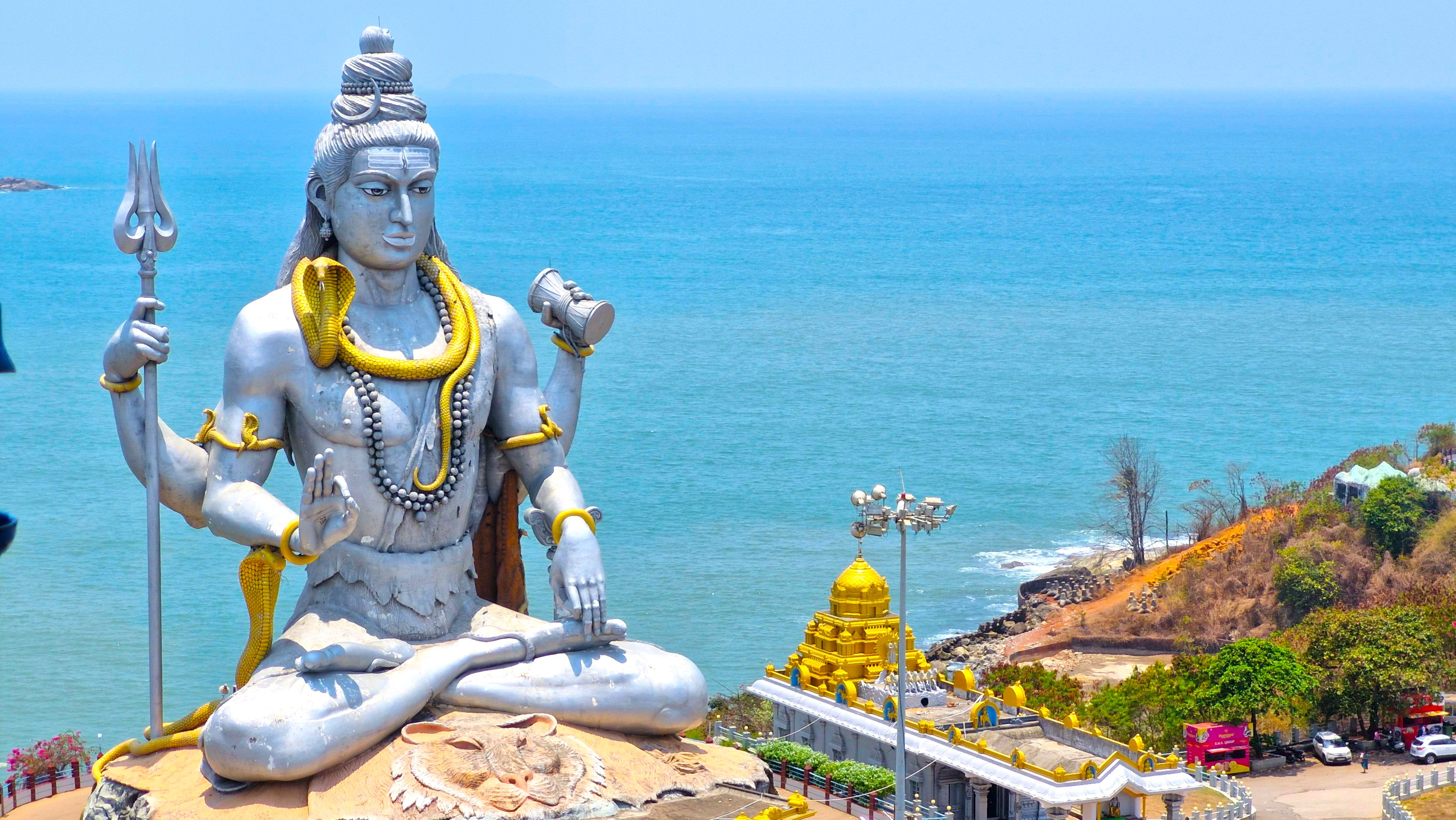 Shiva Temple, Murudeshwar
The Shiva temple sits where the land surrenders entirely to the water — not gradually, not apologetically, but at a clean edge, as if the land simply ran out of argument. The statue of Shiva rises above everything else, facing the sea, the scale of it only becoming legible once you find a human figure to measure it against.
And the water here earns its setting. A deep, saturated sea-green so vivid it reads almost as deliberate — the kind of colour that makes you distrust your own eyes briefly, the way you might question a painting that's gotten something too right. It is not the flat blue-grey of open ocean. It is not the murky, churned green of harbours. It is something specific to this stretch of coast, to this hour, to the particular way the light comes off the Western Ghats and meets the water at this precise latitude. As if the ocean, aware of what stands above it, were making an effort.
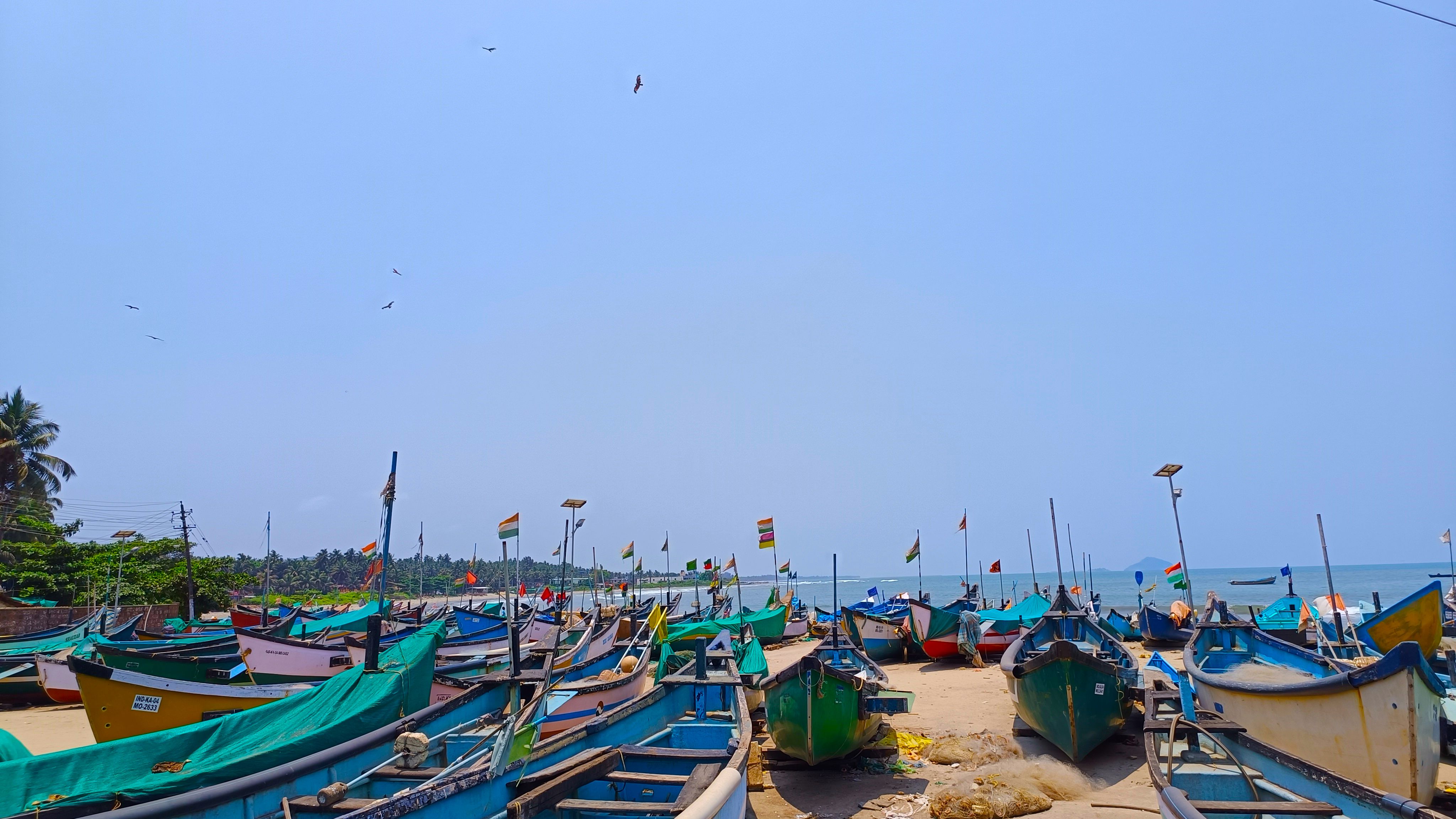 The fishing boats lined on the Murudeshwar beach
Fishing boats lined the coast below, their hulls bright against the water, daily life continuing without ceremony around one of Karnataka's most sacred sites. That collision — the divine and the quotidian sharing the same shoreline — is what earns the stop. Climb to the temple top: the coast curves away in both directions, the enormous Shiva statue rising above it all, and scale reasserts itself in the way it only can beside something genuinely vast.
Maravanthe we kept in motion. NH-66 here runs a narrow corridor between the sea on one side and the Souparnika River backwaters on the other — the stony boulder beach pressed right up to the tarmac, waves crashing in parallel with the car's speed. It is a section that asks nothing of you except to keep moving and stay present. We did both.
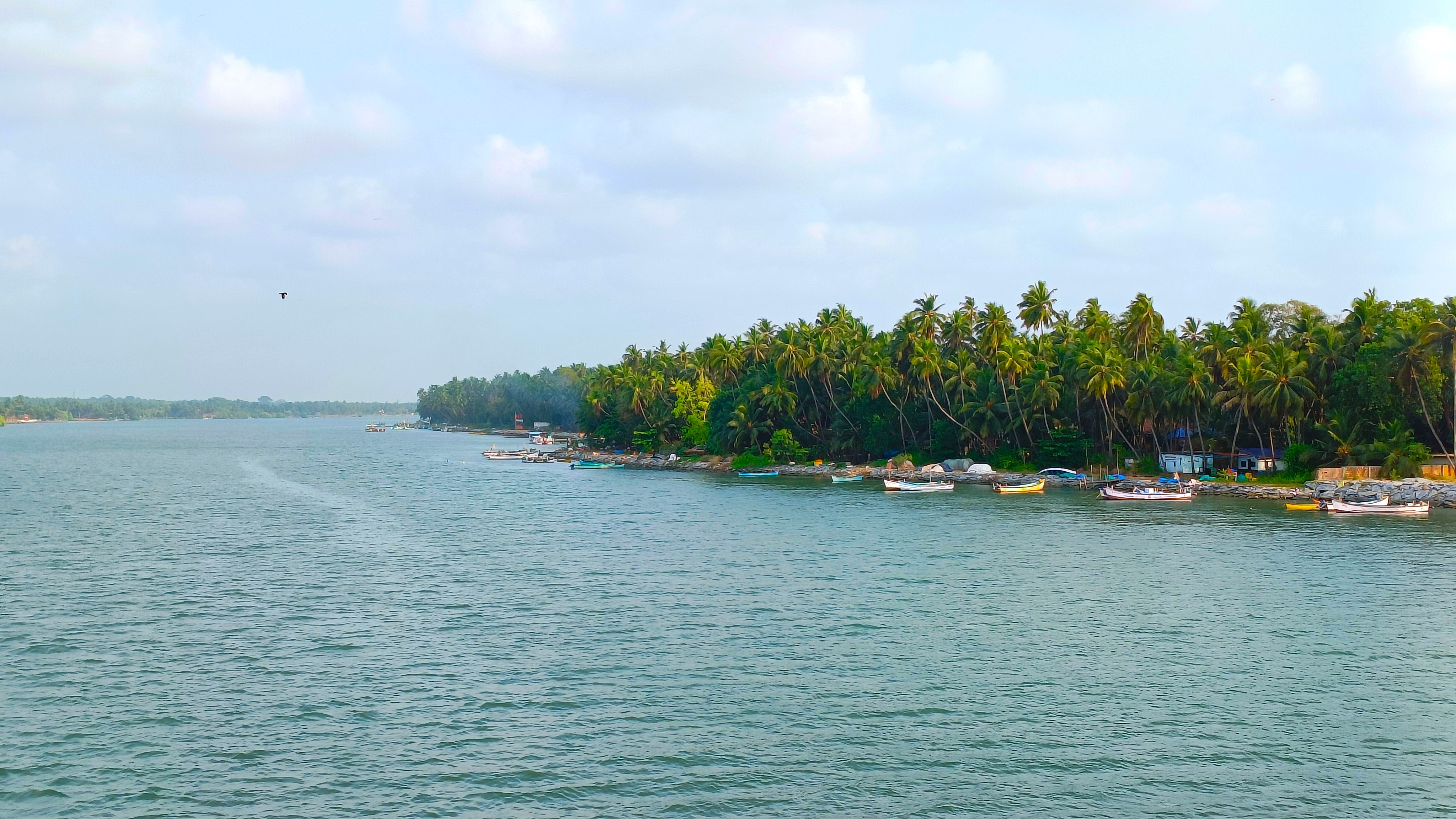 Suvarna River, Udupi
Then Udupi, announced by the crossing of the Suvarna River and the sudden appearance of fishing boats — enormous, painted in the bold primary colours of fishing communities everywhere — moored along the inlet as if in committee.
The road most visitors skip is the narrow fishery lane running through the villages behind Malpe and Mattu beach. Both sides lined with coconut palms; the beaches they lead to are unnamed, uncluttered, without the infrastructure of fame.
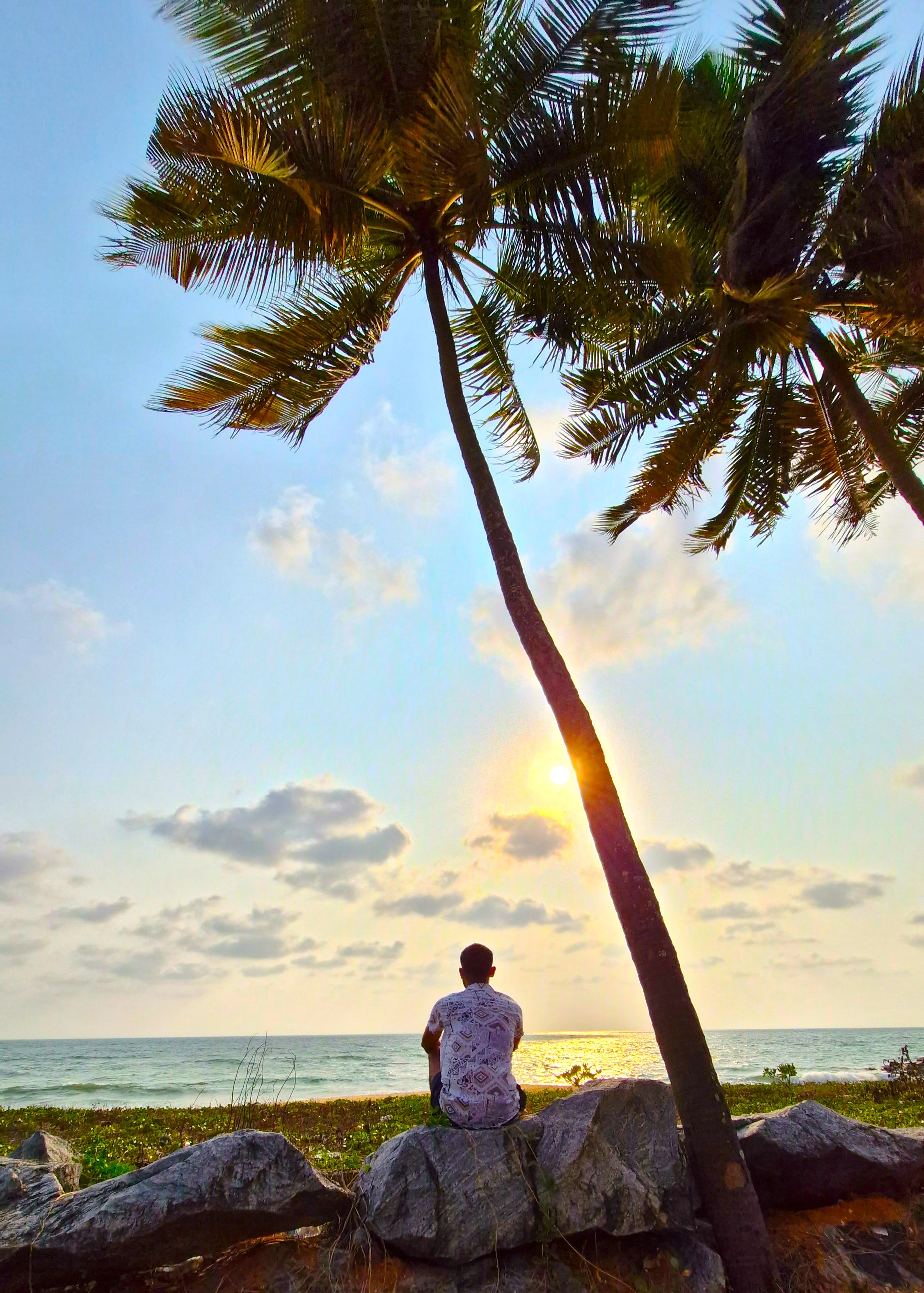 Quiet moments by an unnamed beach stretch, Udupi
I stopped at one such stretch — no sign, no shack, no designation — and sat for a while. This was, unexpectedly, the trip's most clarifying hour. We do this constantly, I thought. We collect the named places, the ranked lists, the geotagged coordinates — and drive past the thing itself, which is usually something quiet and unlabelled.
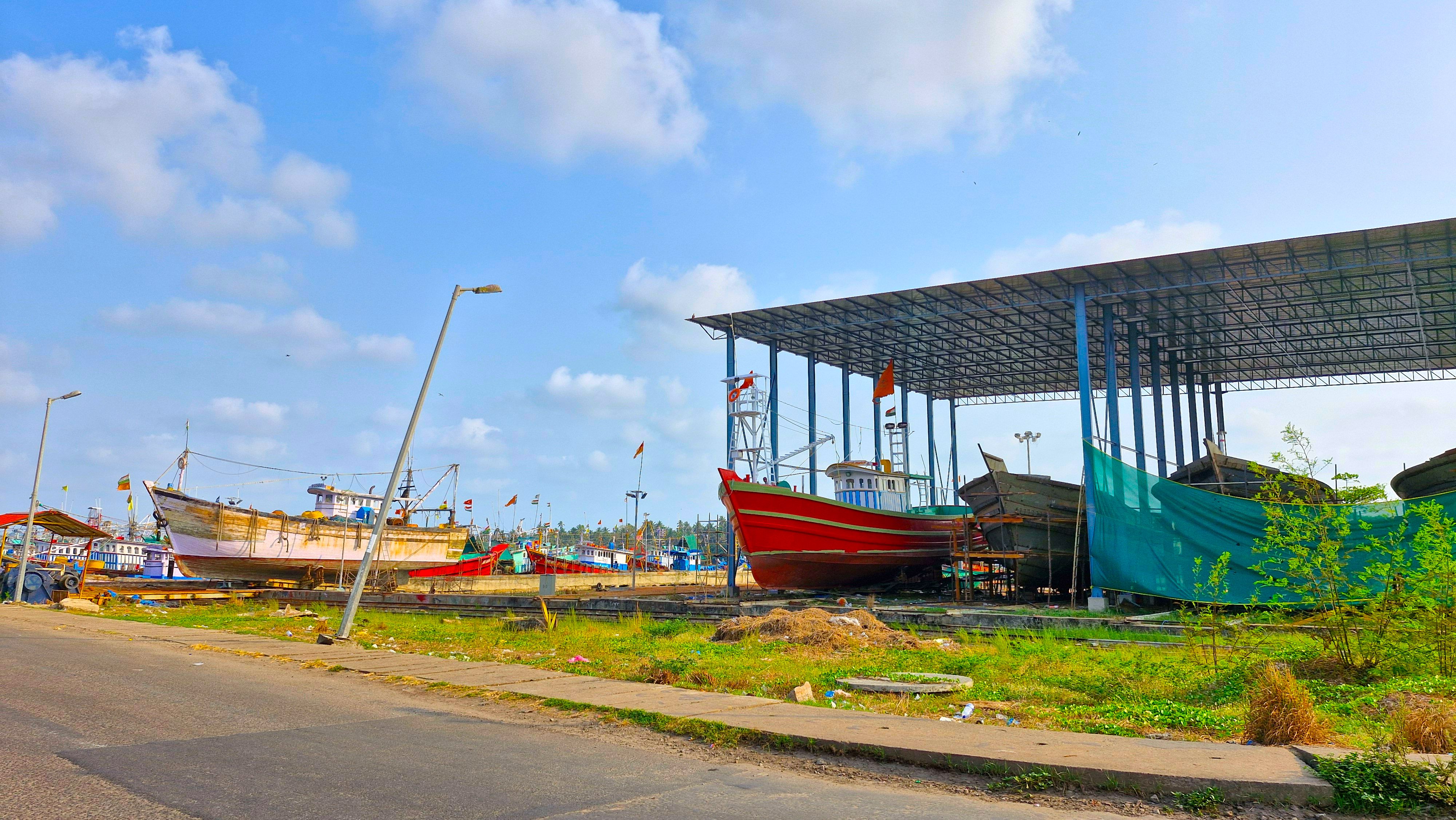 Fishing vessels at Udupi Port
Back at the Udupi port, where the colored fishing boats sat heavy and idle in the inlet after a day's work waiting for the next ride, I got talking to one of the local fishermen. Between his broken English and Kannada mix, something came through clearly: he mentioned the World Bank's investment in this coastline — the SHORE programme, a sustainability initiative aimed at protecting fishing communities and the ecology they depend on.
He said it with a quiet pride, the way someone speaks about something they didn't ask for but are glad, it exists. Standing at the water's edge, listening to a fisherman describe a programme designed to secure his livelihood and the hope for the future generations, I felt the particular hopefulness that arrives when development and preservation are, for once, on the same side. It is not a feeling coastal India delivers often enough.
Our Airbnb host — a man in his forties with the particular authority of someone who has personally witnessed too many guests photograph the wrong sunsets from the wrong beaches — had one instruction for us: Kaup. Before dinner. Don't be late.
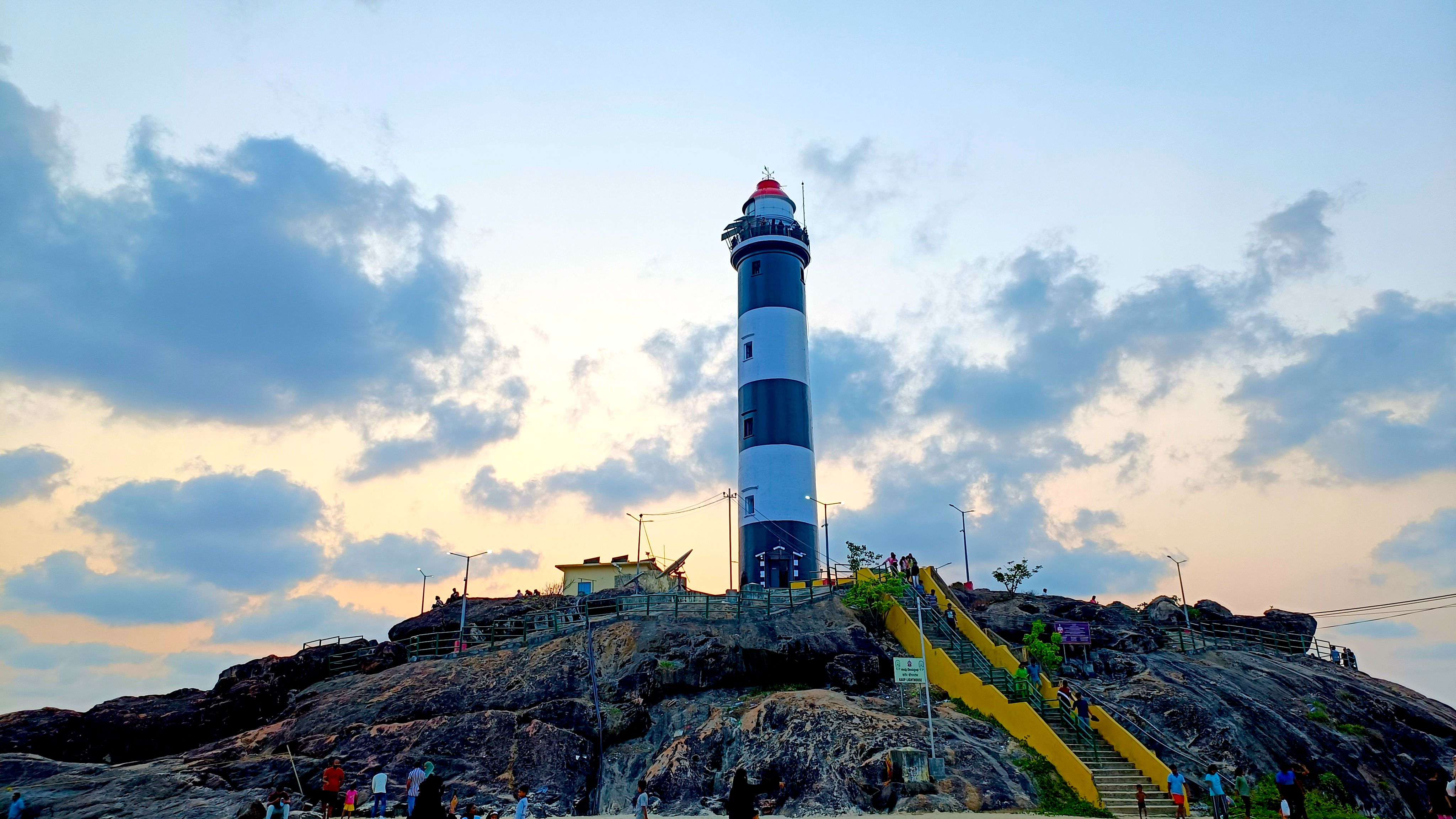 Light House at Kaup Beach, Udupi
The lighthouse doesn't announce itself. It just stands there at the edge of the headland, old and salt-worn. The stairs corkscrewed upward in the way of old lighthouse staircases — narrow enough that two people going opposite directions have to negotiate, each step worn to a slight concavity by the ten thousand feet that preceded yours.
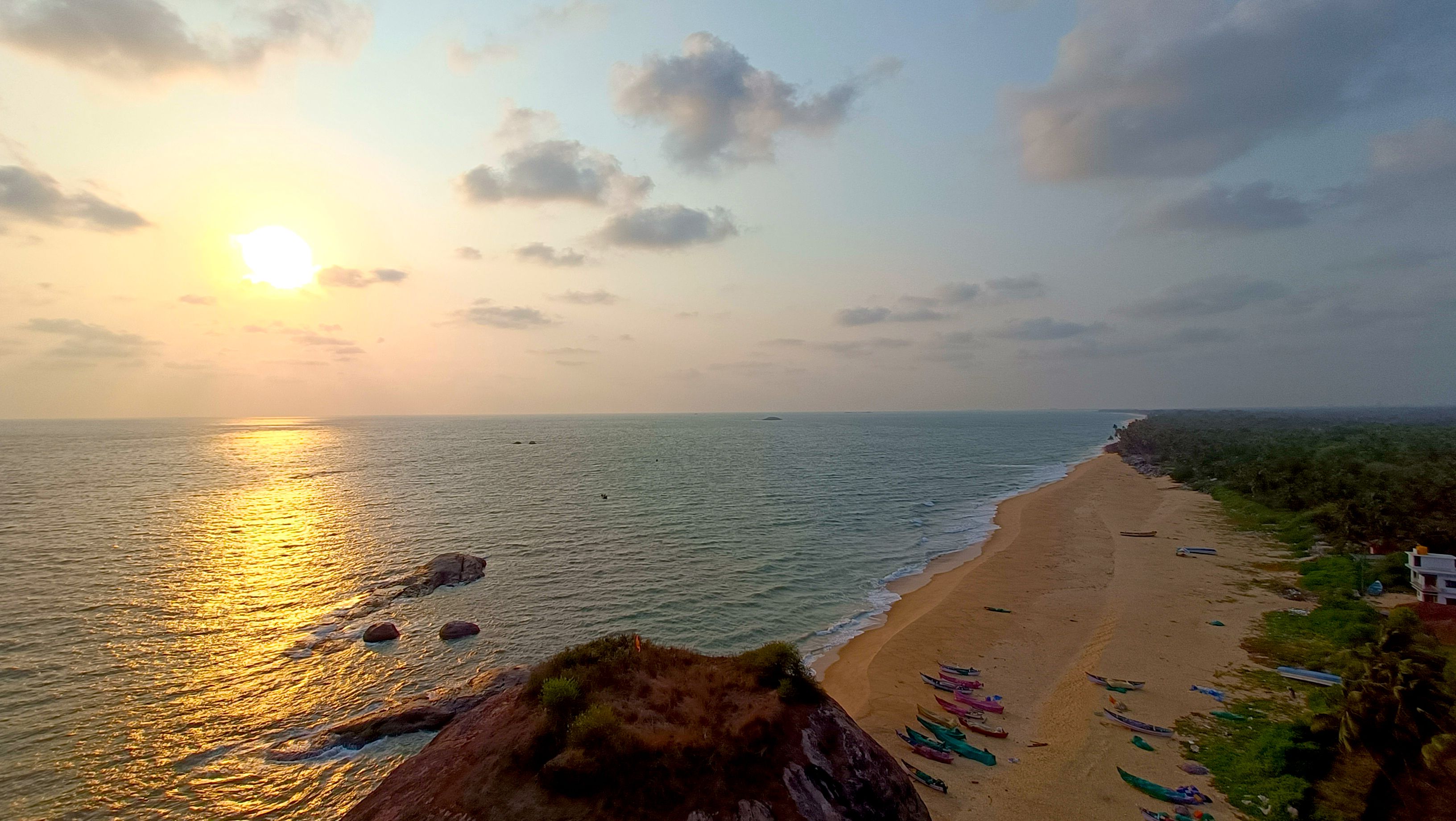 Bird's view of sunset from Light House, Kaup Beach, Udupi
At the top, the view takes a moment to organize itself. Areca palms packed tight on one flank, their crowns swaying without apparent reason. On the other, a lagoon that had stopped being blue somewhere around five o'clock and was now the colour of a melting coin. Beyond it, the Arabian Sea was doing what it always does at this hour — arriving in long, low walls of water that caught the last of the gold on their faces before collapsing into white against the drenched sandy beach, the sound reaching us a half-second after the sight, slightly out of sync, like a film with a loose reel.
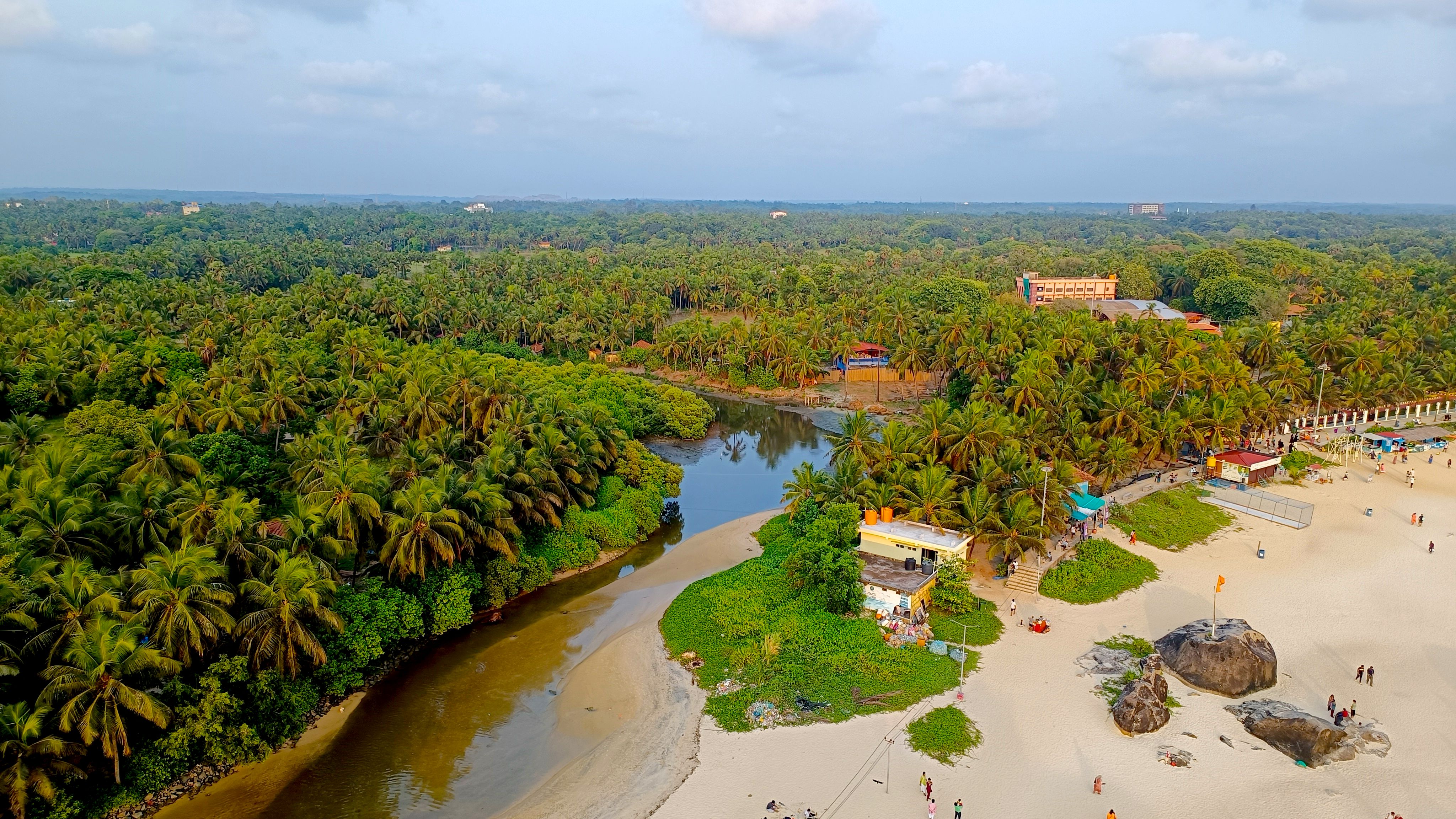 Kaup beach lagoon
The brackish lagoon had gone still silver by the time we reached the top. Not glittering, not shimmering — those are tourist-brochure words. Silver the way old mirrors go silver: a little cold, a little still, holding the sky's last warmth in a way that looked borrowed.
Crowd and all, the sky did not disappoint.
The first sign was the crowd at Machali Restaurant. Every table taken, almost entirely locals — no tourist menus in sight, no concessions to an outside audience. In any food culture, this is the only review that matters. We waited fifteen minutes for a corner table, standing near the entrance while the aroma from adjacent plates made patience feel like a personal failing.
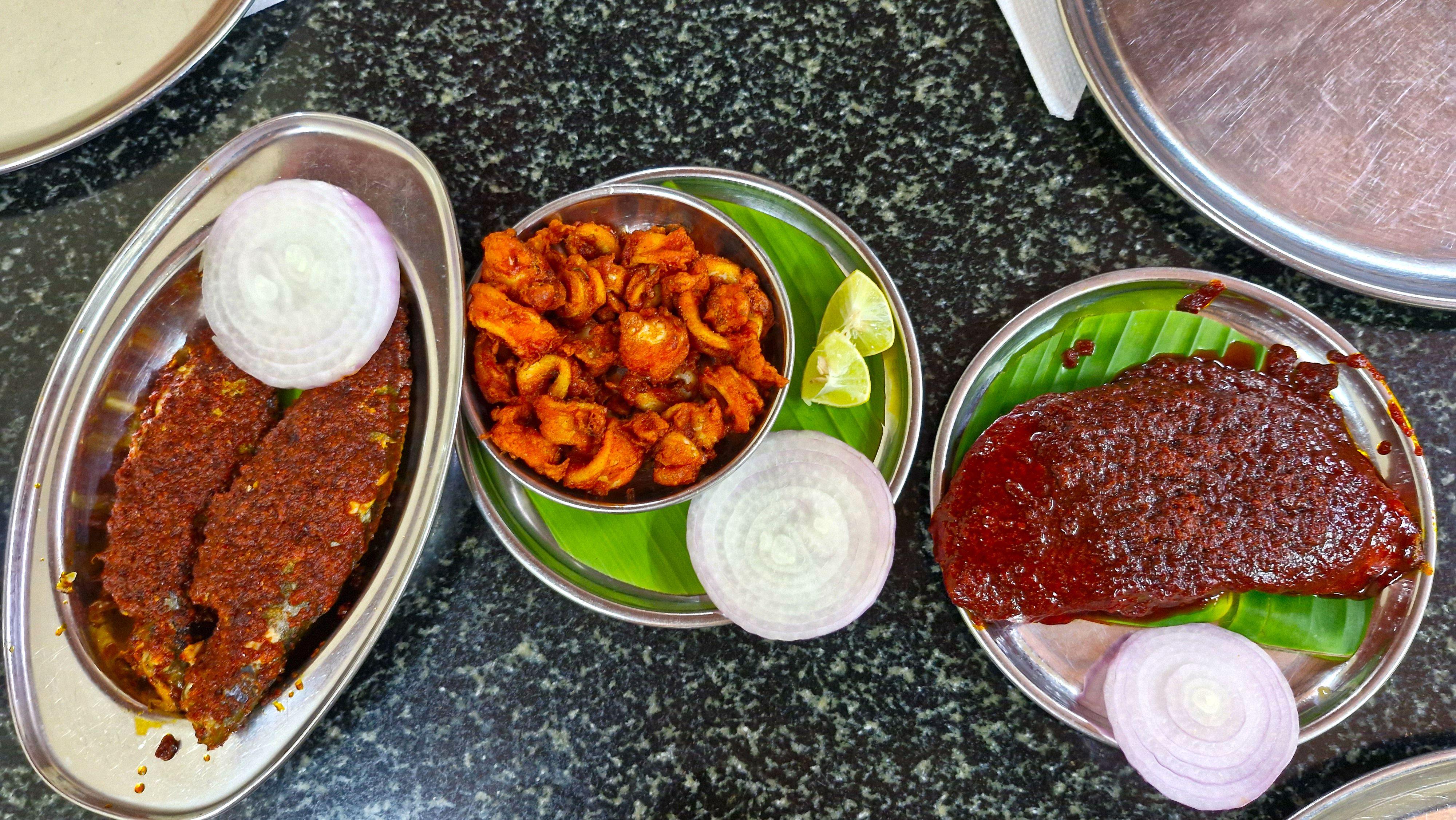 The sumptuous seafood feast at Machali Restaurant, Udupi
When the steel dish finally arrived — dark red masala pooled in ghee, the King fish submerged and glistening — the colour alone gave pause. That depth of red reads as a warning on a hot April night. You brace for the kind of heat that dismantles you.
It didn't. The first bite dissolved before I'd registered the thought — faster than butter in a hot pan, the flesh surrendering cleanly into richness without resistance. And then the masala arrived properly: not a single spike but a sequence, each spice finding its register in turn. The heat climbed, peaked, and settled into something considered rather than aggressive. Spiced without punishing. Complex without performing. For a night already warm, already carrying the salt of the coast — it hit precisely the right notes.
The squid masala and the deep-fried Ade fish that followed kept the standard honest. Mangalorean cooking doesn't require your enthusiasm. It simply arrives, fully formed, and waits for you to catch up.
The conversation with the fisherman at the Udupi port stayed with me longer than most meals do. The SHORE programme he described — World Bank-backed, aimed at sustainable coastal livelihoods — is a reminder that this coastline is not just scenery. It is someone's livelihood, ecology, and inheritance.
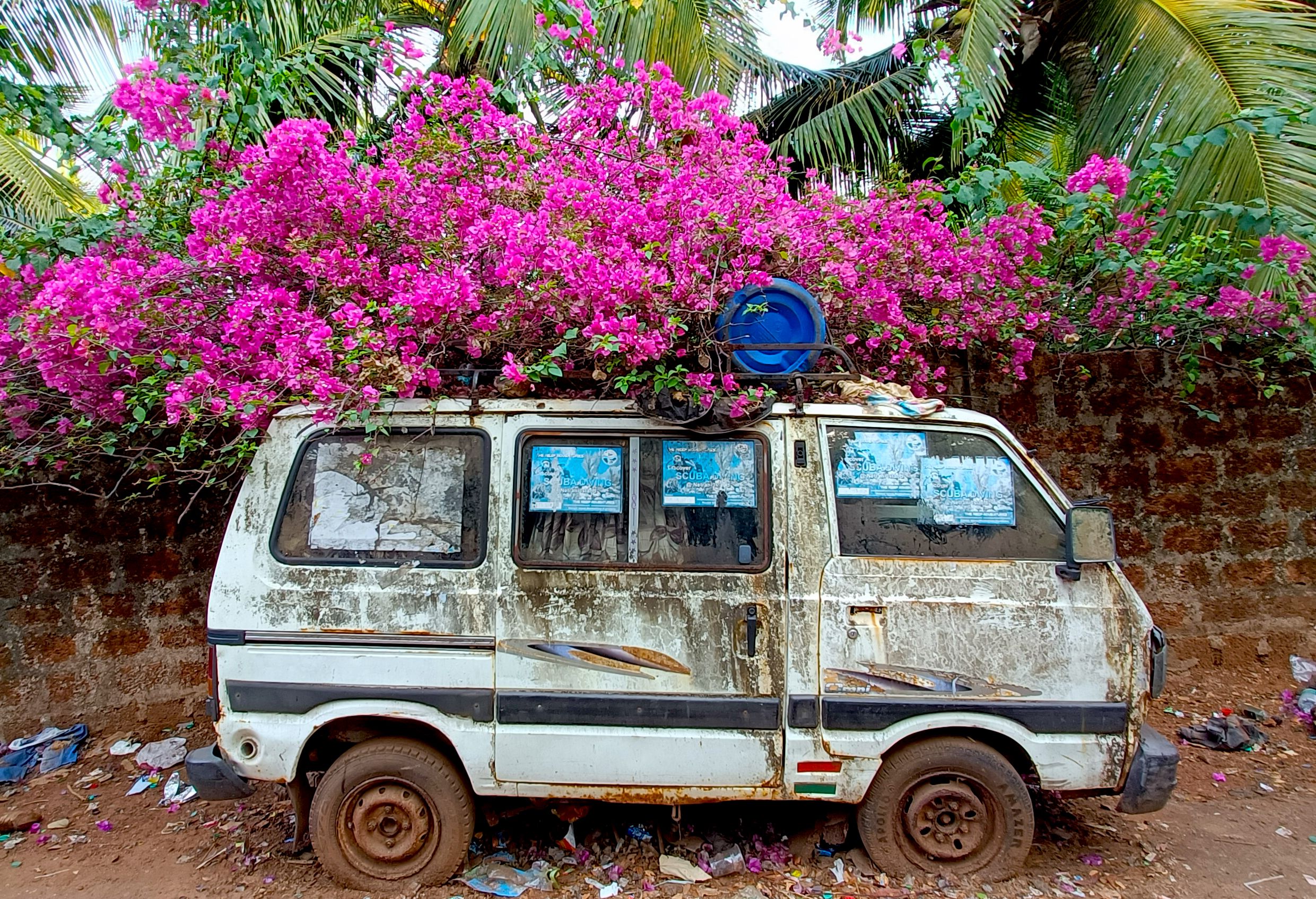
We left Udupi the way you leave a meal that was better than expected — not in a hurry, but not reluctant either. Karnataka had given us exactly what we'd come for: the unnamed beach, the moonlit shore, the fish that needed no justification. A coast that doesn't perform for you.
Wayanad was ahead. Another state, another pace, another version of the south unfolding at its own speed. We drove into the evening with the particular optimism of travellers who have just been proven right — that slowing down works, that the unlabelled places deliver, that the road itself, given the right attention, is never just the way to somewhere else.
The phone stayed face down a little longer than usual.