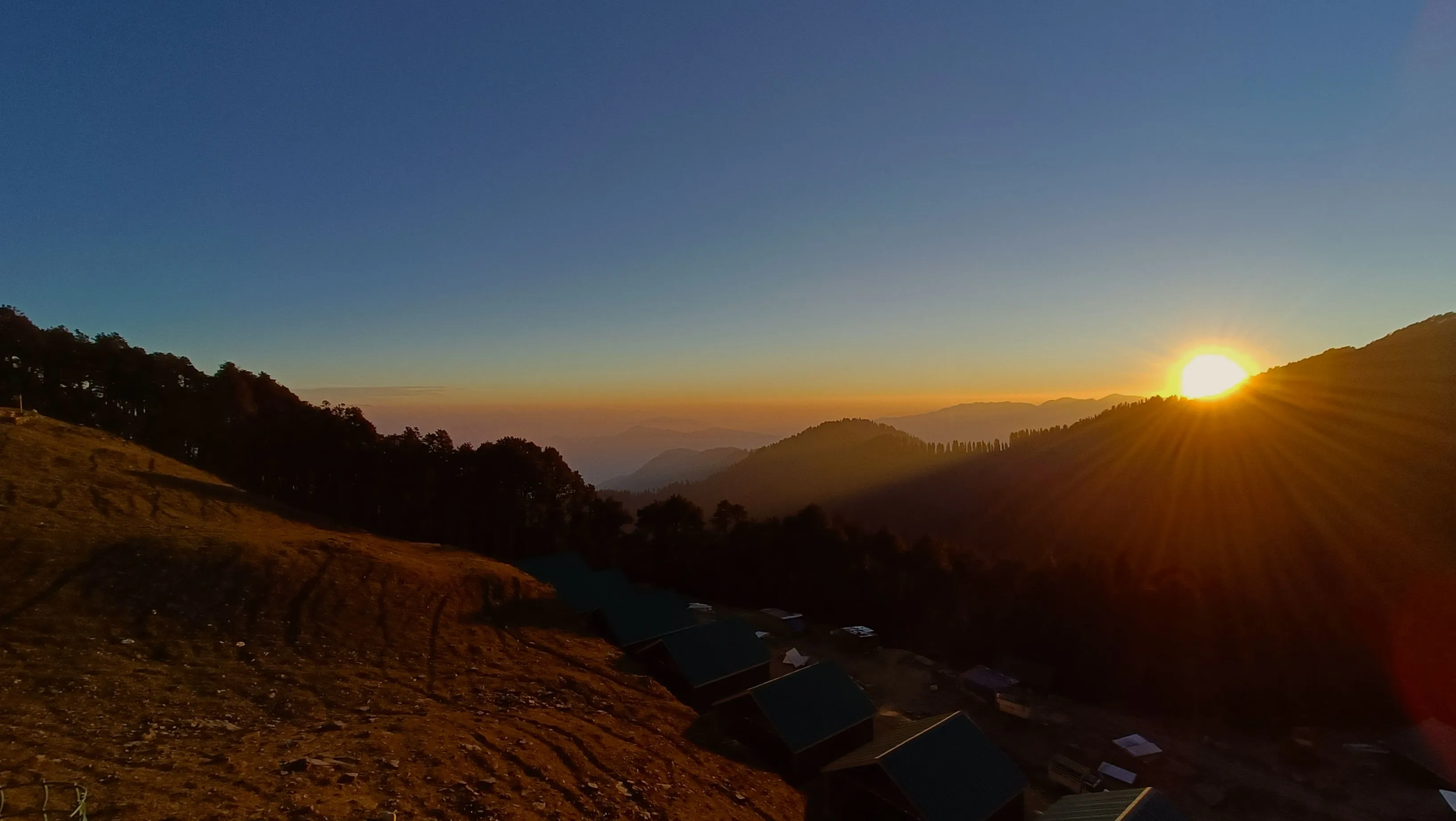
22 Dec, 2025
Last Updated: 10 Jan, 2026
It was December 2021.
By then, the post pandemic world had started unwinding again, but my body hadn’t caught up. For many of us in biomedical spaces and especially as frontline workers, it lingered—long hours in labs for months, zero margin for error, constant vigilance.
Sleep fractured. Attention scattered. Rest felt undeserved.
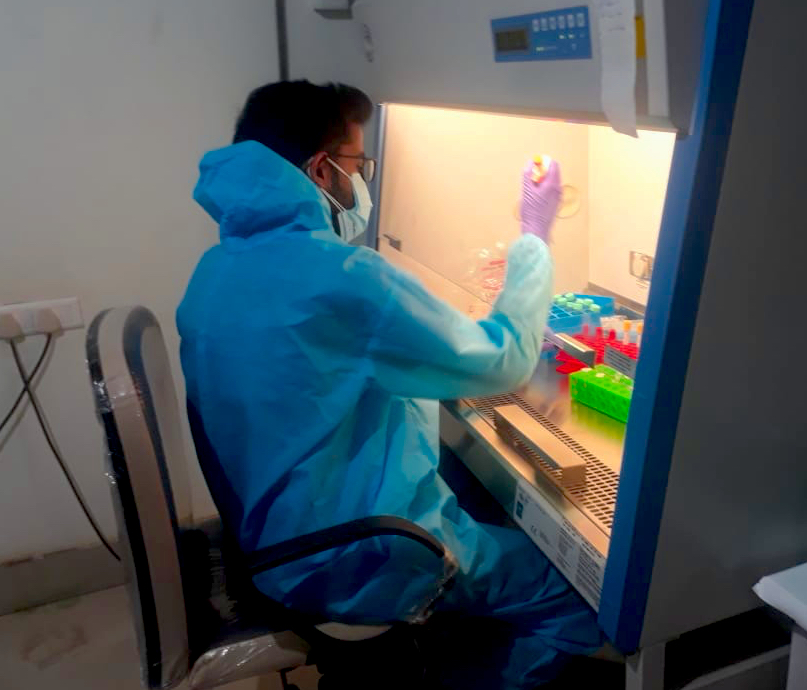
At that point, I didn’t want a vacation. I wanted a reset.
Not movement. Not productivity. Just distance from the noise that had quietly become normal. A reset without an agenda.
This time, I wasn’t traveling alone. A friend came along — not as company to fill space, but as someone comfortable letting it exist. That mattered more than I knew then.
We boarded an overnight bus from Kashmere Gate ISBT, New Delhi. The city receded slowly, headlights thinning into darkness. At some point, the mind loosened its grip. Conversations faded. Decisions stopped demanding justification.
The plan was familiar —Vashisht village near Manali. A place I return to often enough to call my second home.
But plans are fragile things.
Somewhere along NH 44, over an alu paratha at a highway stop, we struck conversation with a tech couple escaping the city for the weekend.
“Where to?” I asked.
“Banjar Valley,” they said.
“Poor network. Quiet villages. Nothing much to do” they added.
That sentence didn’t land loudly. It sank.
By morning, as the bus slowed near Aut, the words returned — uninvited, persistent.
We stepped off without overthinking it.
The HRTC bus climbed into the hills, turning inward with the road. Villages appeared briefly and vanished. Pine trees thickened. Time softened.
When we reached Jibhi, doubt arrived quickly.
Cafés. Hostels. Handwritten signs promising Wi-Fi.
It looked familiar. Predictable.
We stood there longer than necessary, scanning, hesitating.
A taxi driver approached.
“No booking?”
“No plan.”
Instead of asking where we wanted to go, he asked “Why did you come?”
“To slow down.” I said.
He quoted ₹300—and added, almost casually, that if we didn’t like the place he was taking us, he’d bring us back at no extra cost.
We nodded.
That was enough.
The climb was gentle. Cafés dropped away. The road narrowed. Pine forests closed in, their trunks dark and steady. The air cooled. Then the tarmac ended, replaced by dirt.
We rolled into Miyar village.
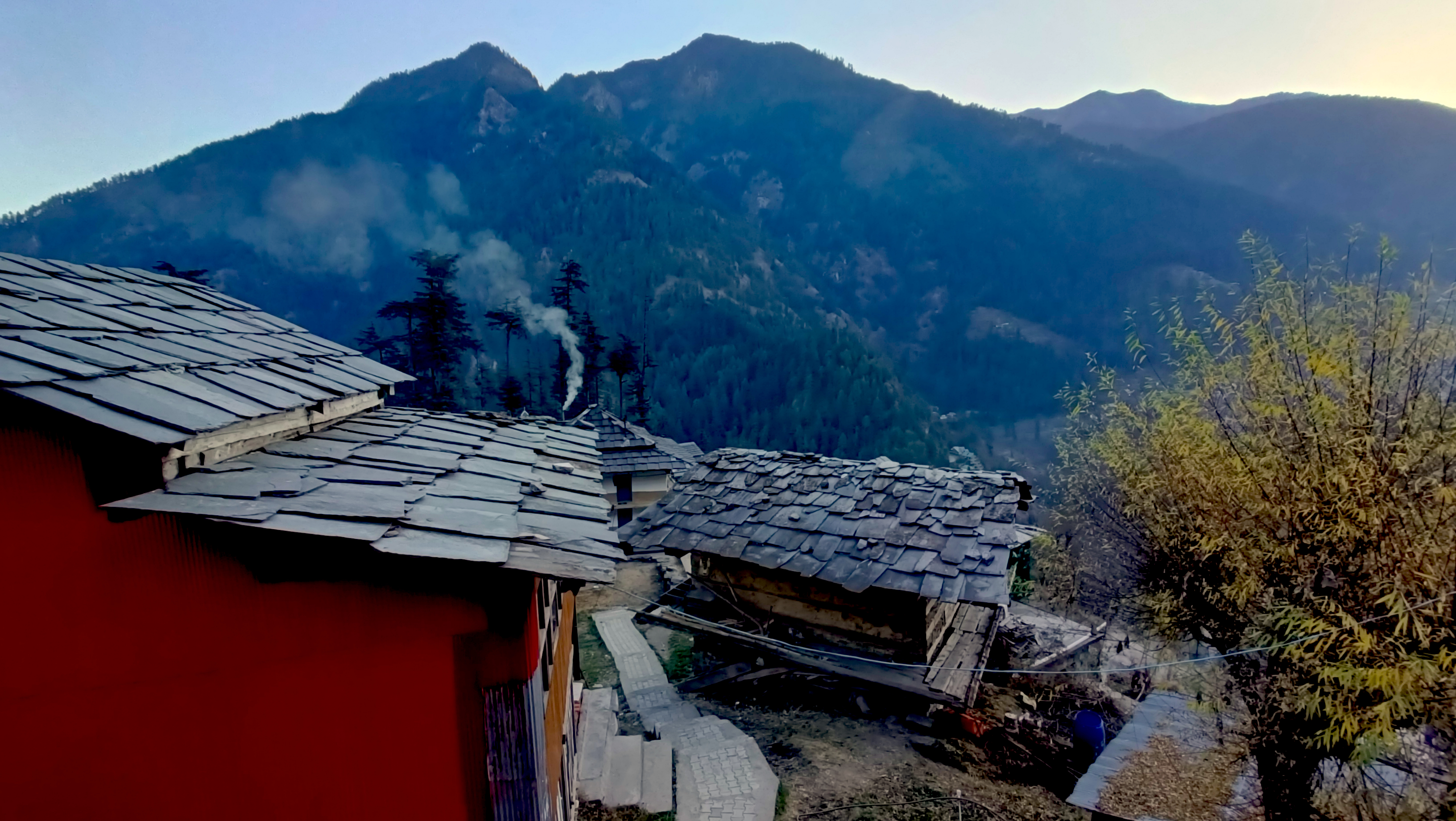
Wooden houses with stone roofs sat low against the slope. Smoke drifted from chimneys into a misty afternoon sky. Cattle moved slowly along terraced fields. The mountains holding everything steady.
Nothing felt arranged for arrival.
The driver carried our rucksacks down a narrow trail and introduced us to Neetu Aunty, who ran a homestay in the truest sense—not commercial, but lived-in. The room was minimal. A bed. A window with a view that needed no framing.
Neetu Aunty didn’t ask if I was hungry.
She arrived with brass plates of steaming rajma chawal, finished with ghee. Everything from their own farm. It tasted far better than it had any right to. We crashed out soon.
We woke up to the laughter of schoolchildren floating in through the windows. Walking in groups, we exchanged greetings through the window. No phones. No hurry.
That evening, wandering through the village we stopped often for chai to appear at doorsteps. Folk stories surfaced without effort. Only later did I realize — our phones untouched, forgotten somewhere in our bags.
As night creeps in early in such settings, we called it a day too- not from exhaustion, but alignment.
For the first time in months, I had a deep sleep without 5mg of melatonin.
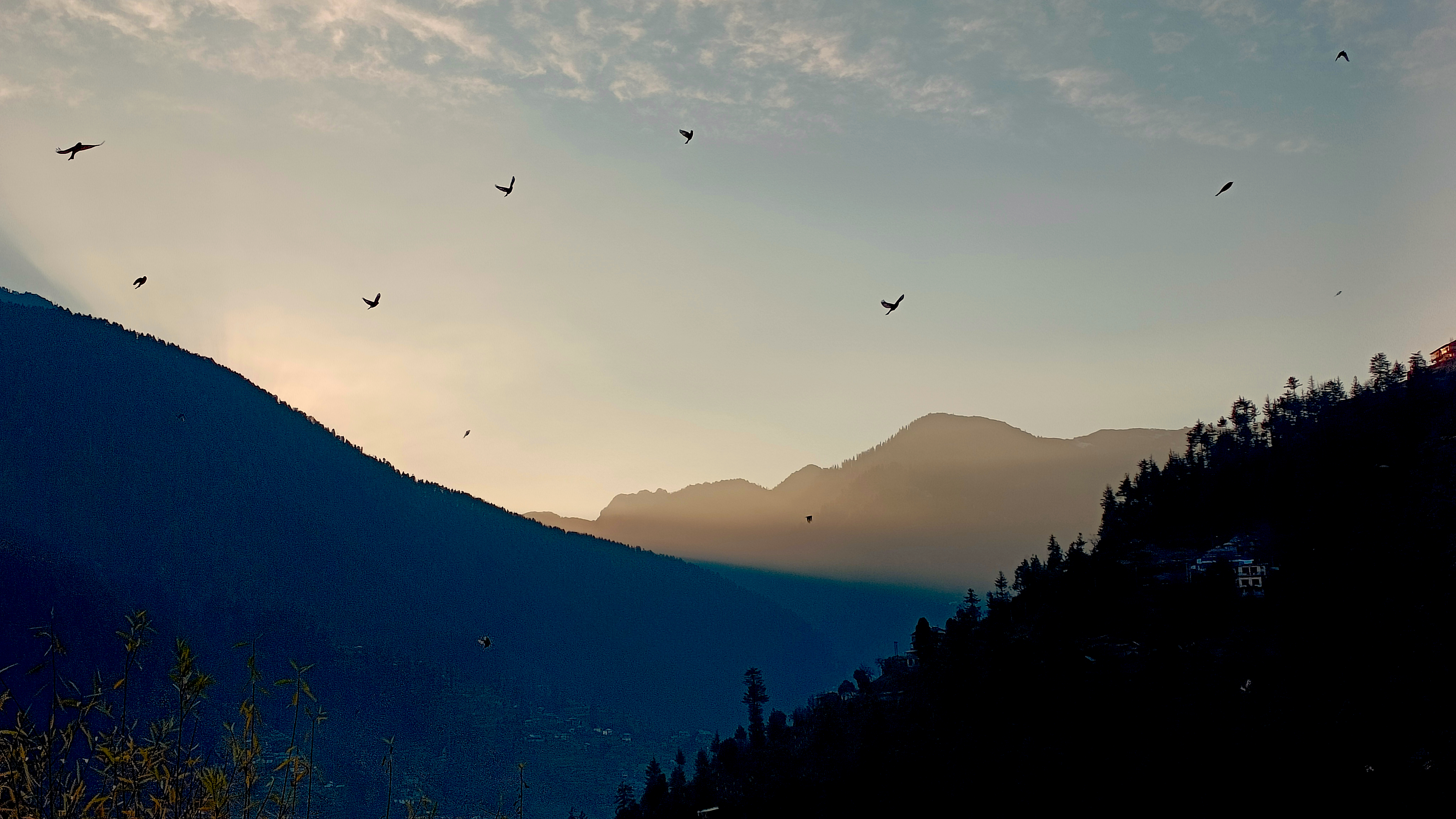
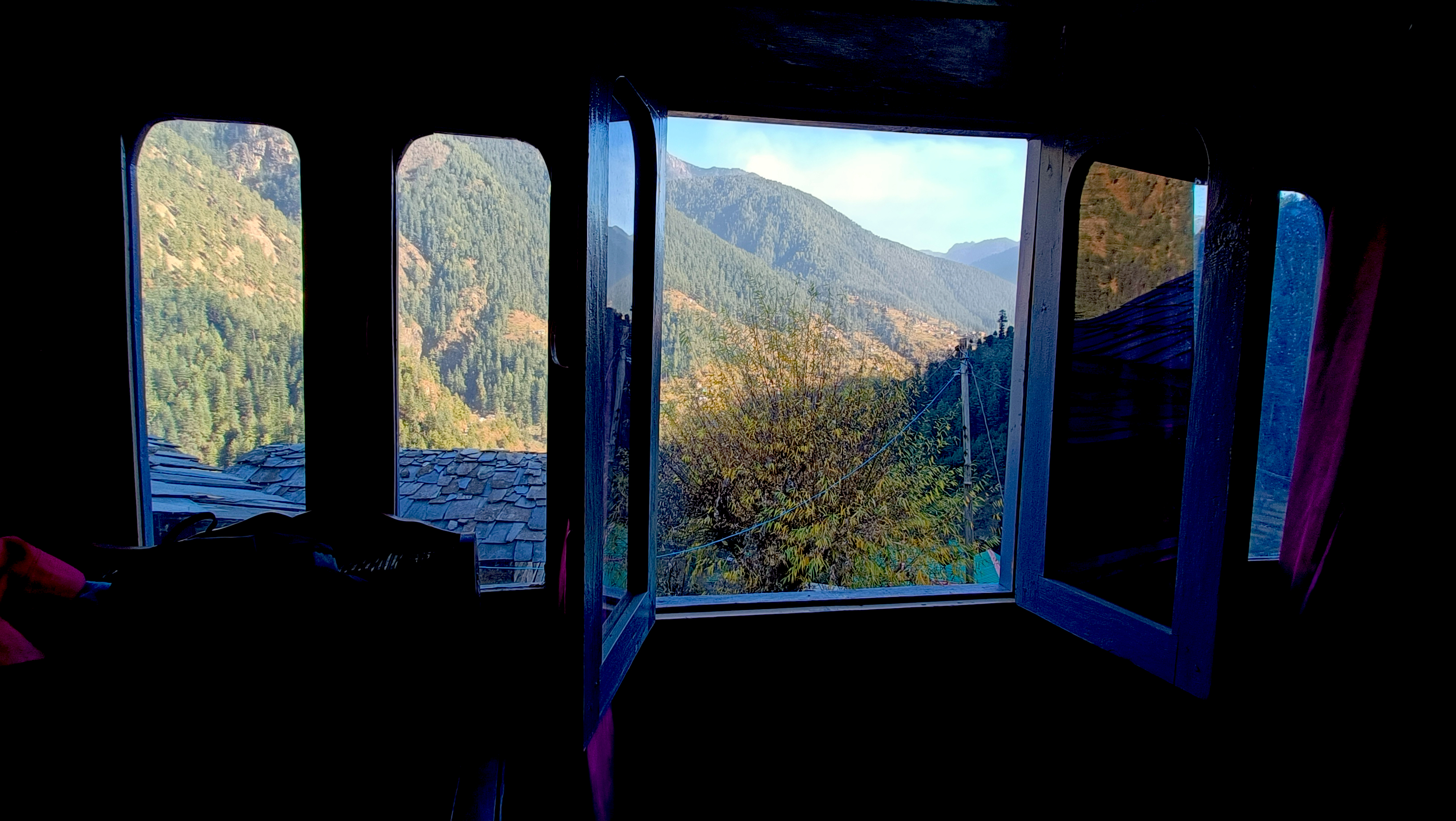
The next morning, I woke up unsure of the hour, unsure of the day — and strangely steady. Through the window panes, morning light filtered in softly. Birds sounded close, unfiltered. Breakfast came — ghee-soaked puris, warm, grounding.
We sat by the window. Later, on the doorstep. Time passed without announcing itself and we gradually started renouncing our worn selves.
At some point, the days slipped out of sequence. I stopped counting them.
Walking became the rhythm of life.
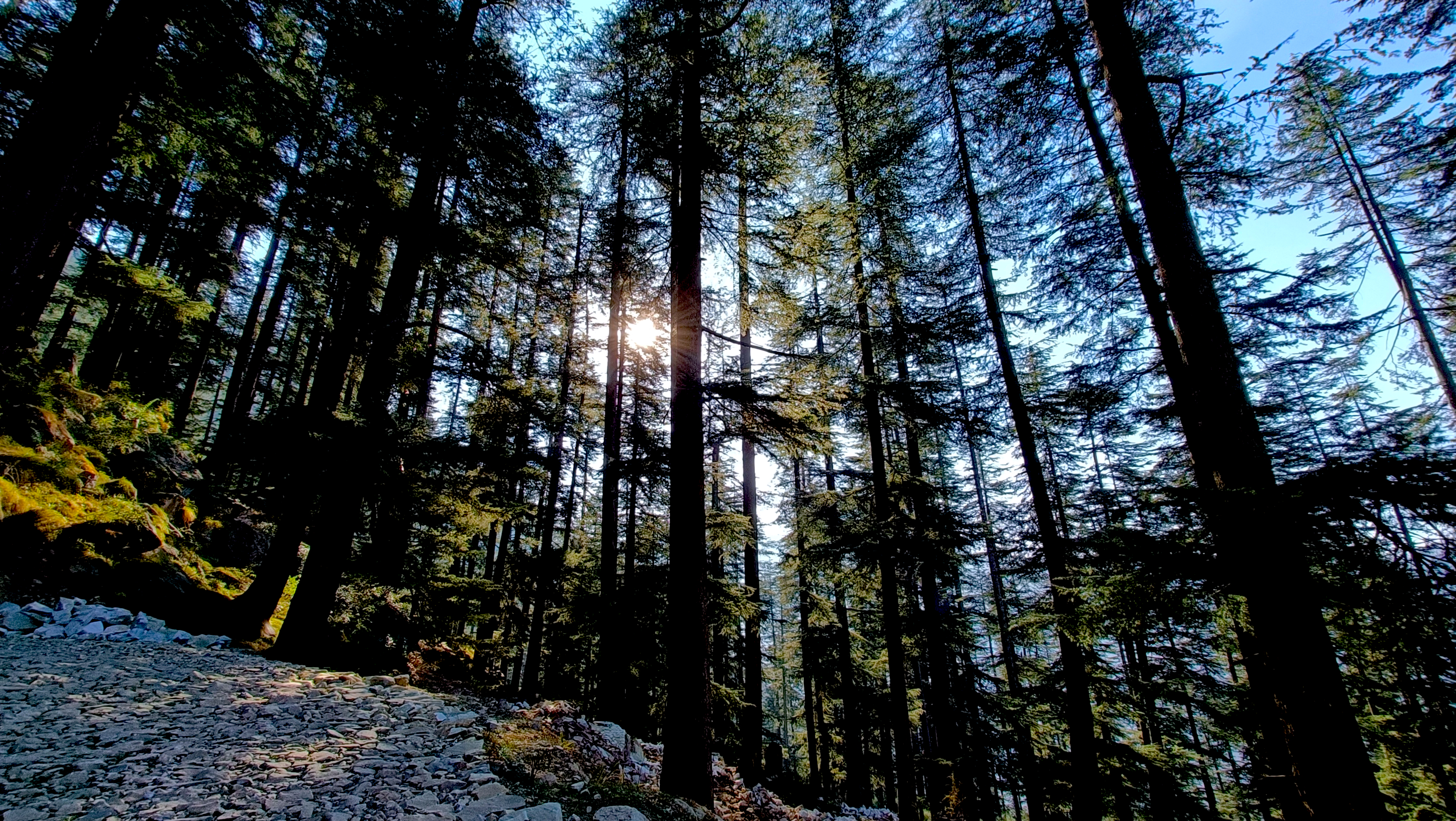
Forest trails softened underfoot. Village paths curved gently between homes. Meadows opened and closed without warning. Breath deepened without instruction. Eight kilometers passed most days, unnoticed.
We walked long stretches without talking. Silence no longer felt like something to manage.
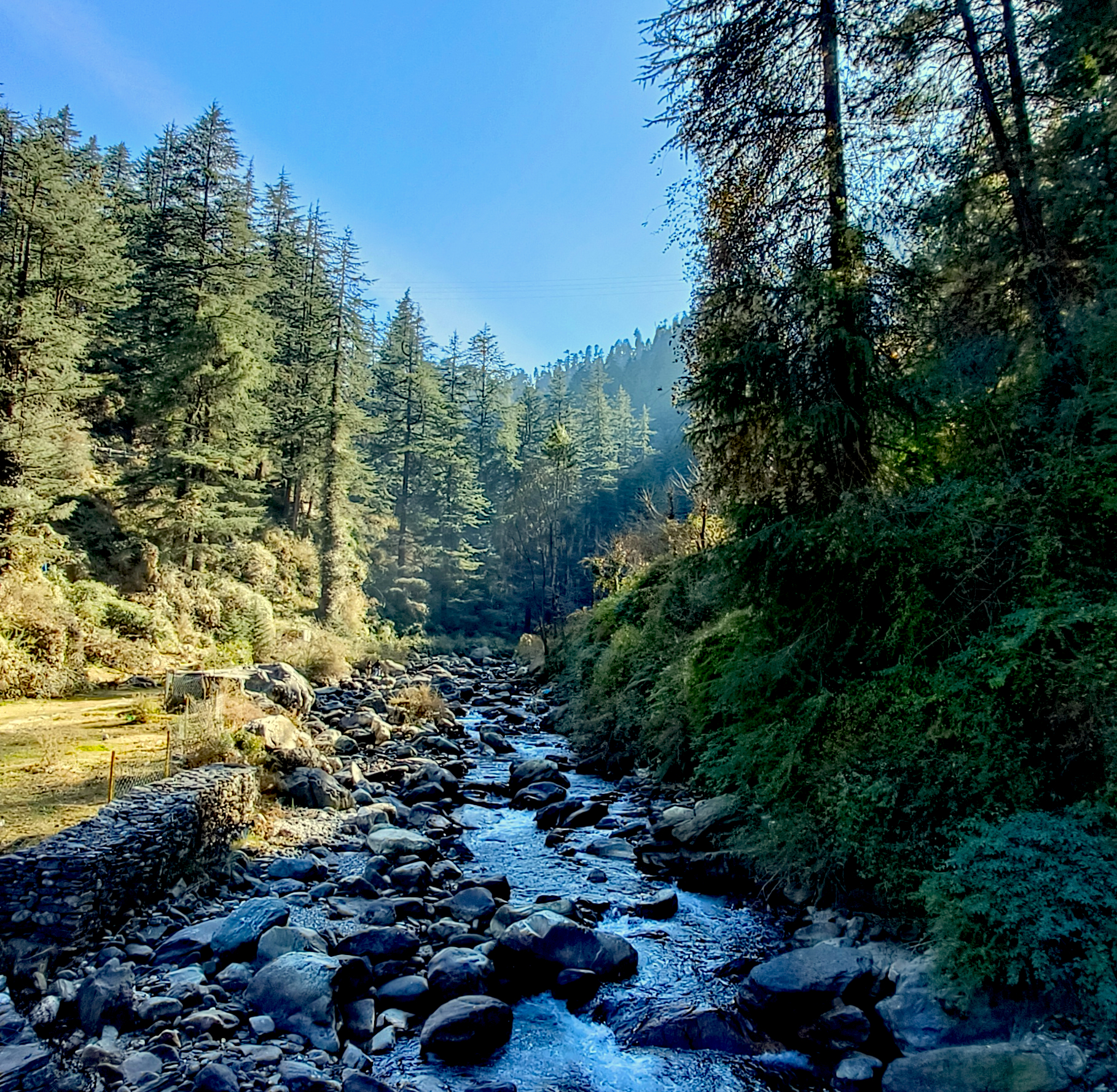
Somewhere nearby, the Tirthan River kept flowing — constant, unhurried. Its sound threaded through the valley like a low hymn. It never asked for attention, yet it was always there.
The creamy mushroom soup at Café Old School by the river, settled gently into tired legs after long walks. Sitting by it quietly, watching the water move without effort I understood something without words: life doesn’t need to rush to move forward. It only needs to keep going.
Midweek, movement pulled us outward.
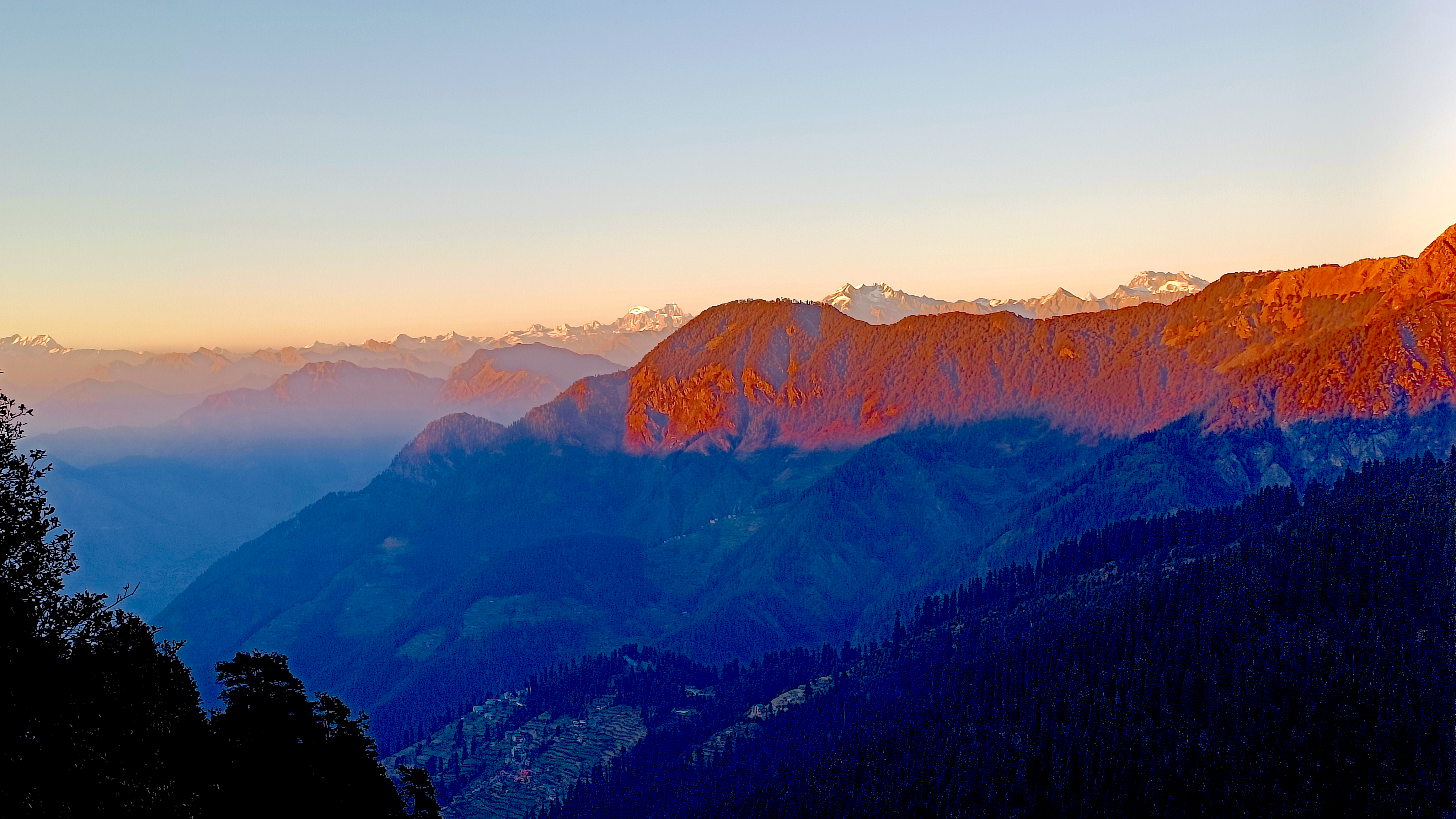
At Jalori Pass, the land opened completely. Ridges layered into one another. Forests stretched in every direction. The sky felt close enough to touch. Standing there, urgency felt small.
Two trails branched away at 10,000 feet.
Serolsar lake or Raghupur Fort.
We chose the one that disappeared into the trees.
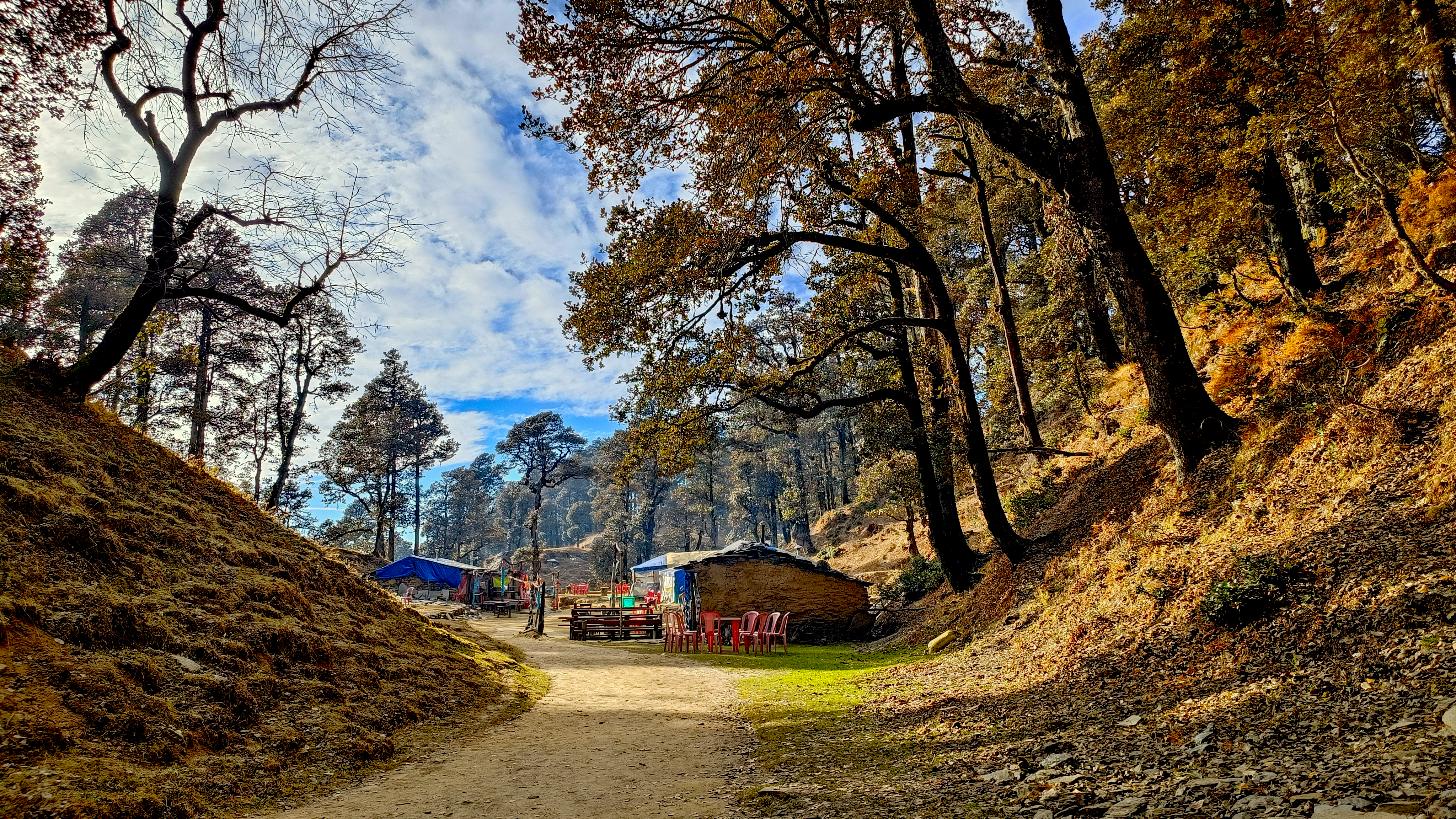 The path to Serolsar wound slowly through forest shade and open meadows. Grass bent easily underfoot. Clearings opened like quiet breaths. The trail didn’t reward speed. It asked for steadiness.
Somewhere along those meadows, I stopped wondering how far the lake might be. Walking itself felt complete.
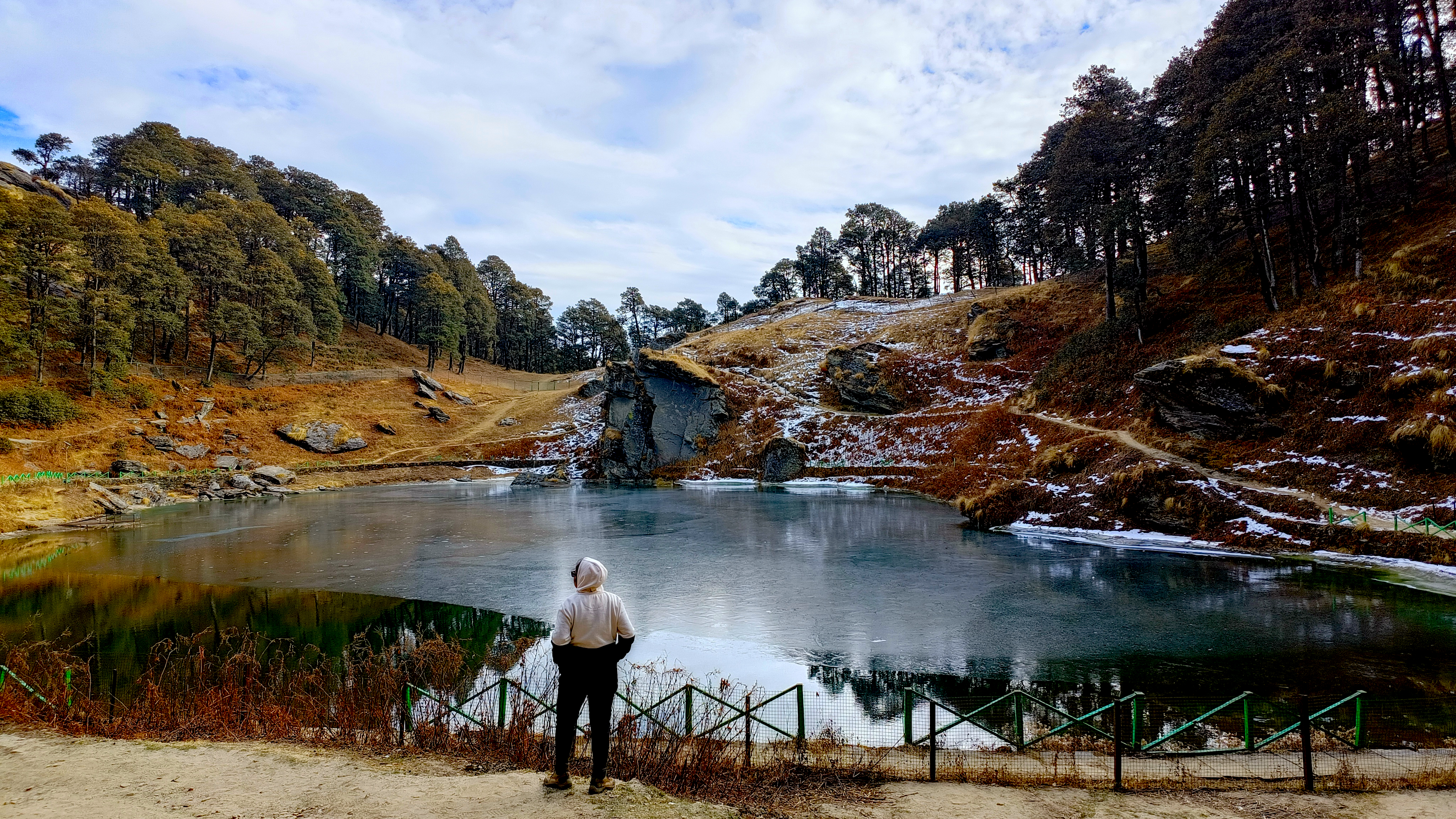
When Serolsar finally revealed itself — still, contained, watched over by the Mata Budhi Nagin Temple — it felt less like an arrival and more like a pause. Golden hour followed us back down, light softening the edges of everything it touched.
Nothing hurried us. Not even the sun.
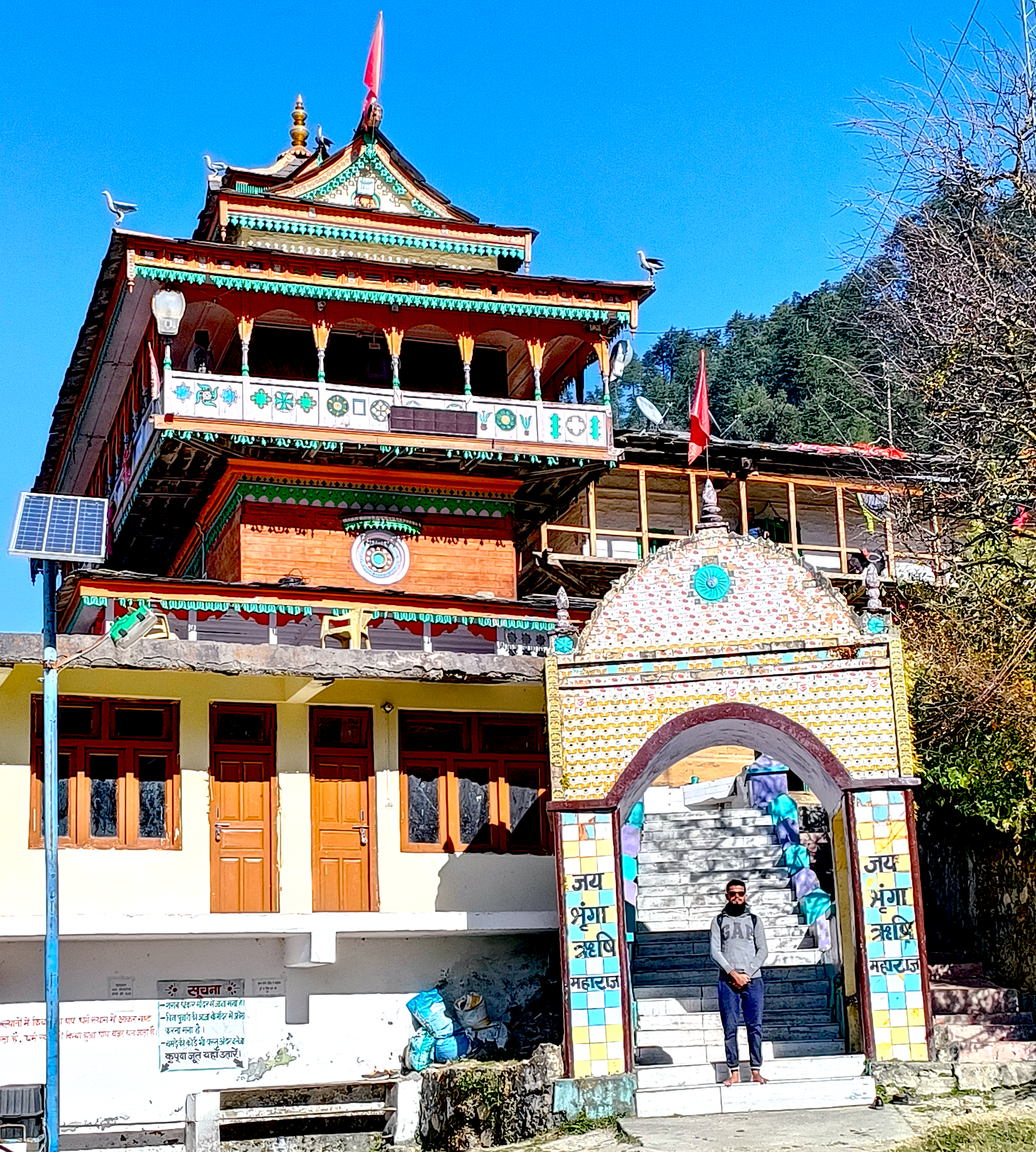
On the final day, after a long hike from Miyar village, we reached the Shri Shringa Rishi Temple. While interacting with the priest, I asked how life has been in this place. He said something that is still stuck with me:
“It is for us to decide how to perceive how our life is.”
Perhaps life has always been this coherent.
Perhaps we lose it in the noise.
Jibhi didn’t offer spectacle.
It offered space.
Space to sleep without assistance.
To walk without targets.
To sit without purpose.
To listen — to water, to wind, to the body remembering itself.
It loosened the grip.
Some places teach you where to go next.
Jibhi taught me how to arrive and feel the present.