02 Feb, 2026
Last Updated: 27 Apr, 2026
The kind of heat that arrives in April has a way of unsettling cities.
It seeps into concrete, into tempers, into routines that already feel stretched thin.
By then, the cosmopolitan rhythm of Bengaluru had begun to feel claustrophobic. Glass buildings reflected ambition back at itself. Notifications demanded attention. Conversations revolved around deadlines rather than days. The city had been eating us up — not loudly, but steadily — the way routine does when it goes unquestioned.
So we left.
Not impulsively, but deliberately.
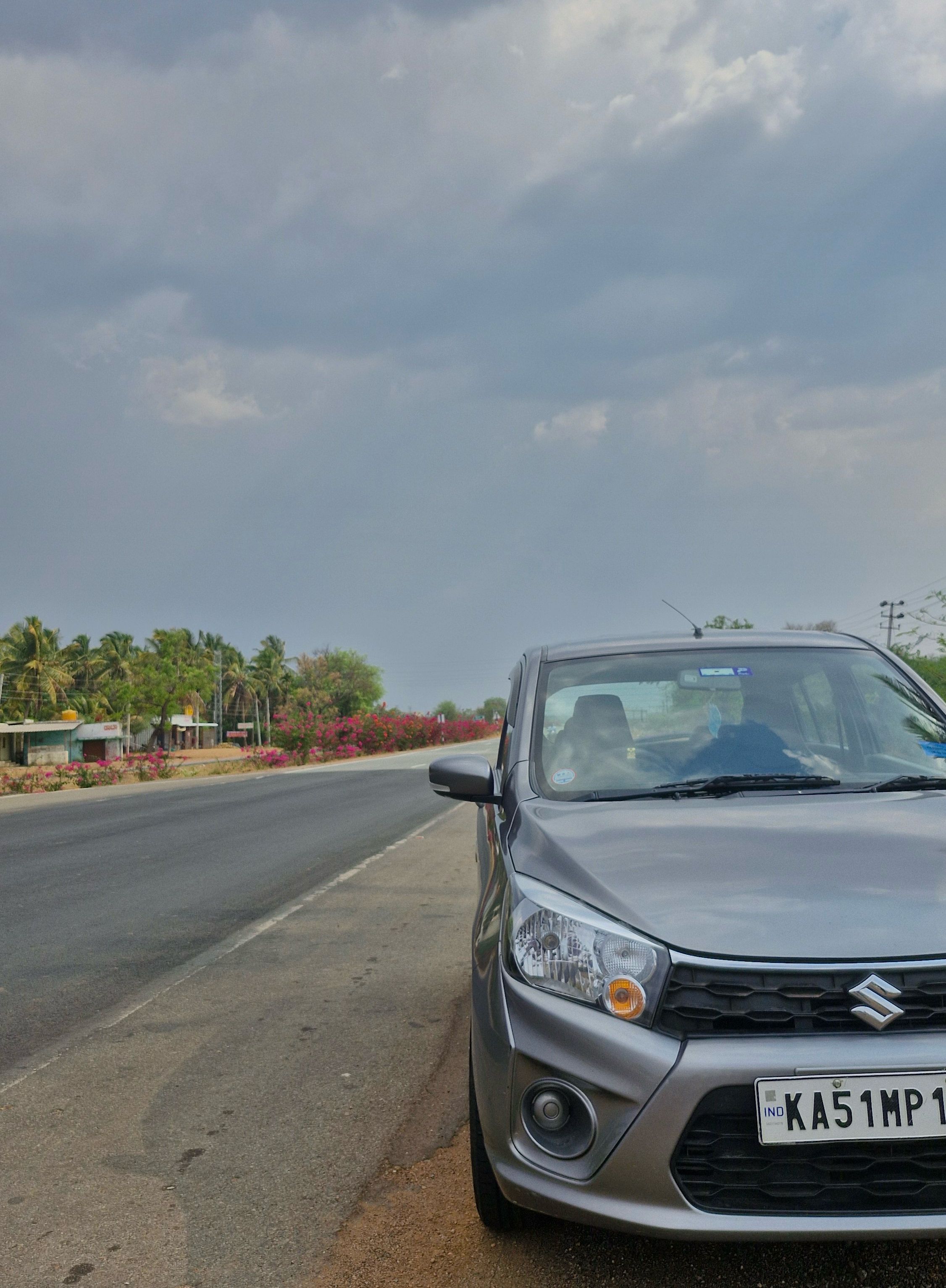
With no fixed destination in mind, we were looking for a break that could bring some meaning back into how life had begun to feel. Hampi surfaced almost instinctively — not as an escape, but as a pause. We needed a place that would slow us down before the journey truly began.
Leaving Bengaluru took patience. The city clung on — flyovers, traffic lights, the familiar frustration of knowing the road but not escaping it yet. Even as the highways widened, the mind stayed wired to urgency.
But somewhere beyond the city’s edges, the hold loosened.
As the road opened further in sync with the fresh air, clutters started taking a backseat.
Then came Chitradurga.

The windmills appeared gradually — tall white silhouettes scattered across rolling hills, turning steadily against the harsh summer sky. There was something deeply reassuring about them. They weren’t rushed. They didn’t resist the wind. They moved with it.
That stretch did something subtle but lasting. The grip of routine loosened. The mind, still wired to deadlines and notifications, began to unclench. The journey stopped feeling like an escape and started feeling like a transition.
Around the eighth hour of the drive, the boulder-strewn landscapes of Hampi began to emerge.
Hampi doesn’t greet you with spectacle.
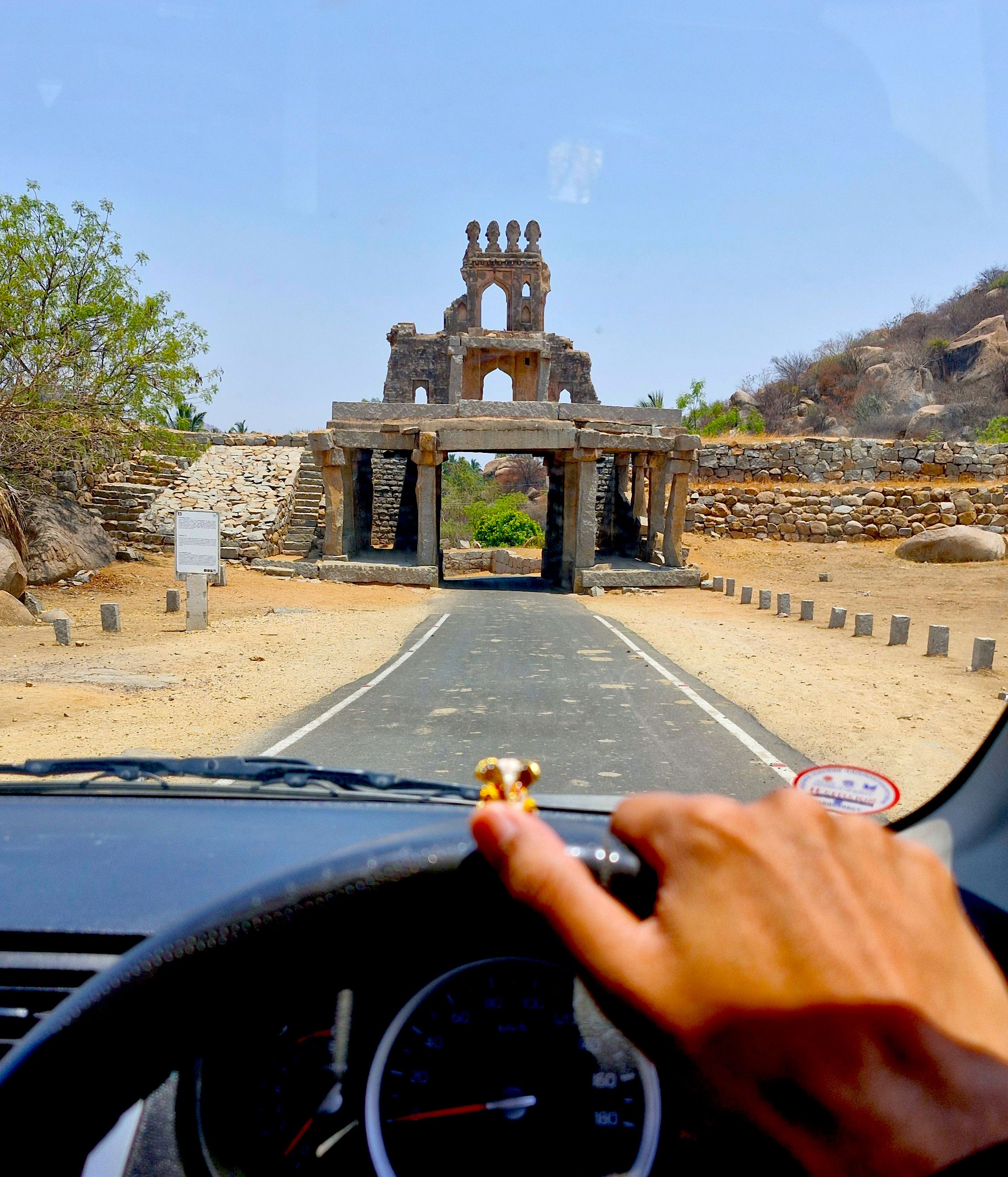
It settles around you.
Warm stones under the sun. Open land stretching endlessly. Structures that have witnessed centuries and no longer need to announce themselves.
The remains of the Vijayanagara Empire, resting along the banks of the Tungabhadra River, carried a quiet certainty. The bazaars lay still — pillars broken, carvings softened by centuries of wind and rain. Yet there was nothing hollow here. The foundations were intact. The belief systems that built them — devotion, purpose, collective effort — lingered, almost palpably.
These weren’t reminders of loss, but of continuity.
Time had eroded surfaces, not intent.
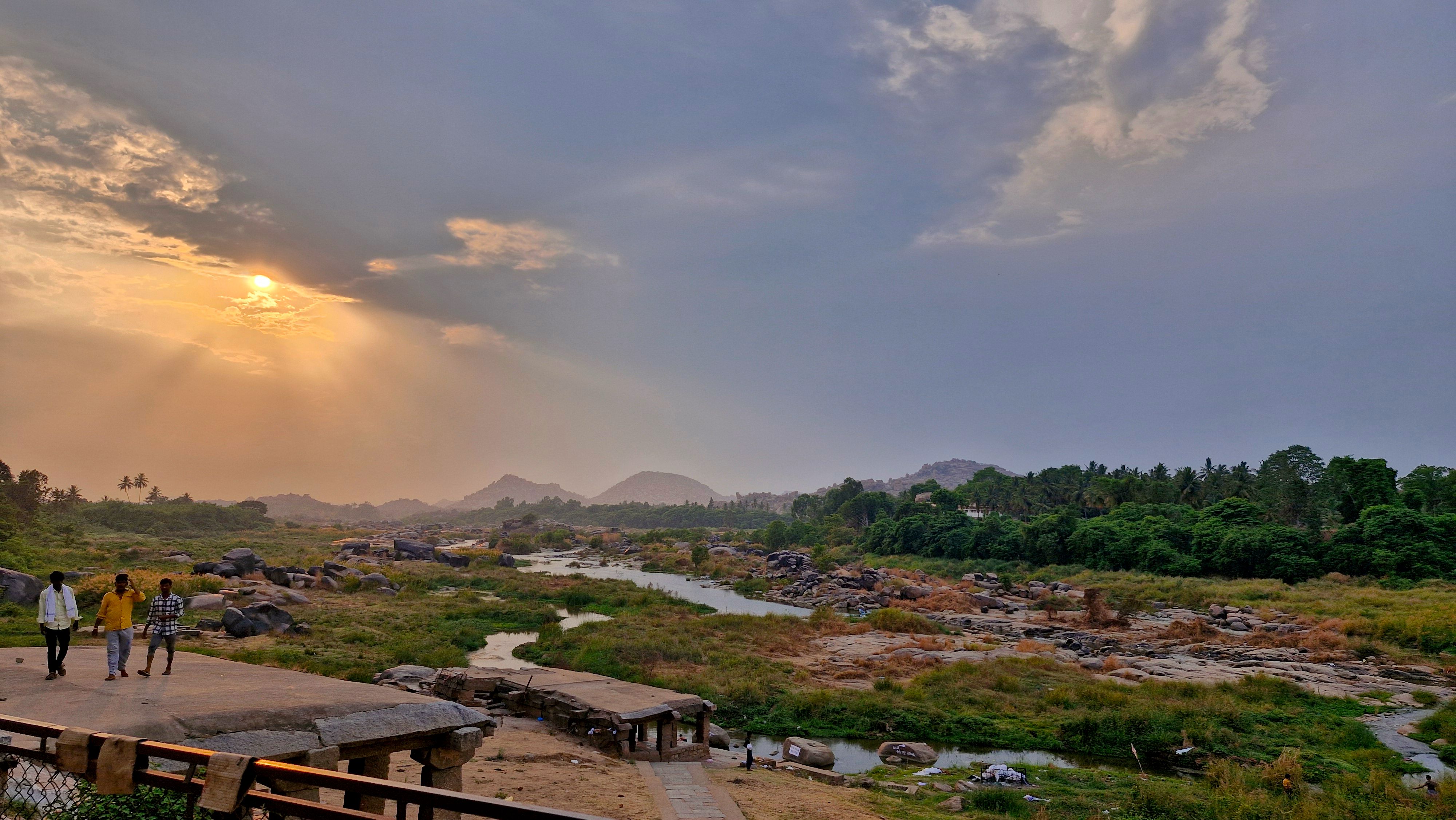
Hampi whispers gently — you may fall, you may crumble, but your foundations remain.
And maybe that’s what many of us have forgotten — that stillness isn’t stagnation, and solitude isn’t loneliness. Sometimes, it’s the only way back to oneself.
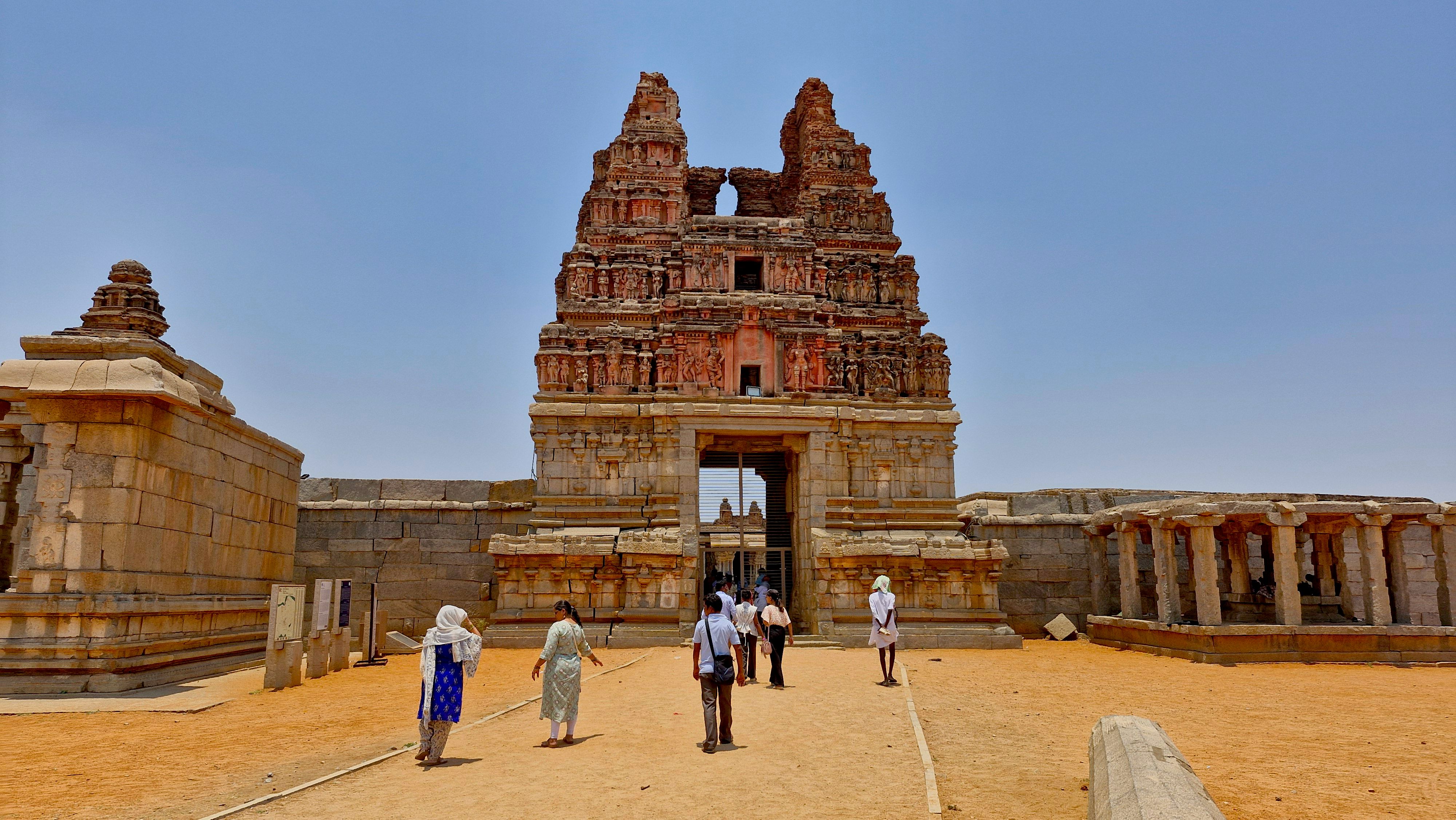
Awe arrived without warning at the Shree Vijaya Vittala Temple.
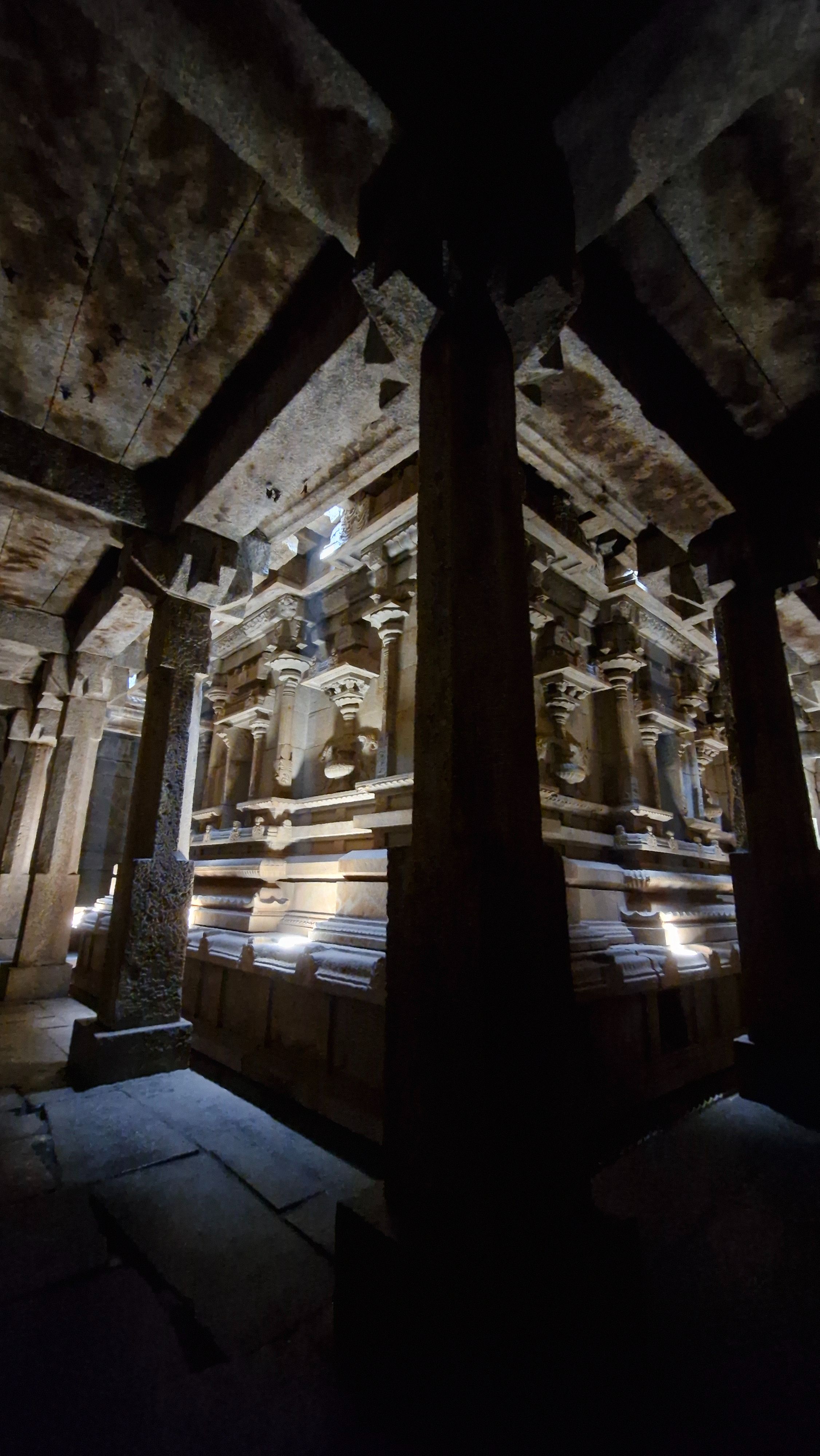
As the clock struck noon time, the sun stood directly overhead, natural light found its way into the depths of the temple — illuminating spaces that seemed impossible to reach. Stone corridors glowed softly, as if the structure itself was breathing light inward. There was no grandeur imposed here, only mastery — a precise understanding of space, time, and nature that felt both scientific and spiritual.
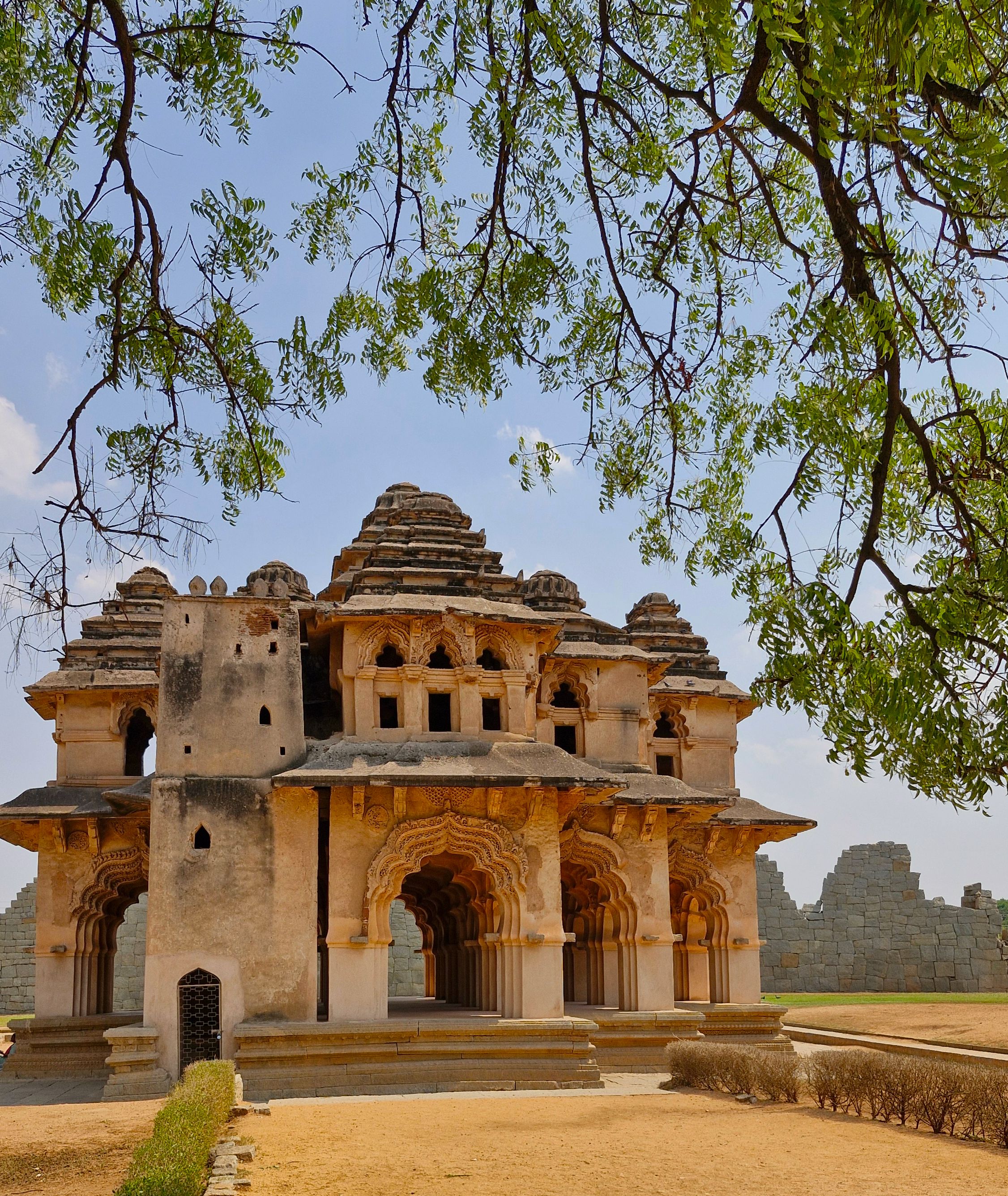
Nearby, the royal quarters revealed another layer of the empire’s character. The Indo-Islamic elegance of the Lotus Mahal and the symmetry of the Elephant Stables spoke of power at its peak — confident, but never imposing. Their presence was felt without diminishing anything around them.
As the day slowed, the light itself seemed to soften — drawing us upward.
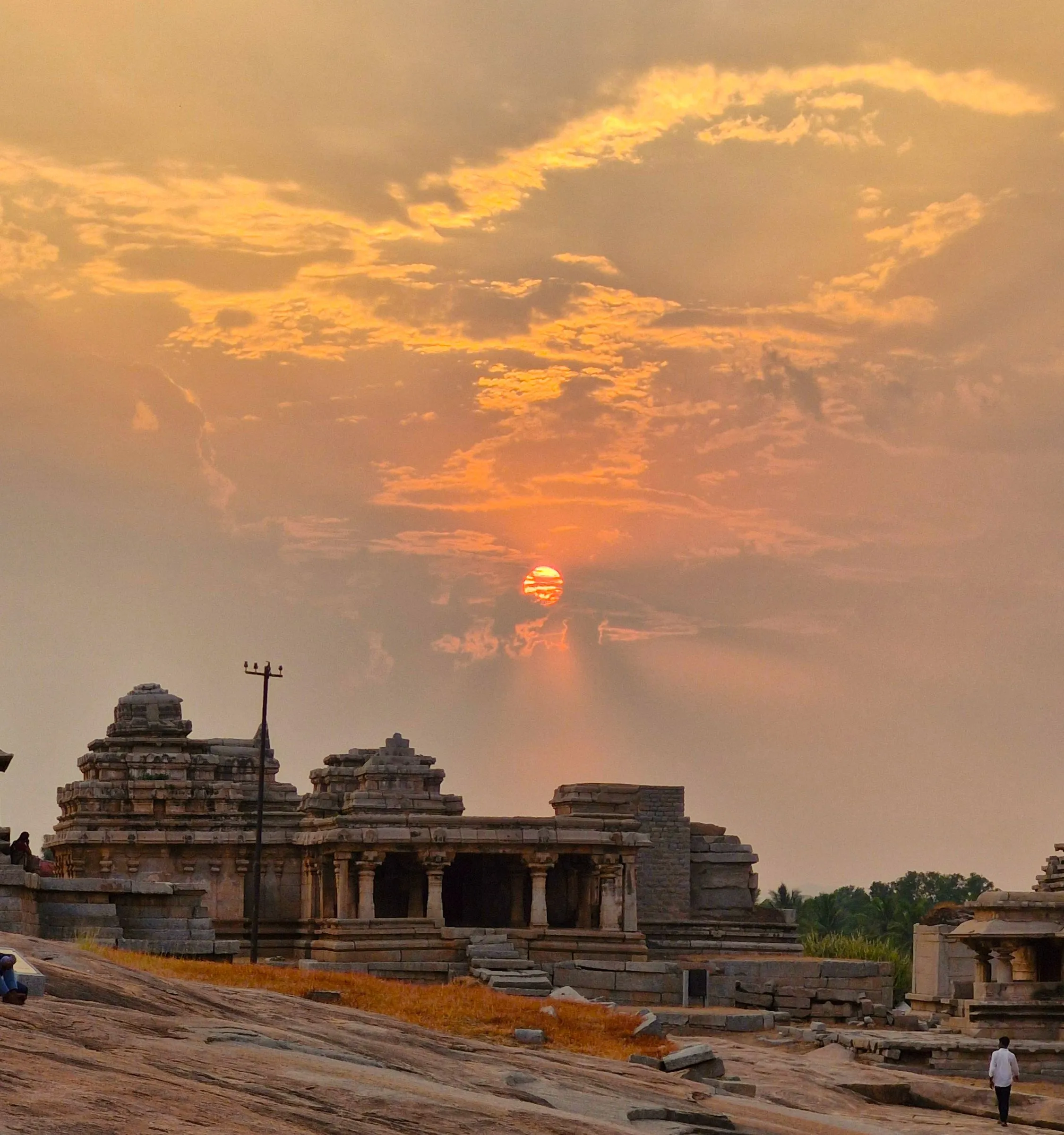
The climb to Matanga Hill wasn’t planned. It felt instinctive. From the top, Hampi unfolded in layers — ruins glowing amber, the river catching the last light, shadows stretching gently across stone.
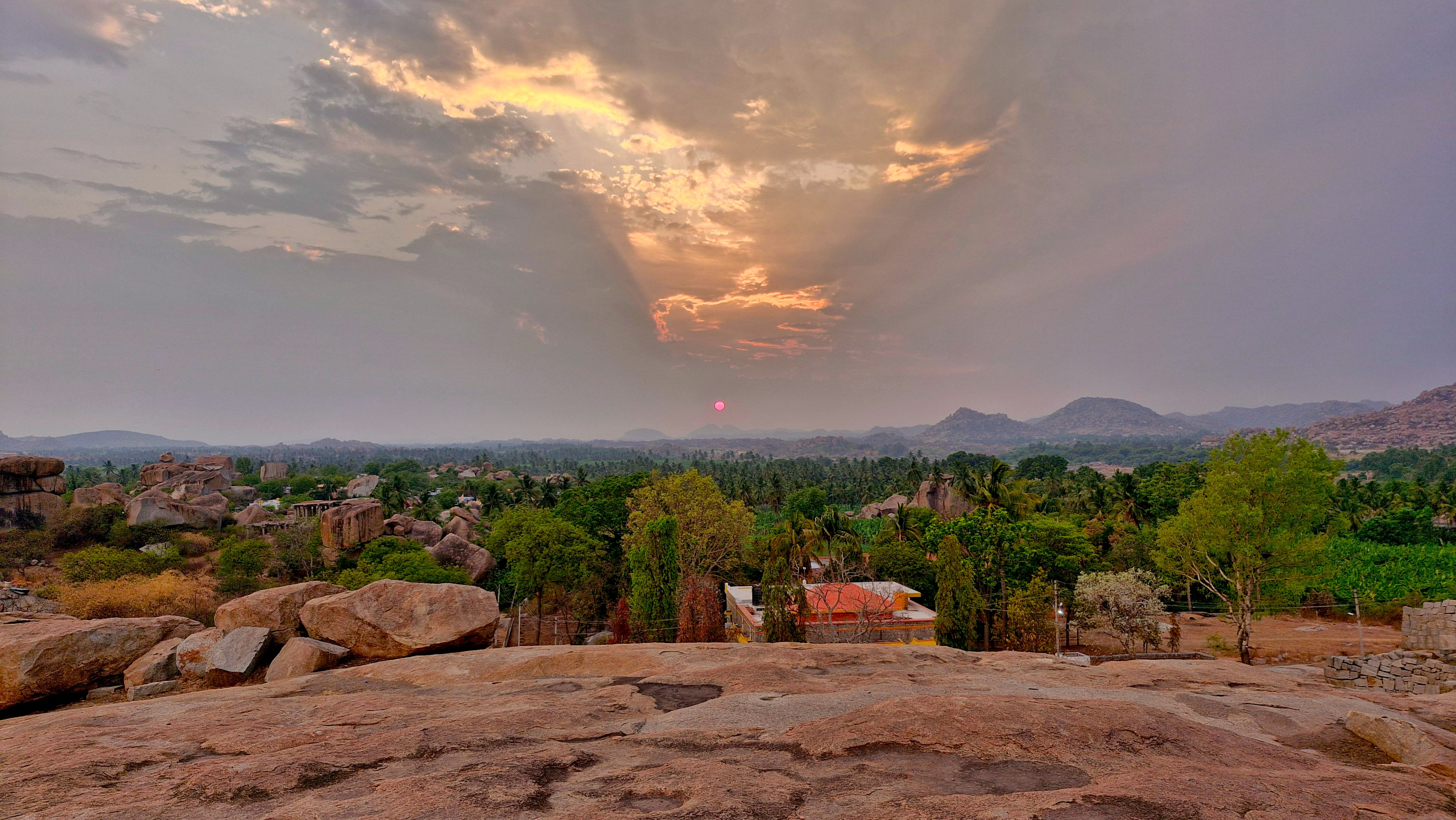
The sunset here doesn’t feel dramatic.
It feels clarifying.
It becomes difficult not to introspect — about pace, about purpose, about how often life is lived in anticipation rather than presence. The view doesn’t offer answers. It offers space. And sometimes, that is enough.
Mornings near the Virupaksha Temple unfolded without urgency. Devotees arrived quietly. Vendors arranged flowers. Incense curled lazily into the air.
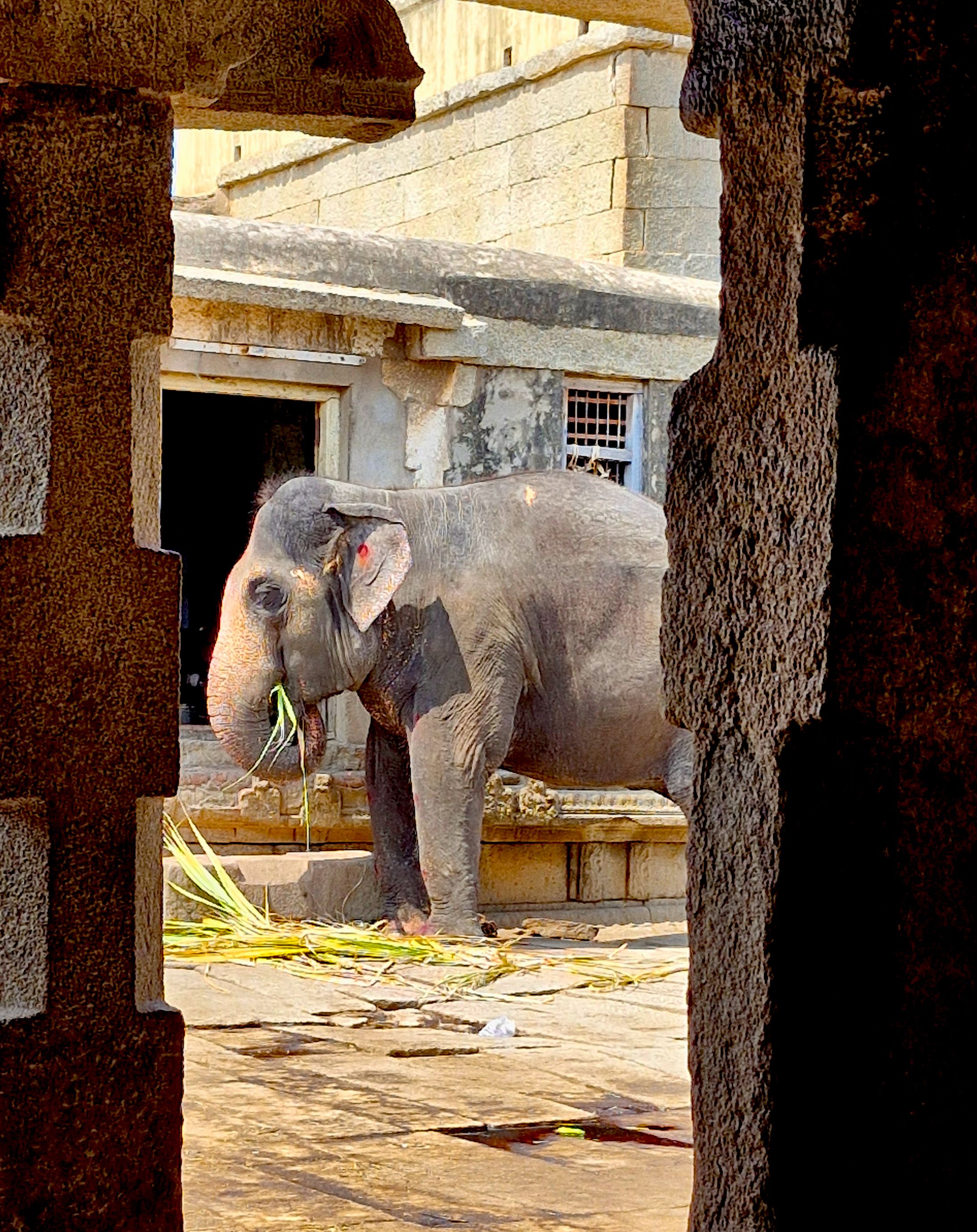
Lakshmi — the temple elephant — moved through the courtyard with an unhurried familiarity, blessing visitors one by one, guided not by spectacle but by routine.
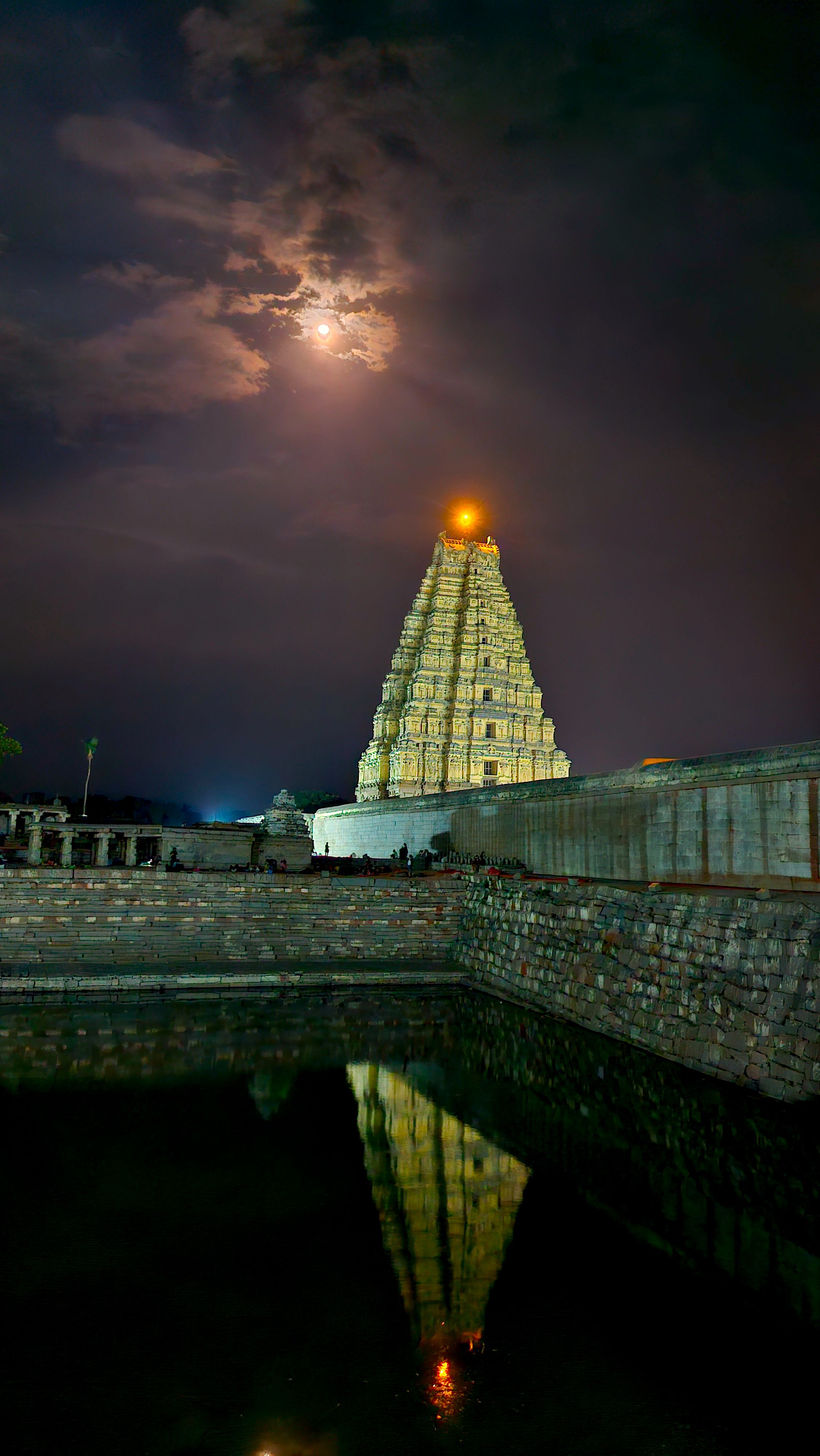
While the morning rituals naturally drew attention, it was the evening hours that lingered longer. As the crowds thinned, a different rhythm took over. Sitting by the temple pond, watching moonlight ripple across the water, the noise of the day softened into stillness. The reflections shimmered gently, and with them came a tranquility that felt deeper, more personal.
Spirituality here wasn’t distant or ceremonial — it was lived daily, gently, without needing attention. In a world that often turns faith into performance, this quiet communion between stone, water, and silence felt profoundly human.
Our visit coincided with the Virupaksha Chariot Festival. As dusk settled, we stood among thousands gathered to witness the massive wooden chariot roll through the ancient streets in devotion to Lord Shiva.
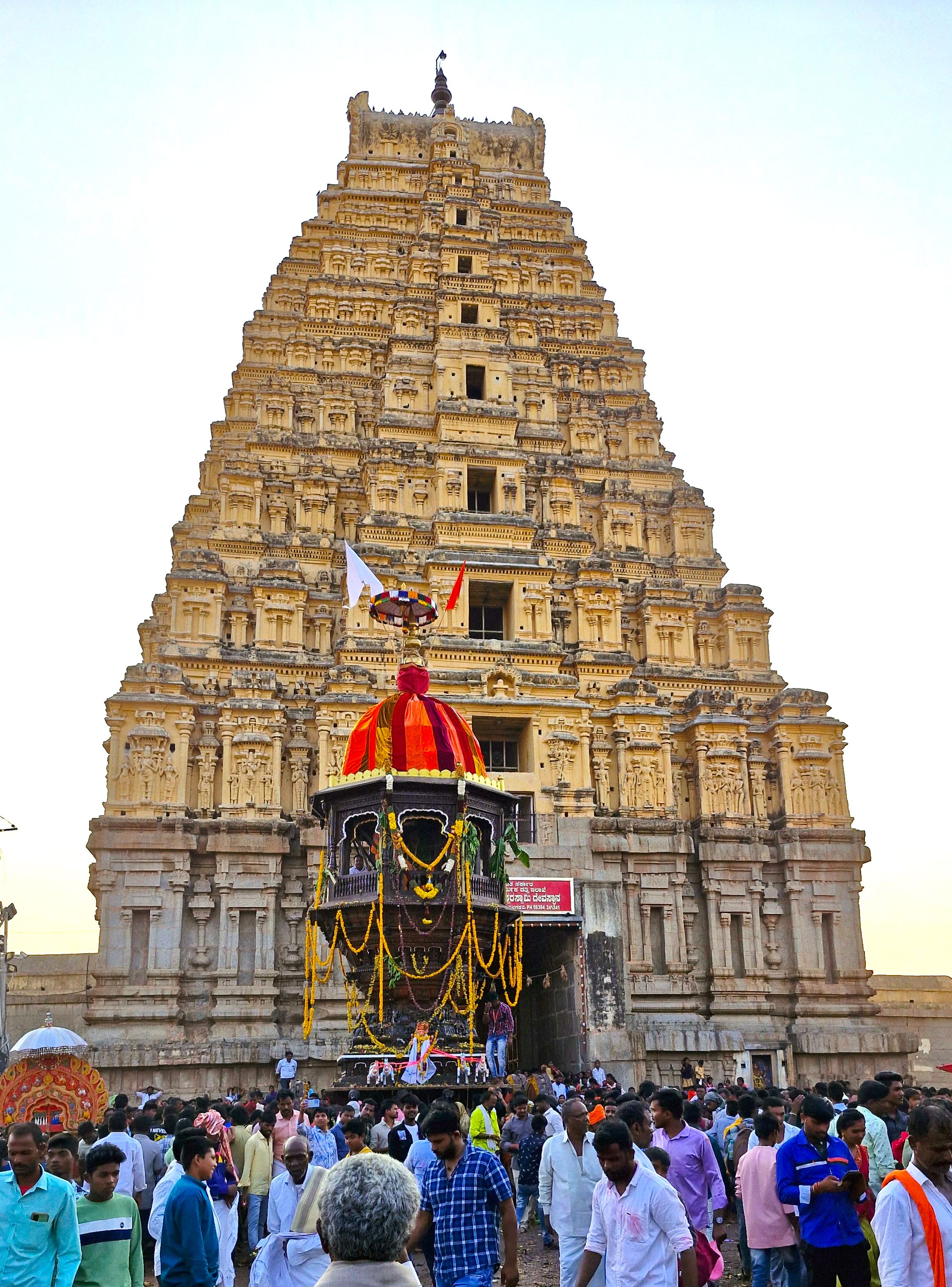
The drums came first — deep, ancient, reverberating through stone and skin alike. Chants followed.
Then the chariot moved — slow, deliberate, unstoppable. Against the backdrop of stony hills, the scene felt almost prehistoric, yet unmistakably present, where ancient rhythms merged seamlessly with modern life, reflecting how existence has quietly evolved over time.
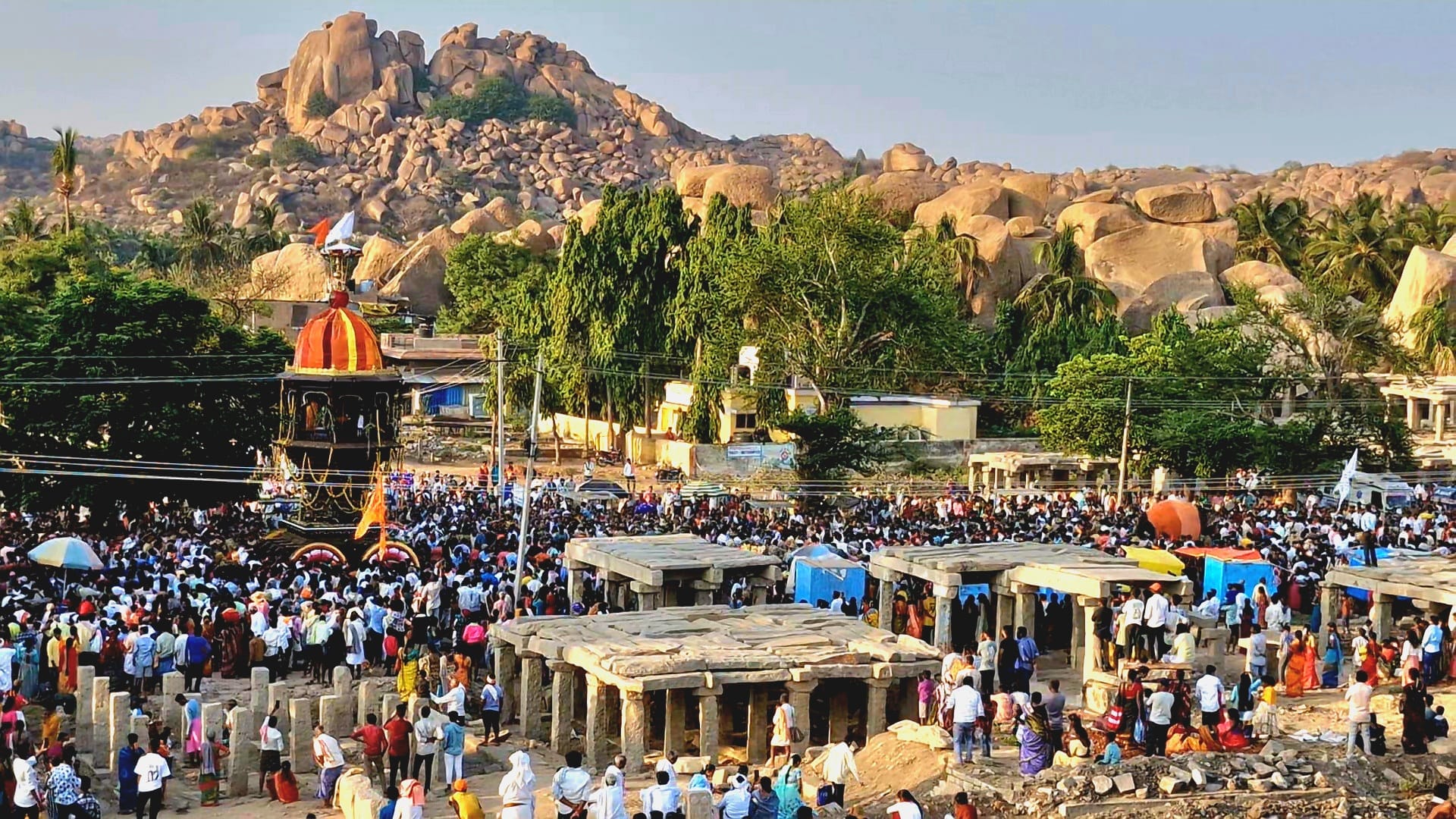
Dust rose. The air thickened with devotion and an energy that felt raw and timeless. For a brief moment, we weren’t just travelers observing — we were part of the rhythm. The crowd moved as one, bound not by language or creed, but by faith.
This was spirituality in its purest form — not curated, not documented, but felt.
Not about salvation, but belonging.
By the banks of the river, Amma’s Kitchen offered something equally sacred.
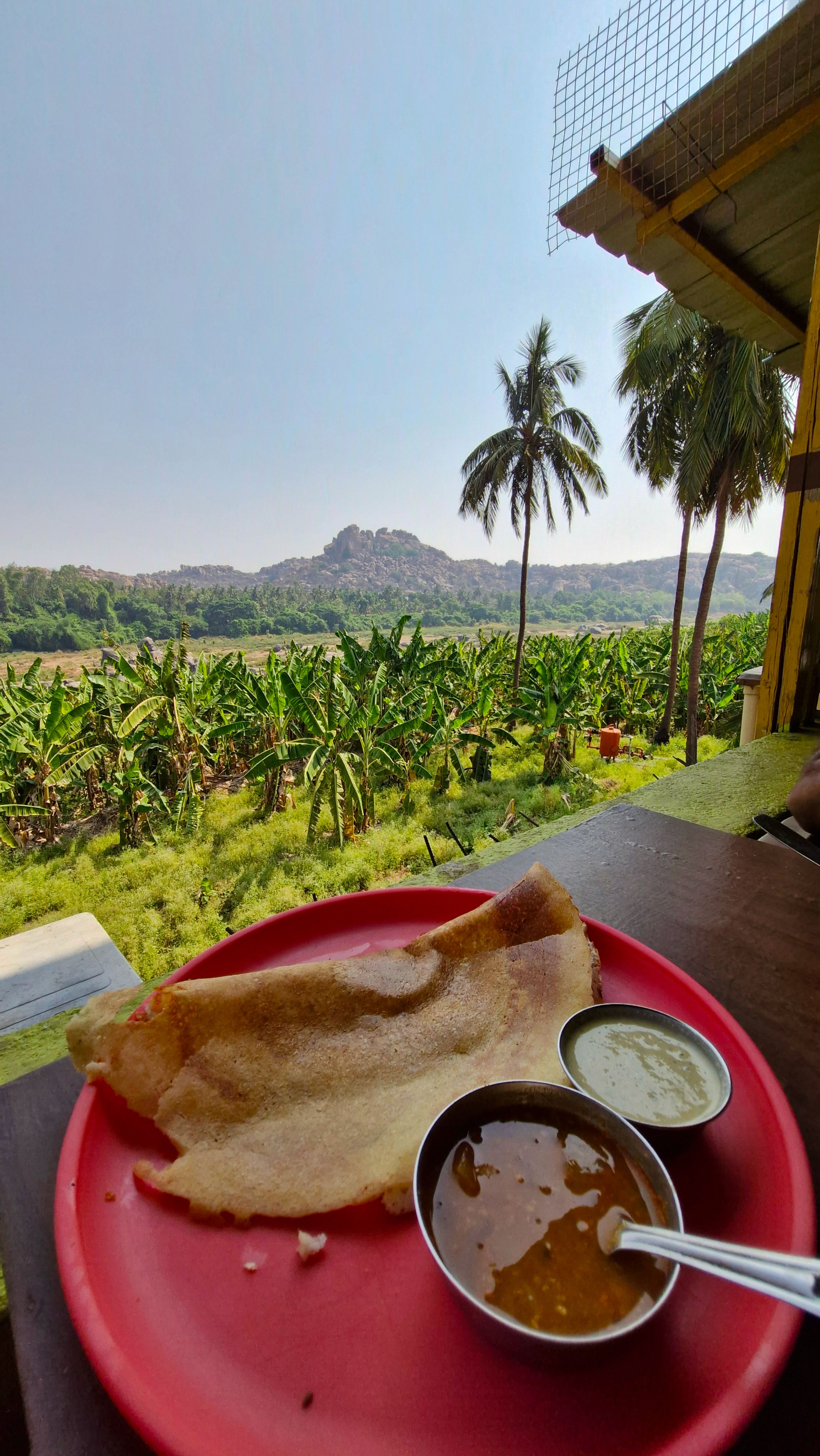
The karam dosa wasn’t elaborate. No garnish, no presentation worth photographing. But it was prepared with care, served warm, accompanied by stories that flowed as easily as the water beside us. Amma spoke of Hampi, of seasons, of change — not as history, but as lived memory.
It was one of those meals that stays with you — not for its taste alone, but for how it makes you feel welcomed. Seen. At ease.
Standing there, it was hard not to think of those like us — Gen Zs and millennials navigating traffic on Outer Ring Road, chasing deadlines, dopamine, and digital meaning.
Maybe we all need to drive down this road once.
To trade honking horns for temple bells.
To exchange acceleration for alignment.
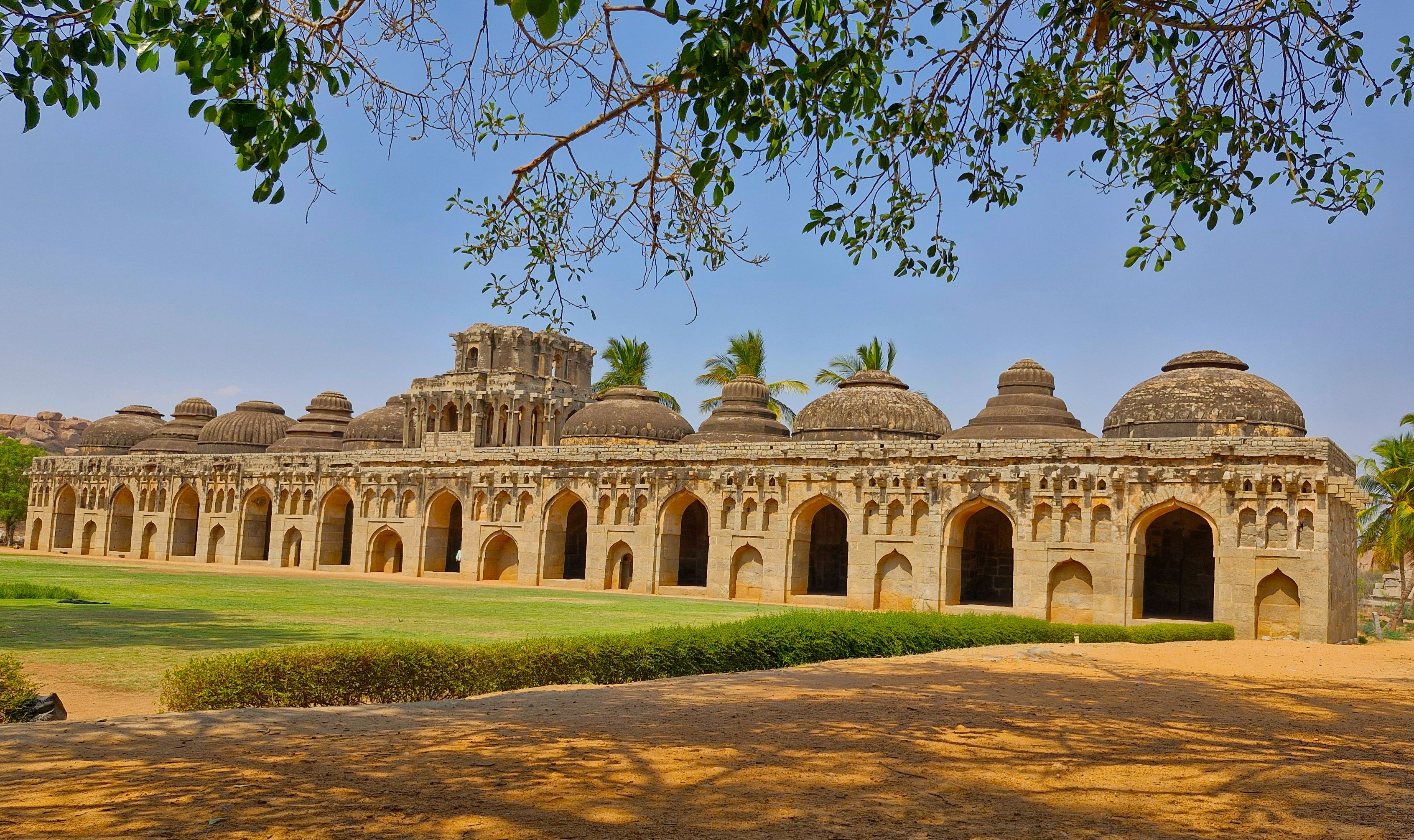
The slow rhythm of Hampi’s native community teaches a quiet truth — resilience isn’t always about speed or productivity. Often, it’s about continuity. About showing up each day with patience and grace.
In a world obsessed with momentum, Hampi offers something rarer.
Balance.
And the permission to slow down.