07 Apr, 2026
Last Updated: 07 Apr, 2026
The road to Khonoma village in Nagaland did not feel like the beginning of something unfamiliar.
As I drove 20 kilometers west of Kohima, I found myself trying to make sense of a contrast I couldn’t quite reconcile. Khonoma was often described as a warrior village, rooted deeply in Angami Naga heritage, known for its resistance and history. And yet, it was equally known as India’s first green village—a place defined by conservation, eco-tourism in Nagaland, and ecological balance.
Both identities felt complete in themselves.
But together, they felt almost contradictory.
Somewhere along that winding road through landslide-scarred hills, I realized I wasn’t just traveling to a place—I was trying to understand how both of these could exist at once.
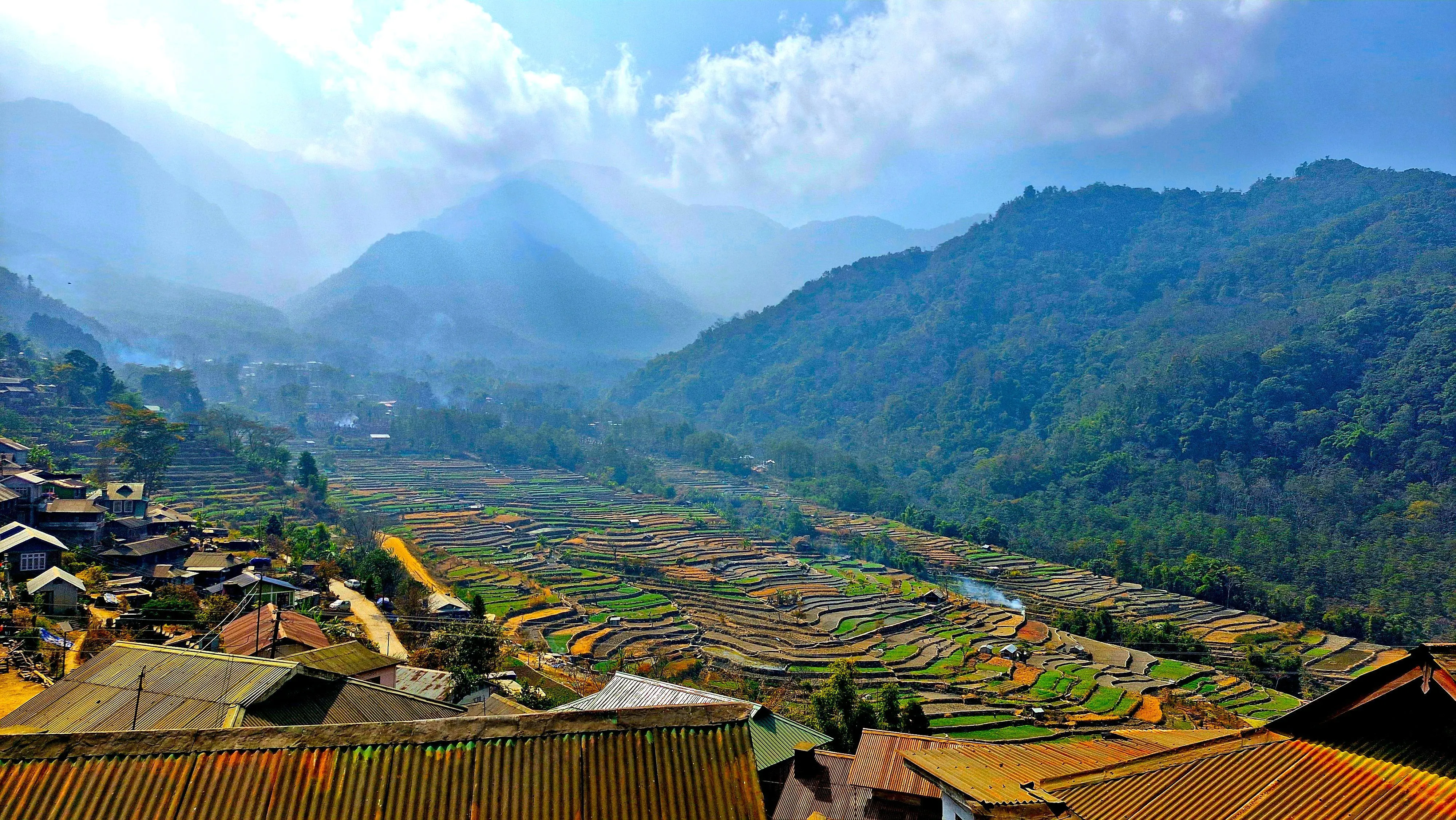
Beyond Khonoma Kharu, the entrance gate, the landscape opened gradually. Terraced fields stretched across the slopes in layered greens, held gently by the surrounding mountains.
It was quiet. Not empty. Not inactive.
But composed—as if the village had chosen its own pace and stayed with it.
I walked toward the tourist information centre, hoping to find a guide for the village tour.
Instead, I found absence.
Most of the villagers had gone to Kohima for a state wrestling event. The village felt paused, almost suspended in time.
And then, near the staircase leading inward, sat an elderly man.
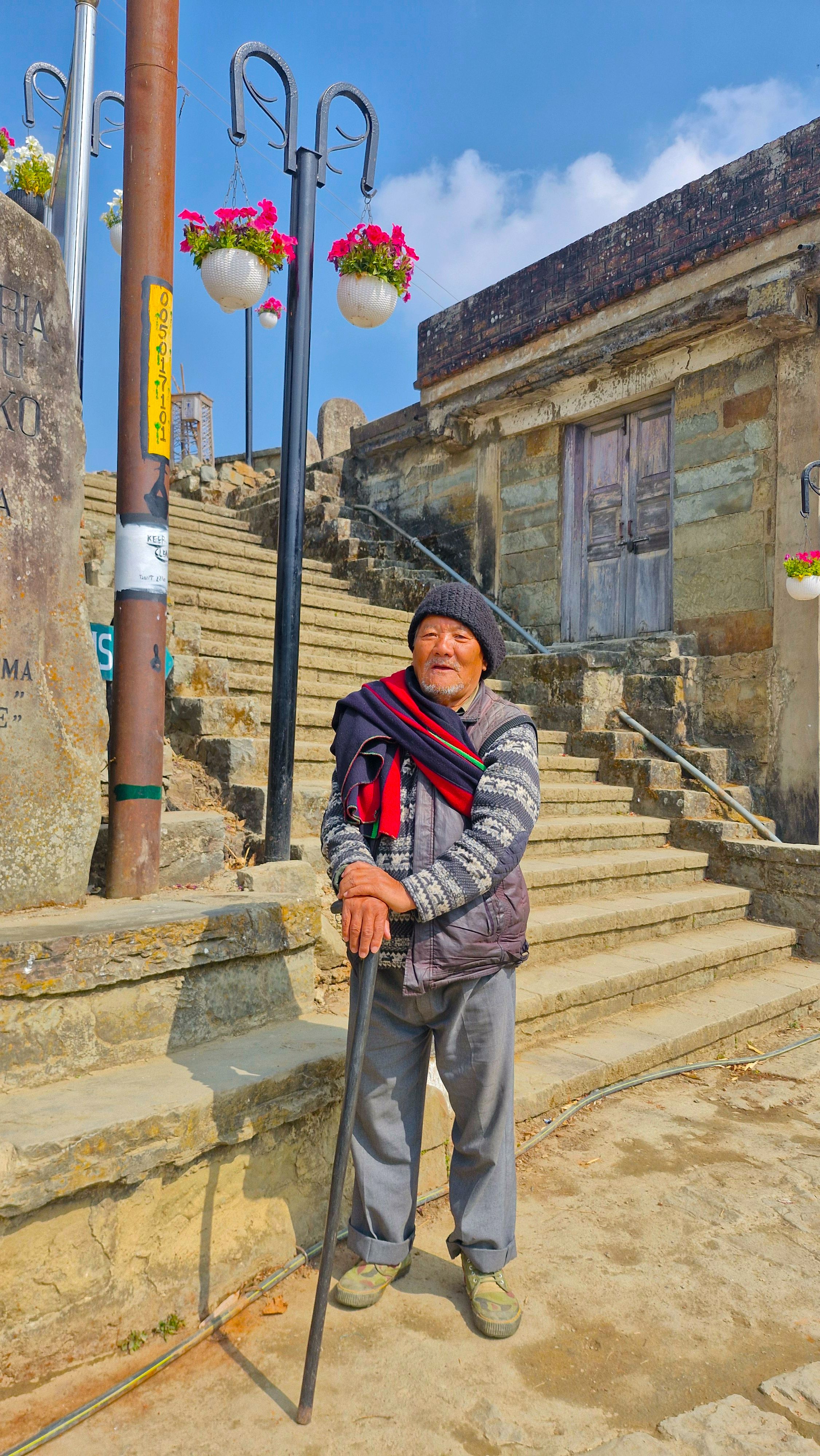
He noticed the hesitation before I could speak.
Without introduction, he asked me to follow. We walked slowly uphill toward the baptist church overlooking the village. From there, Khonoma unfolded in a single frame—the terraces, the clustered homes, and the forests forming a quiet boundary.
We sat under the mild winter sun.
And then he began—not as a guide, but as someone remembering.
Through a mix of Nagamese and English, he spoke of the khel system, the clan-based structure central to Angami Naga culture. Each khel functions as a close-knit unit, shaping both governance and everyday life in this traditional Naga village.
Among them, the Semoma Khel stood out.
As he pointed across the landscape, fragments of history began to align.
“This side… fighting time.”
In 1879, Khonoma became the center of resistance during the Battle of Khonoma—one of the most significant episodes in Naga history.
The stillness I had first noticed no longer felt passive.
It felt earned.
After a while, he simply gestured—
“Now you walk… inside.”
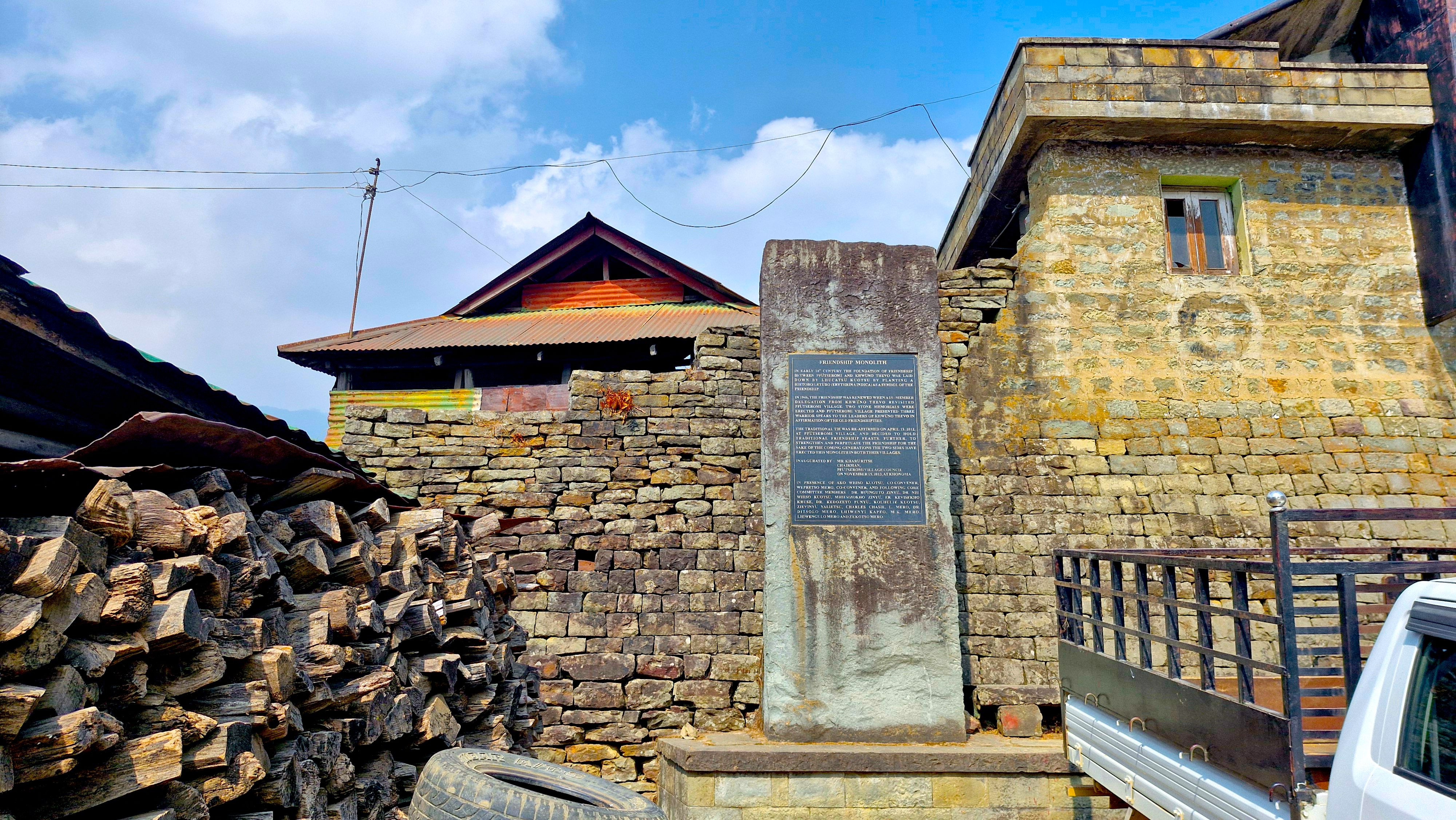
The lanes narrowed as I moved deeper into the village. Traditional houses lined the paths, their walls stacked with neatly arranged firewood.
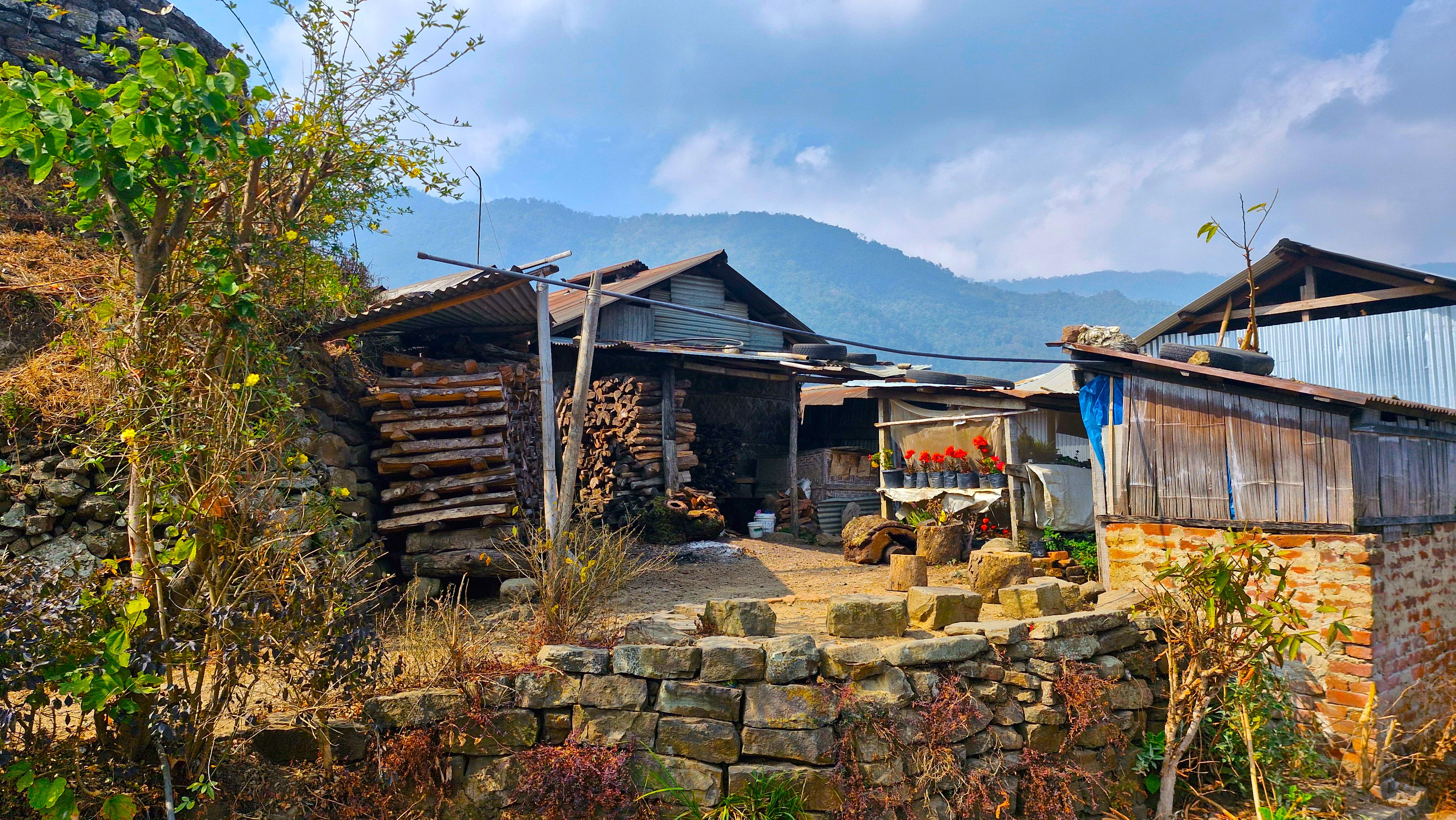
Thin streams of smoke rose gently from the spaces between the roofs, dissolving into the crisp mountain air. The aroma of boiled pork with lai xaak (mustard greens) and Raja mircha (King chilli) drifted across the lanes—subtle, grounding, unmistakably local.
The pathways themselves felt cared for in quiet ways.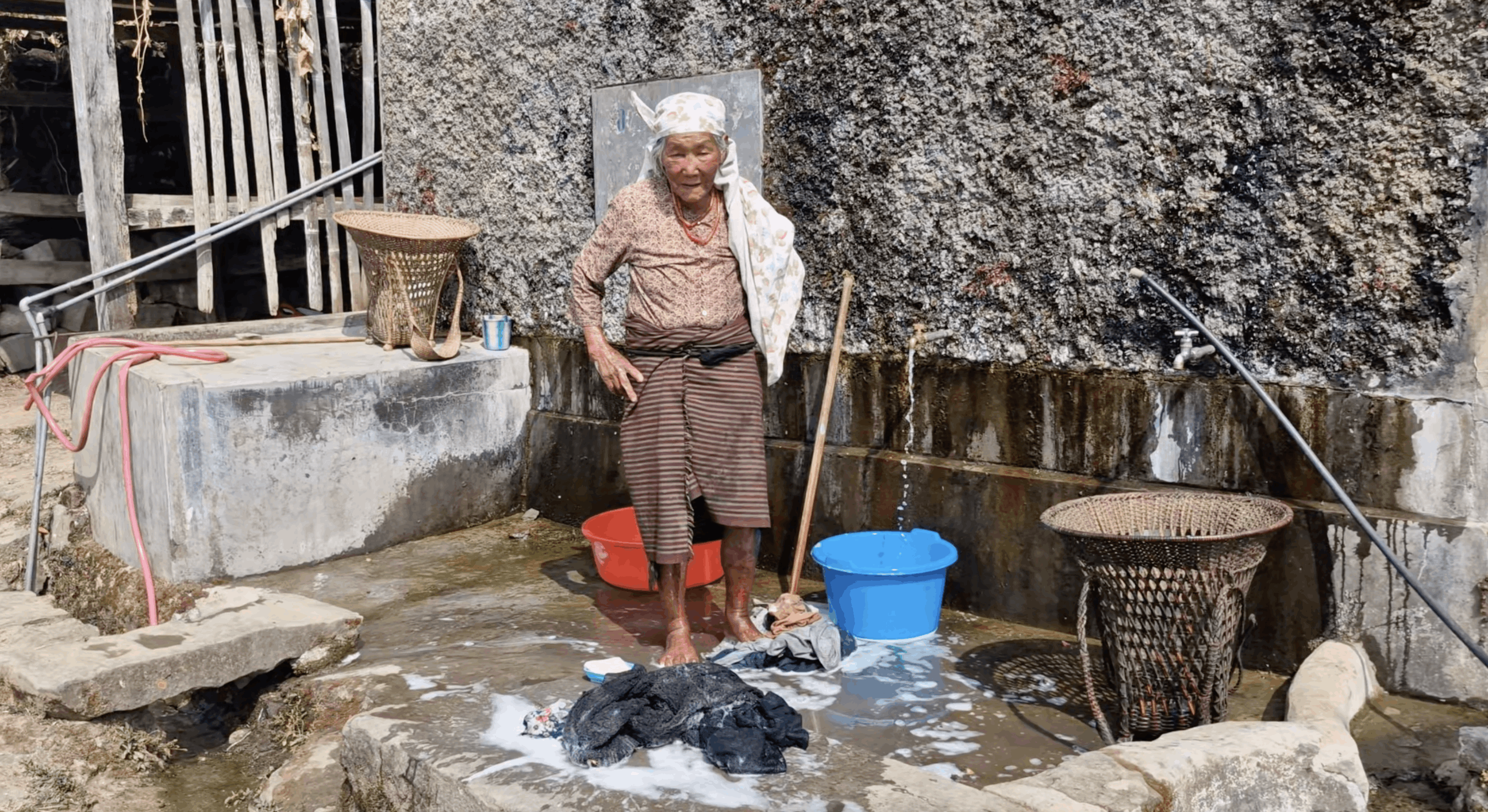
It was also a quiet surprise to see octogenarian villagers going about their household chores on their own—unhurried, self-reliant, and deeply at ease within the rhythm of their surroundings.
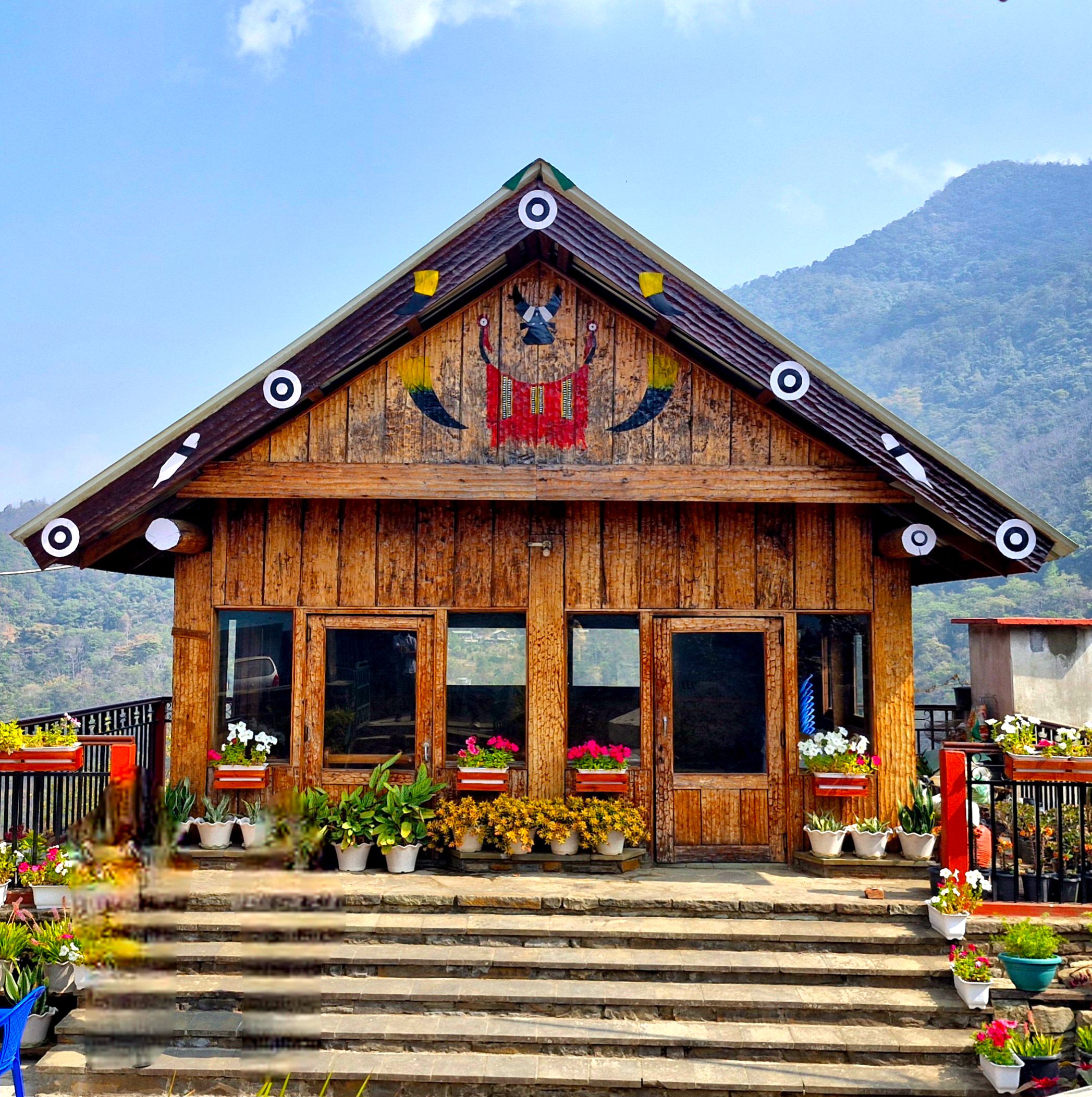
Colorful flower pots lined sections of the lanes, adding small bursts of life to the earthy tones of wood and stone.
Nothing felt curated. Everything felt lived-in.
At first, a few bottles of wild apple juice lay unattended at a corner, almost unnoticeable while walking the lanes.
Then, a shop.
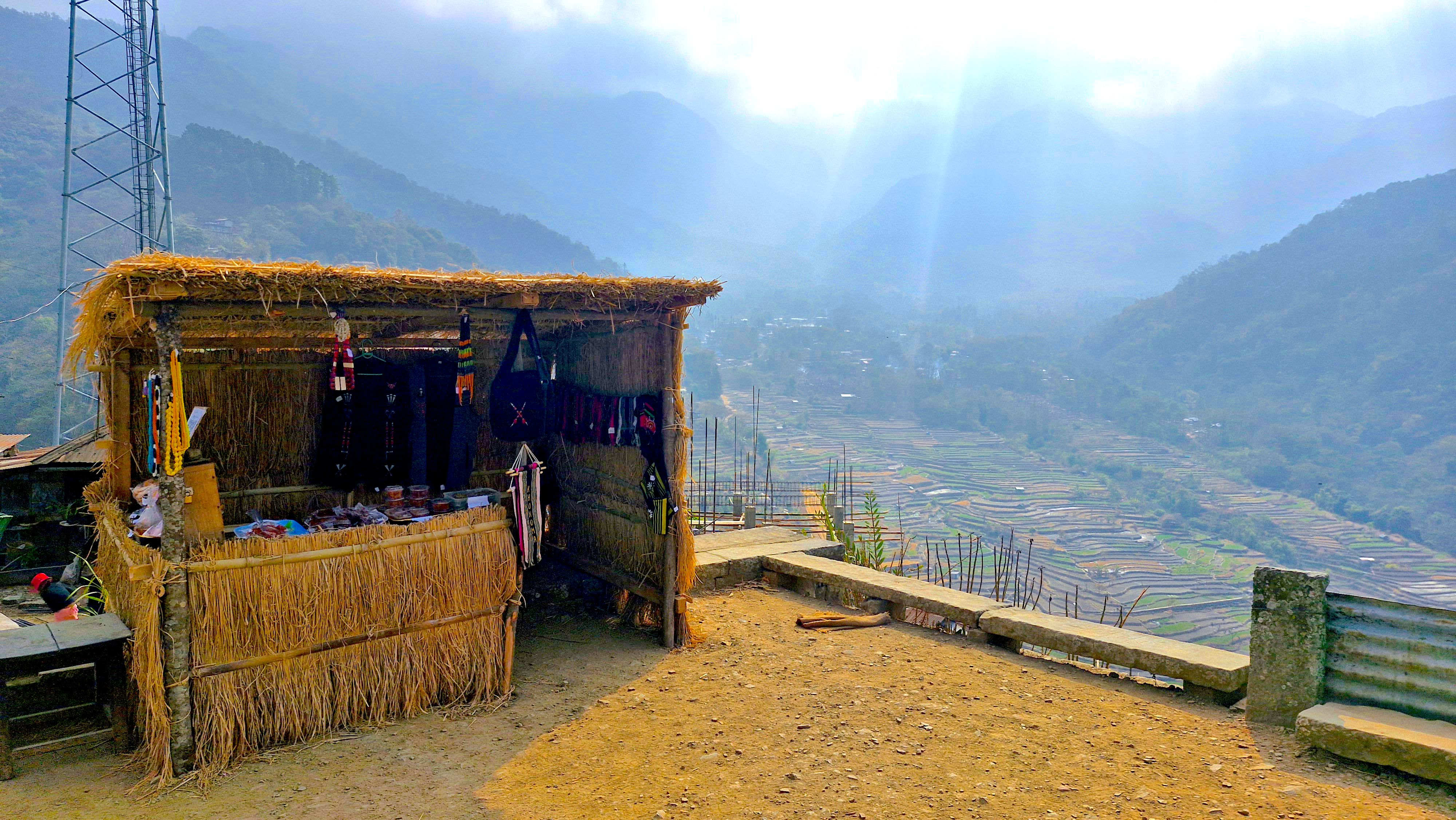 Dried berries. Juices. Handmade garments.
No shopkeeper—just a small box placed to the side.
No instructions. No supervision.
These honesty shops in Khonoma village, while they may draw attention today as a tourist curiosity, are far from a novelty. They reflect a deeply rooted system of trust and collective accountability—something rarely sustained in modern urban life.
This was not an exception. It was the system.
Further ahead, high stone walls enclosed something hidden.
A narrow staircase led upward.
At the top stood the Khonoma (Semoma) Fort.
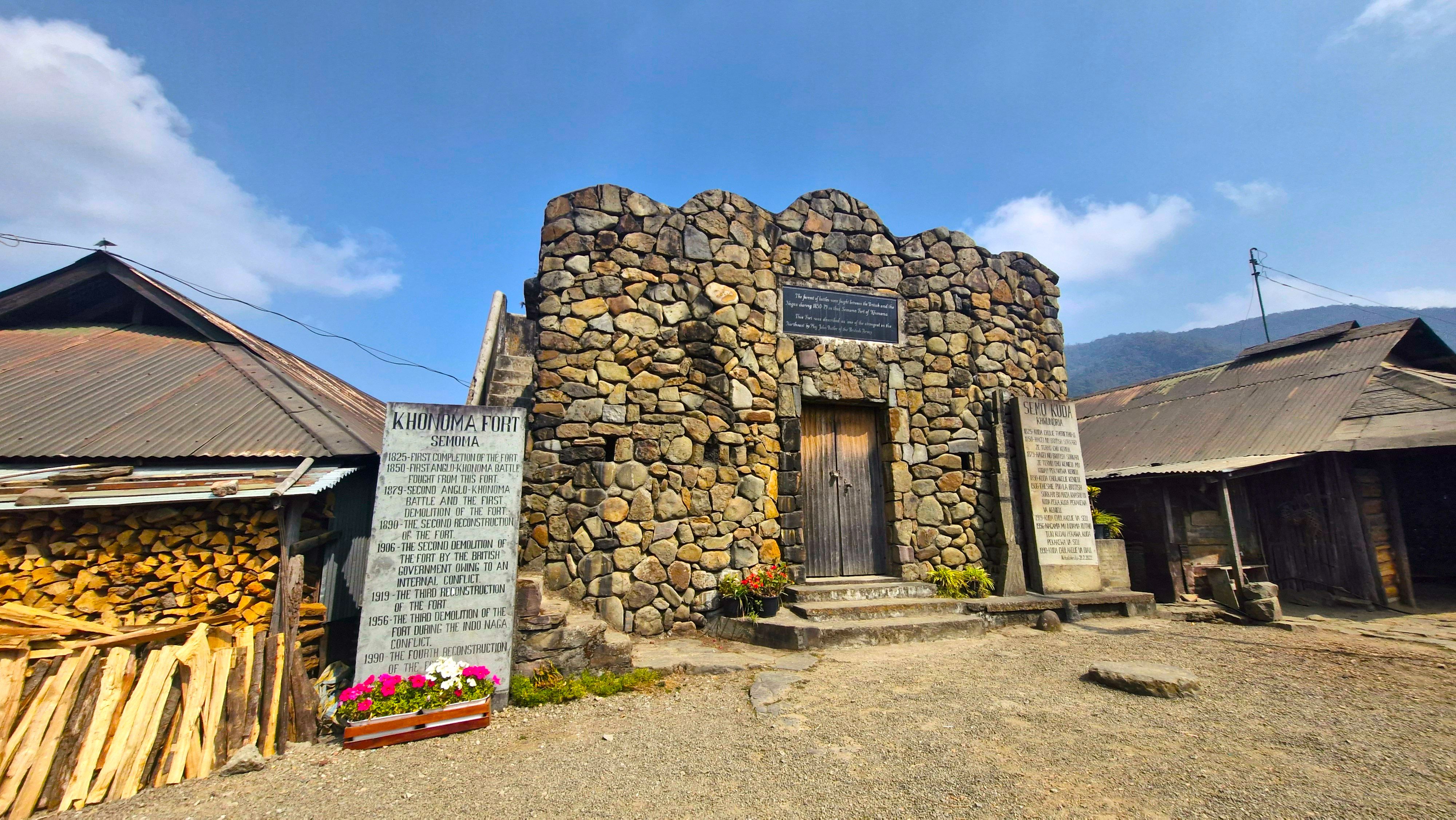
Built in 1820, the fort has witnessed multiple conflicts—from early Anglo-Khonoma confrontations in 1850, to 1879, and the Indo-Naga conflict of 1956. Rebuilt multiple times, its present form dates to 1990.
The stones are rough, stacked without mortar.
The fort has been destroyed more than once, and rebuilt each time.
Not out of necessity alone, but out of resolve—because rebuilding here was never just about restoring walls, but about not surrendering to what sought to erase them.
It stood not as a monument, but as a memory.
But Khonoma’s story does not end with resistance.
It evolved with time.
By the late 20th century, wildlife depletion became evident. Species like the endangered Blyth's Tragopan began to disappear.
In 1998, the village took a collective decision.
Hunting was banned.
What followed transformed Khonoma into a model for sustainable villages in India even before it was a mainstream topic of discussion.
The alder-based farming system, combined with terrace cultivation, allowed natural soil regeneration. Today, Khonoma stands as a leading example of sustainable farming in Northeast India and community-led conservation.
Before leaving, I picked up a packet of wild apple juice from one of the honesty shops and walked toward the edge of a pathway overlooking the terraces.
The fields below caught the winter sun in a way that made everything feel unusually clear.
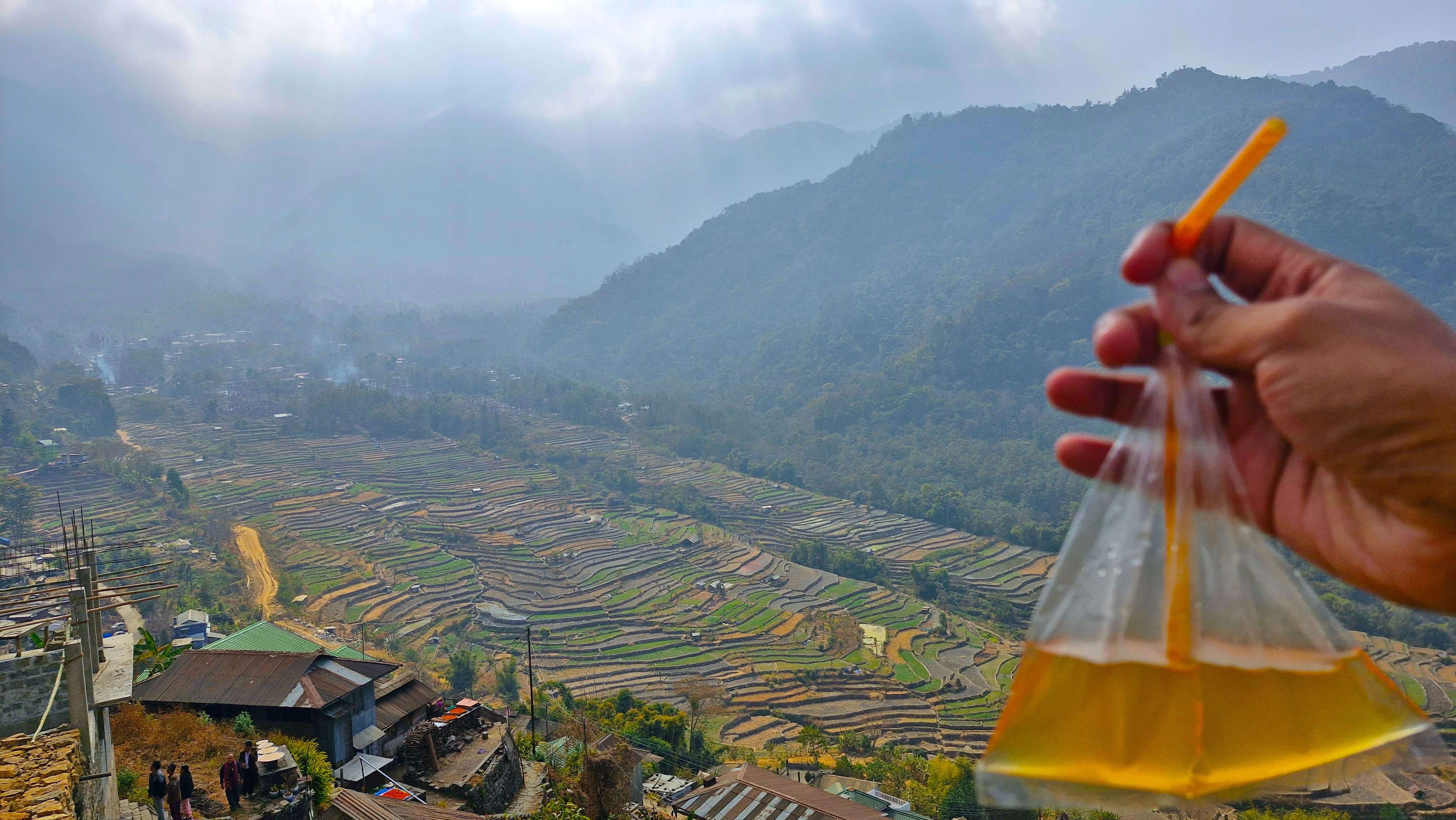 I sat there for a while.
And somewhere in that stillness, a thought began to take shape.
As individuals, we often assume that our lives are shaped by circumstance—by the pace of cities, by systems, by convenience. Complexity begins to feel inevitable.
But Khonoma suggested something else.
 That the way a community lives is, at some level, a choice. Not an easy one. Not immediate. But one that is made repeatedly, over time.
This was a village that had once faced real conflict—an existential struggle rooted in survival. And yet, across generations, it chose to evolve.
To move from extraction to balance.
From resistance to responsibility.
And in contrast, it made me question how easily we overlook that same choice in our own lives.
The realization did not arrive dramatically.
But it stayed.
Khonoma is not just a destination for Nagaland travel or offbeat places in Northeast India.
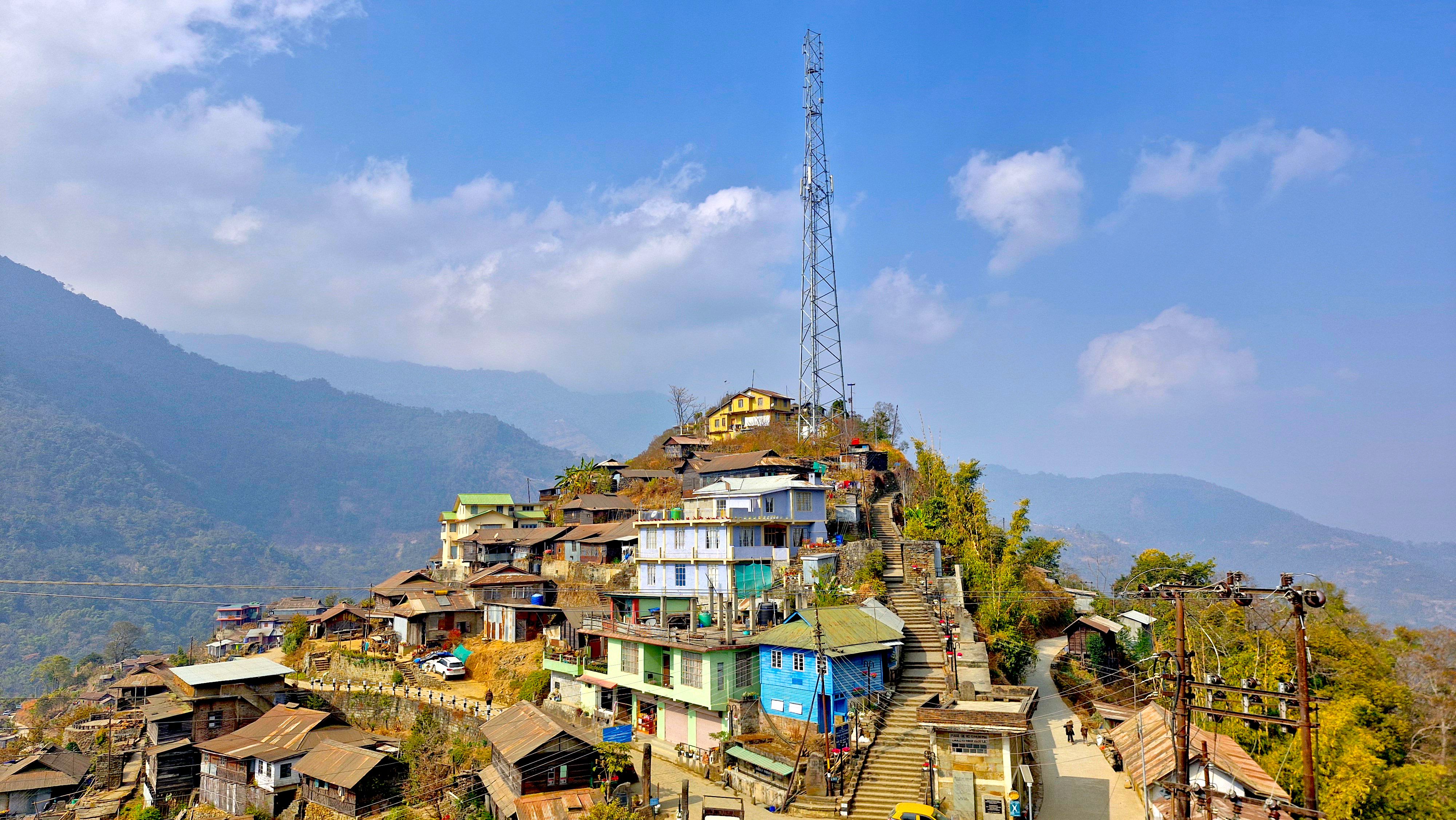 It is a living system.
A place where history, sustainability, and community continue to coexist.
You arrive expecting to see a village.
You leave understanding a way of life.
Khonoma did not stop being a warrior village.
It simply chose new battles.